

Teddy bear — a step-by-step lesson for grown-up and child
Here at the end of the set sits its cosiest word: the bear who may already be your baby’s nightly hug. This lesson makes the introduction and closes the set warmly.
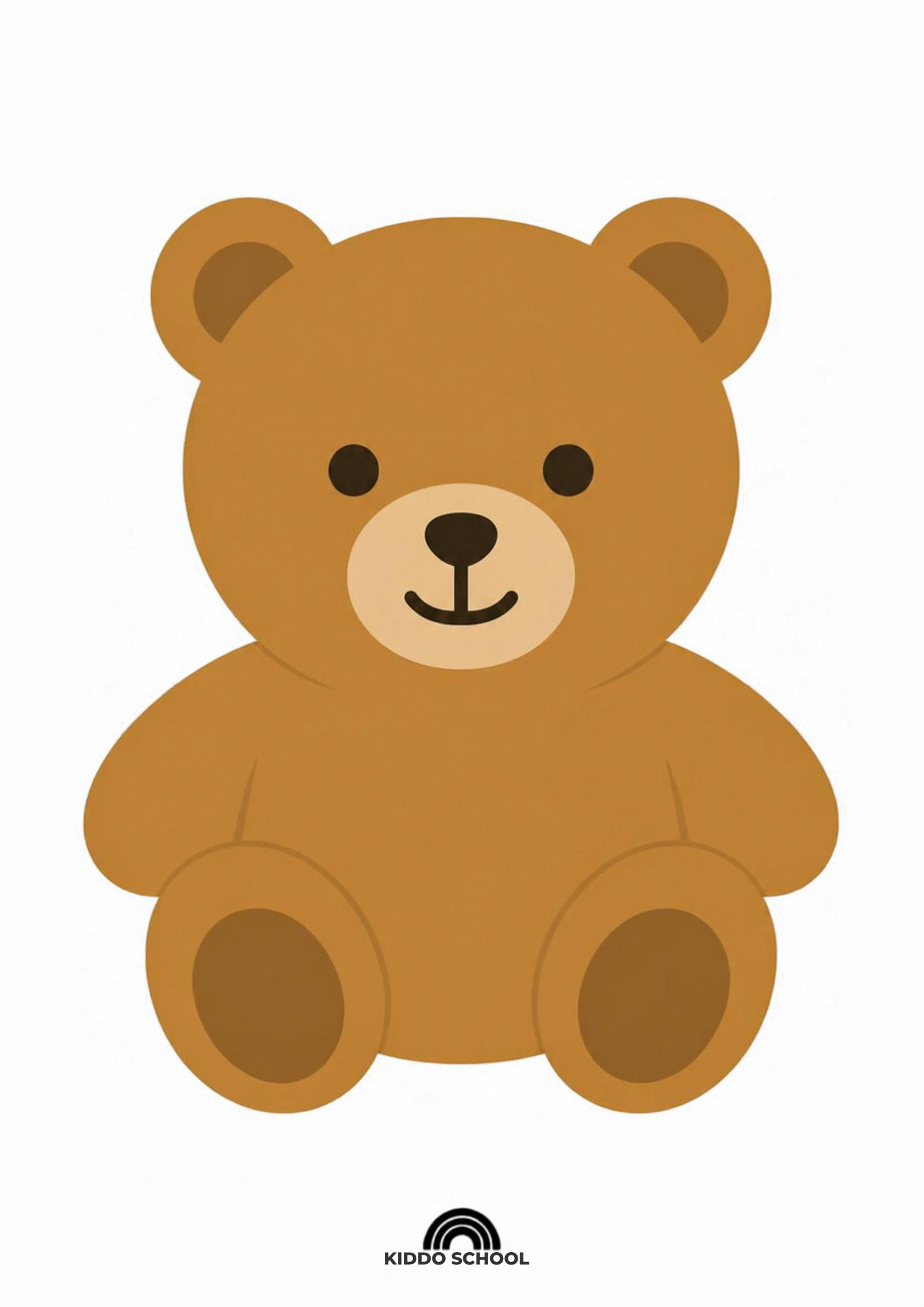
What is this?
A teddy bear is a soft toy friend — for many babies, the specific one that lives in the cot or rides in the pram. The card is a portrait of someone already known, which makes this the cosiest word in the collection.
What does it mean?
Comfort objects hold emotional weight that turns words into anchors: naming the teddy fuses language with security. And a comfort object that attends card time changes the texture of the whole routine — sessions with teddy feel safe, and safe sessions run longer.
What does the child need to know?
Fetch the real bear and stage a formal meeting — fur bear greets picture bear, with your voice doing the introductions. Then let teddy stay for the rest of card time as the resident audience. A card that has been thoroughly loved is a card that has been learned.
Why this matters
Ending the set with a comfort word is good design: it closes card time on the feeling you want your baby to keep. Babies who finish sessions warm come back to the next one easily — the ending is the advertisement for tomorrow.
What it teaches
Emotional security in learning routines, word-object mapping for a beloved object, touch-and-look pairing, and ritual-building — the same warm sequence, repeated until it is a habit.
Words to learn
teddybearsofthugfriendnight-night
Say this to your child
“"Teddy bear! Look — here is teddy on the card. And here is YOUR teddy, come to meet the picture. Soft teddy, cuddly teddy, friend teddy. Shall we let teddy watch cards with us? Hello, teddy. This is your seat."”
Step by step
- Show the card at close range with a warm voice: "Teddy bear! You know this friend."
- Let your baby study the picture, then fetch the real teddy and bring it into view beside the card.
- Introduce them: "Card teddy, this is real teddy" — and make the real bear wave with your hand doing the work.
- Offer the real bear for a touch against your baby’s hands or cheek — soft is the entire point of a bear.
- Seat teddy where it can watch the remaining card time, and give it that job at every session from now on.
Look closer at the picture
The artwork is a soft teddy bear in bold friendly shape — say that much. The live noticing: does the gaze travel between picture bear and fur bear, and does the touch of fur change your baby’s body language? Comfort shows on babies as loosening and leaning.
Ask your child
Watch the introduction: does your baby treat the two bears as one friend or two? Does the word alone start to collect a look by week’s end? Wonder aloud: "I wonder if you think the picture bear knows your bear. I like to think they do."
What your child can say or do
Looks that swing between card and bear, fingers sinking into fur, a full-body snuggle towards the real bear, or a happy babble at the teddy-voice — the bear tends to produce this set’s biggest reactions, and every one is welcome.
Out in the real world
Teddy travels: the cot, the pram, the car seat, the spare at grandma’s house. Each appearance is a replay of the word — and this card often becomes the one your baby "reads" first, months from now, by recognition alone.
Try it together
Teddy picks: from today, let the real bear choose which card comes next — your hand operates the paw, the bear "points", and your baby watches the selection ceremony. Rituals like this turn card time from an activity into a story.
Understanding check
Parent self-check: did the two bears formally meet, and did teddy earn a standing job in the routine? The ritual is what lifts this card above vocabulary into friendship — and warm endings are the best recruitment there is for tomorrow’s session.
Parent tips
No teddy in the family? The nearest loved soft thing does the job — the lesson is about naming a cherished object, not this exact bear. Keep the teddy-voice identical across sessions; your baby is memorising that voice as much as the word.
Staying safe
Choose a baby-safe bear: no button eyes, no glued decorations, no loose parts, nothing that sheds. If your baby’s sleep bear follows strict sleep-safety rules, card time can borrow a different bear and leave the night friend to its real job.
This lesson pairs with the Teddy bear flashcard in the library — print it, show it, keep it on the fridge. Back to First Words & Familiar Things (Infant 2).