

Ball — a step-by-step lesson for grown-up and child
Few first words have a head start like this one: the ball is probably already your baby’s favourite toy. This lesson rolls the real thing into view and lets the fun carry the name.
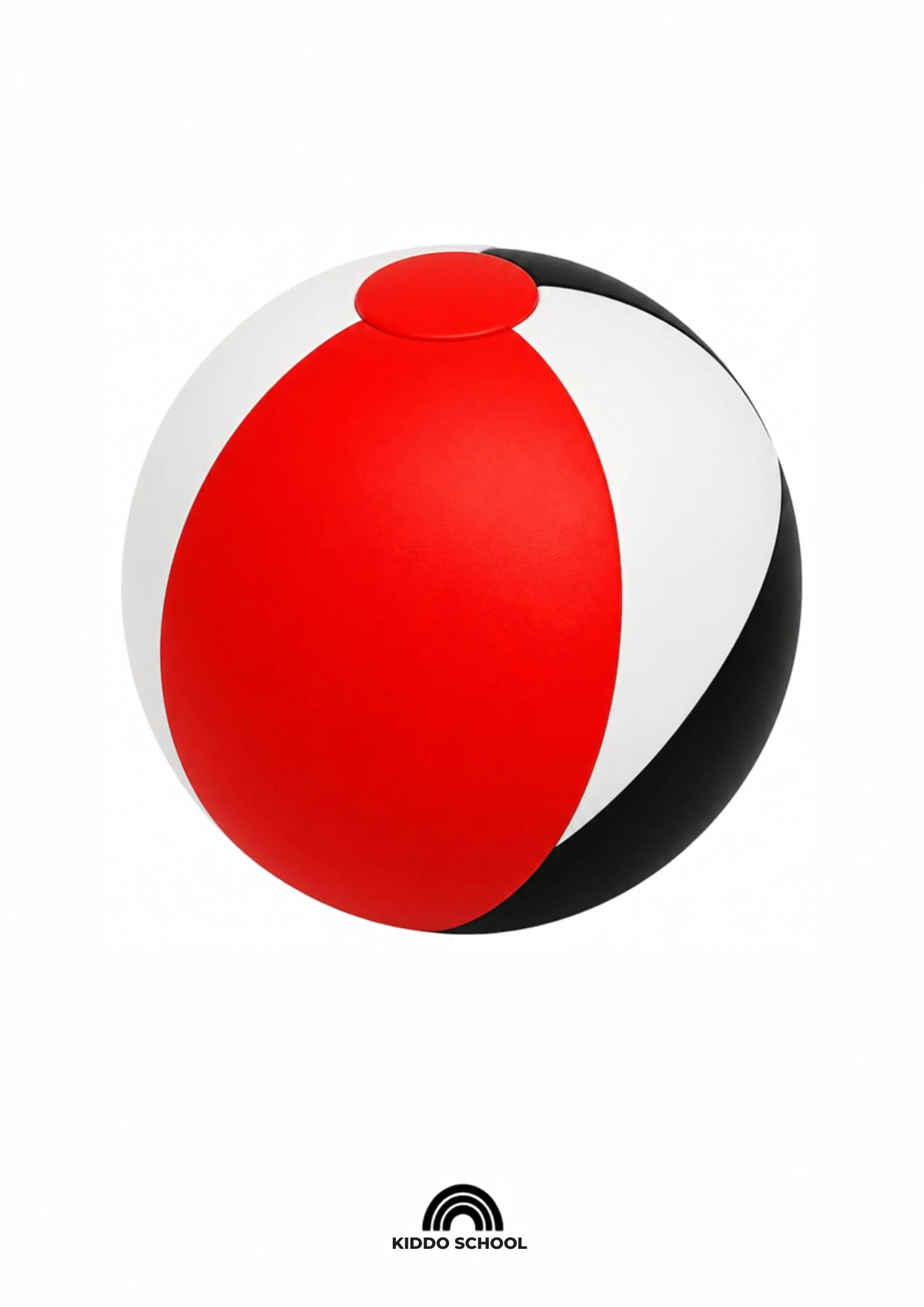
What is this?
A ball is a round toy that rolls, bounces and stops — and your baby has probably already chased one with their eyes and hands. The card gives that favourite a clean portrait; the game gives it motion and a name.
What does it mean?
Nothing needs repeating yet: what counts at this age is hearing the word said with warmth, over and over, attached to something worth watching. Words that arrive during genuine play get processed as good news, and good news is remembered.
What does the child need to know?
The order matters: roll the real ball first, then show the card, or roll after the card — either way, play leads and language follows. Replies, when they come months from now, will arrive on their own schedule; nothing needs prompting today.
Why this matters
First words are overwhelmingly the things babies see most, and a ball tops many lists. Every warm repetition now is a deposit in the account your baby will draw on when speech starts — deposits made in laughter earn the best interest.
What it teaches
Object recognition, visual tracking of moving targets, reach-and-grab aim, and word-pleasure pairing — the emotional side of vocabulary that makes words worth saying later.
Words to learn
ballrollroundbouncygoneagain
Say this to your child
“"Ball! Here is the picture ball, all round and bright. Now watch — a real ball, rolling across the floor... and it stopped. Did you see? Rolling balls, still balls — they are all ball. What a good word."”
Step by step
- Settle your baby and show the card at close range with its name: "Ball. Round and ready for a game."
- Let the picture earn a good look — then fetch a real ball: big, light, clean, and bigger than their fist.
- Roll it slowly across the mat within full view, saying "ball" once as it moves, and let it stop naturally.
- Wait. A reach, a bat, a shout of delight — answer whichever arrives with a warm "yes, ball!" and let hands meet the ball.
- Close by returning to the card for one final look, so the word has been heard at the picture and at the game.
Look closer at the picture
The artwork is a simple bright ball — say that much. The live noticing: did the eyes follow the roll to the end, and did the gaze come back to the card after the game? That round trip is the whole lesson, happening or not happening, right in front of you.
Ask your child
Watch the circuit: picture, world, picture — where does the trip break down today? Does the reach aim for the card or the ball? Wonder aloud: "I wonder if the rolling ball or the still one holds your eyes longer."
What your child can say or do
Eyes locked on the full roll, a two-handed grab that lands on the ball, a squeal at the first movement, or babbling that starts up mid-game — ba-ba noises during ball play are not coincidence; the sound and the word are neighbours.
Out in the real world
Balls are everywhere once you list them: the one clipped to the pram, the big therapy ball at baby group, the dog’s tennis ball. One word at each sighting keeps this card running all week without another session.
Try it together
Stop-and-go roll: roll the ball a short way, say "ball", let it rest, then roll it back. The stop is as important as the go — each restart is another naming moment, and your baby learns that games have a rhythm words can live inside.
Understanding check
Parent self-check: did the real ball actually roll today, and did you say the word once per roll rather than on loop? One word per event is what makes each naming land — narrating non-stop buries the word you are planting.
Parent tips
If your baby grabs for the card itself, let them hold it with you — crinkling and gumming a corner is real learning at this age. Rotate which ball you use so the word attaches to round things in general, not one exact toy.
Staying safe
Balls for this age are big, light and unmarked — nothing smaller than their fist, nothing with a broken seam, nothing retrieved from under the sofa mid-session. The card returns to adult hands after any shared holding.
This lesson pairs with the Ball flashcard in the library — print it, show it, keep it on the fridge. Back to First Words & Familiar Things (Infant 2).