

Cow — a step-by-step lesson for grown-up and child
Every animal card has its gimmick, and the cow’s is endurance: one note, held long, getting funnier the longer it goes. This lesson teaches the word through stamina.
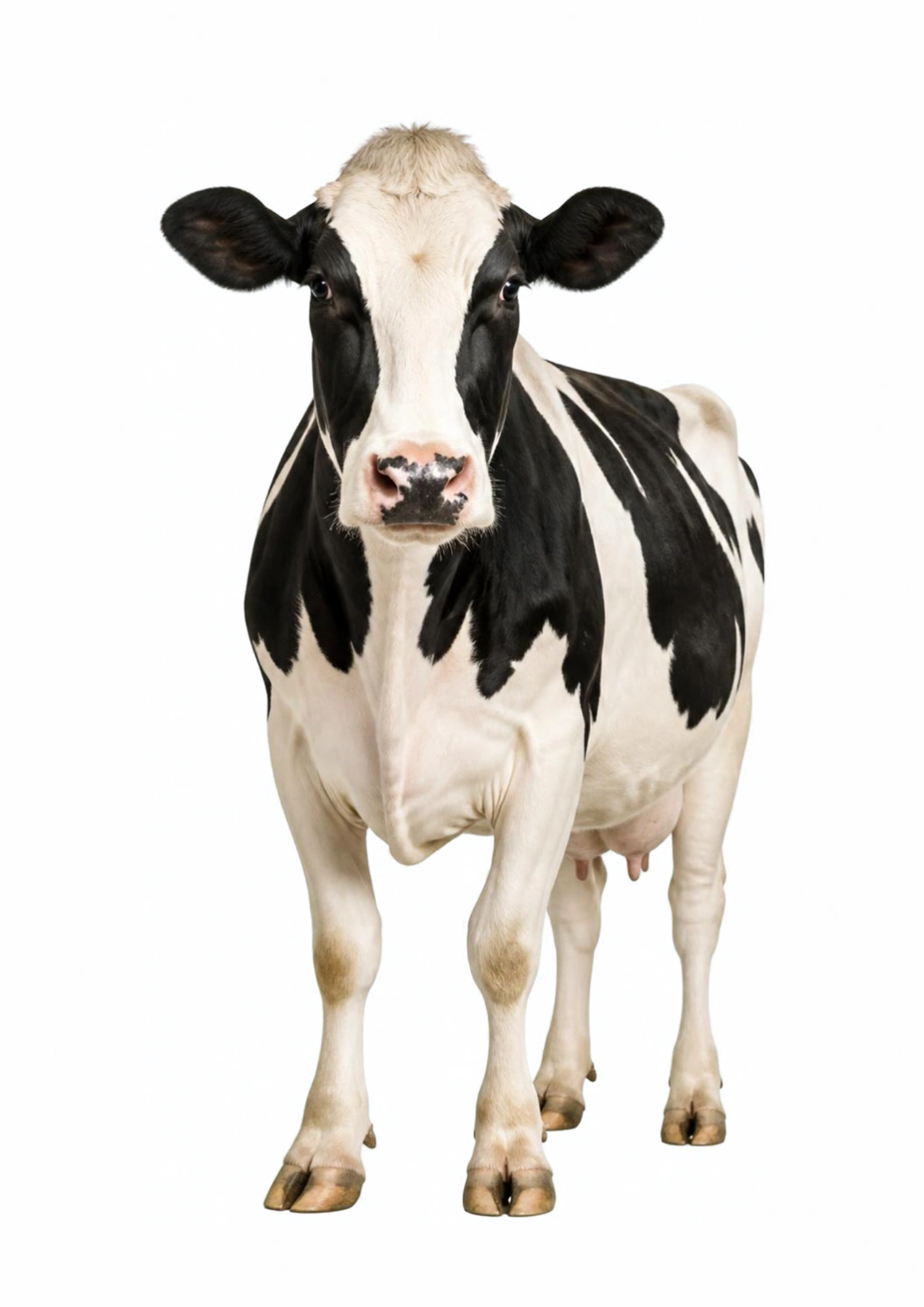
What is this?
A cow is a big, calm farm animal that eats grass and says moo — a sound with no sharp edges, no speed, just length. The card gives the gentle giant’s portrait; your lungs give the performance.
What does it mean?
Long sounds are wonderfully funny at this stage, and they are also ear-training: hearing one sound stretch and change teaches your baby to listen inside a sound — where it starts, how it wobbles, when it ends. That listening is the raw material of every word they will ever hear.
What does the child need to know?
Hold the moo for as long as your baby stays interested — that is the whole technique. Not loud, just long, with a small wobble in the middle for comedy. When the sound ends, stop everything; the silence after a long moo is practically a standing ovation.
Why this matters
Before babies speak, they listen — and listening is a trainable skill, not a given. Cow trains it at maximum fun: a sound that long cannot be ignored, and babies who track a moo from start to finish are doing genuine phonological work while thinking they are watching a cow.
What it teaches
Auditory attention and sound-tracking, length discrimination (short sounds versus long ones), big-and-gentle animal concepts, and shared silliness that keeps learning warm.
Words to learn
cowmoolongbiggrassgentle
Say this to your child
““Cow! A big cow, standing so still in the grass. And a cow says... moooooooooo! Just one long sound, going and going. Such a big animal, such a slow sound. Moooo... all done. Did you hear how long that was? The cow was not in a hurry at all.””
Step by step
- Show the card at viewing distance and set the scene: “Cow! A big, gentle cow, standing in the grass.”
- Trace the cow’s broad back and gentle face — this animal is mostly calm, and the card should feel calm too.
- Take a breath and deliver the moo: long, low, with one little wobble halfway. Keep it going while your baby keeps listening.
- Stop the moment attention breaks — the first look-away ends the note, always. Then enjoy the quiet together.
- Run the moo once more later in the session, slightly shorter; the repeat is the part they will start anticipating.
Look closer at the picture
The artwork is a big, gentle cow — broad body, calm face, grass at its feet. Say that much. The live noticing: how long does your baby track the moo — and is today’s record longer than yesterday’s? That creeping number is real auditory growth you can chart in seconds.
Ask your child
Watch the listening: does your baby still before the sound or during it? Do they look startled when the moo finally ends? Wonder aloud: “I wonder if you like the beginning of the moo or the wobble in the middle — the wobble is my favourite too.”
What your child can say or do
Whole-body stilling at the long note, mouth movements that echo the moo’s shape, a startle-laugh when it ends, or babble that tries an open ah-sound afterwards — the moo’s vowel is one your baby’s mouth is already fishing for, and hearing it stretched helps.
Out in the real world
Cows graze in picture books, on farm toys, out of train windows and in the fields of every car journey ever taken. Each sighting is a moo waiting to happen — and few words offer this much fun per syllable.
Try it together
Long-and-short: do the long moo, then a tiny “moo!” like a sneeze, then ask yourself aloud which was longer while tapping the card for the long one. You are not testing your baby — you are modelling comparison, out loud, with a cow.
Understanding check
Parent self-check: did the moo actually run long today, and did it end the moment interest did? The discipline of ending on the first look-away is what keeps this card welcome — push past it and the whole note turns to noise.
Parent tips
If you feel ridiculous, good — ridiculous is the working state of baby classes. Vary the wobble’s position across days; regulars get anticipatory grins. And if your baby starts mooing back in babble-form, that is imitation’s first draft: celebrate it loudly.
Staying safe
Volume stays conversational — long does not mean loud, and a baby’s ears get one childhood. Farm toys and cow books are fine backups; real cows are met at gates and over fences, always on the animal’s side of them.
This lesson pairs with the Cow flashcard in the library — print it, show it, keep it on the fridge. Back to Animals & Everyday Objects (Baby 1).