

Ball — a step-by-step lesson for grown-up and child
The animal cards end and the everyday half of the set begins — with the object your baby has probably already pushed, dropped and chased across a kitchen floor. This lesson names all of that.
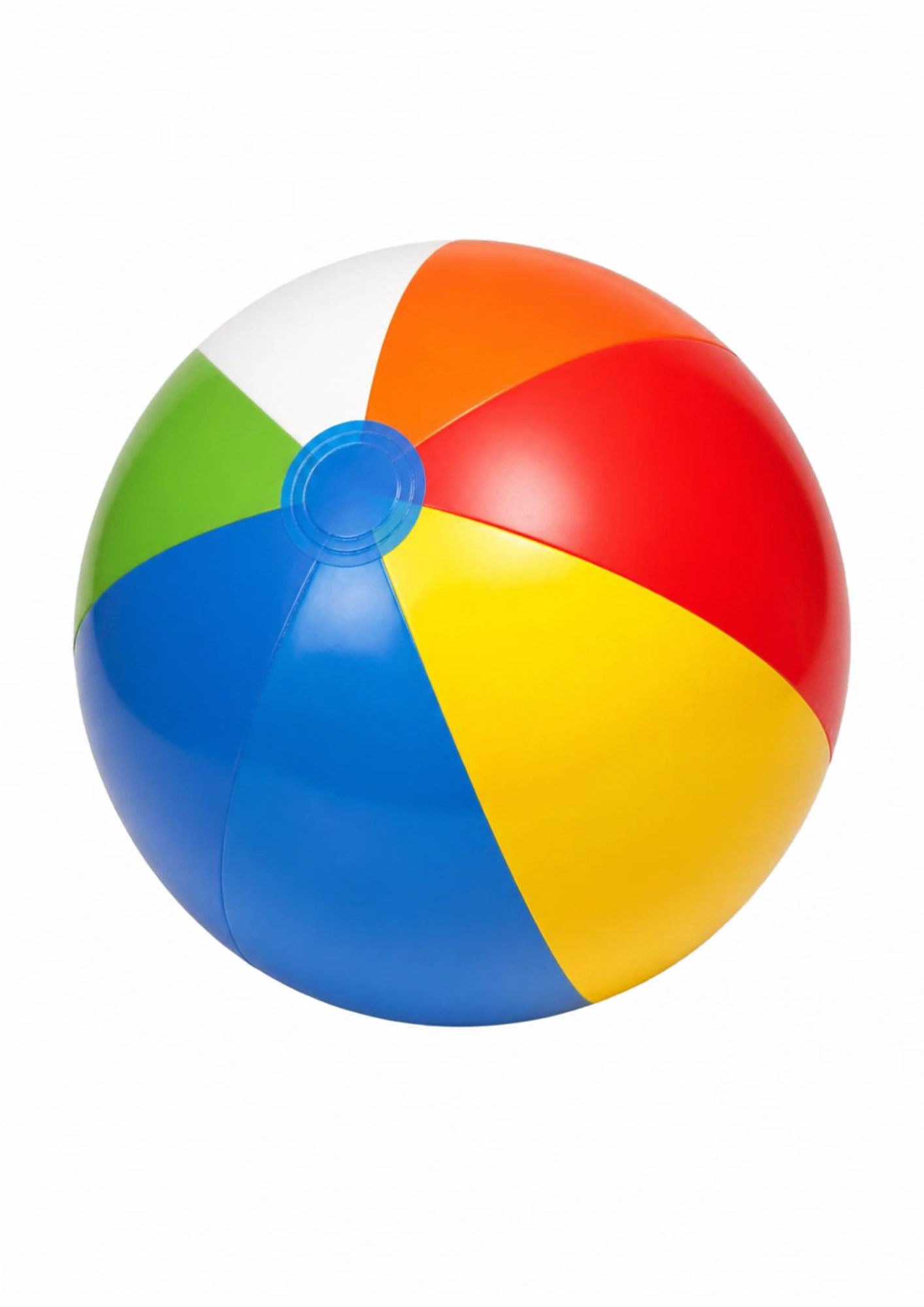
What is this?
A ball is a round toy that rolls, bounces and falls — and at 6–9 months your baby is deep in a research programme about exactly those properties. The card gives the portrait; your floor supplies the laboratory.
What does it mean?
Dropping things off the high chair is not mischief at this age — it is physics: what happens when I let go? Naming the ball through all its experiments gives the science a vocabulary. The word travels with the object through every fall and retrieval.
What does the child need to know?
Roll the ball towards your baby and name it as it moves — action words love moving objects. Then let your baby’s own version happen: the push, the drop, the tumble off the tray. Each one gets the same calm word, and the game becomes vocabulary practice wearing mischief’s clothes.
Why this matters
Balls teach the physical world’s first big rules — things move, things fall, things come back. A baby with the word ball can carry those rules in their head: name it, drop it, watch it, name it again. Language turns play into knowledge you can keep.
What it teaches
Object permanence in action (the ball exists even under the chair), cause-and-effect experimentation, tracking in two directions, and action-naming — words attached to movement rather than stillness.
Words to learn
ballrolldroppushgoneback again
Say this to your child
““Ball! Watch it roll — all the way to you. And back it goes. Push it! There it goes — and stop. Dropped it? Ball goes down, down... and here I come to fetch it. Round things love to travel. Ball is the word for all of it.””
Step by step
- Settle your baby and show the card: “Ball! Round, bright, and always up to something.”
- Roll a real ball slowly towards them, saying “ball” as it moves, and let their hands stop it.
- Roll it back the other way — tracking both directions is a new skill this stage — and name it again, once.
- If your baby pushes or drops the ball, narrate the fall warmly: “ball — gone! ... there it is.” No scolding; the physics is the point.
- Close with the card again, and let the ball live where your baby can find it for the rest of the day.
Look closer at the picture
The artwork is a bright, bouncy ball — say that much. The live noticing: which ball event collects the most attention — the roll towards, the roll away, or the drop? Your baby’s preference is a window into what their brain is currently solving for.
Ask your child
Watch the experiments: does your baby push the ball deliberately, with eyes on its path? Do they look to you after the drop — checking whether you saw? Wonder aloud: “I wonder if you dropped it to see me fetch it. I suspect you did, you little scientist.”
What your child can say or do
A two-handed push with total focus, head-tracking the roll in both directions, the classic tray-drop with immediate eye-contact to you, or delighted squeals at the return — every version is an experiment, and your narration is the lab report.
Out in the real world
Balls fill the months ahead: the soft one in the cot, the big one at baby group, every ball that ever rolls under the sofa. Each one runs the same curriculum — and by toddlerhood, your child will supply the word themselves, in the middle of the game.
Try it together
Under-the-blanket ball: roll the ball behind a cushion, pause, then bring it back with “there it is!” This is object permanence — gone is not gone — staged with the exact object your baby most suspects of magic.
Understanding check
Parent self-check: did the ball roll in both directions today, and did the drops get words instead of sighs? Accepting the drop as curriculum is the hardest part of this lesson and the most important — physics does not negotiate.
Parent tips
Keep the ball big enough to defeat swallowing and light enough to fail at hurting. If your baby is in a drop-everything phase, this card is your best friend: the phase is not a bug, it is the lesson running at full speed.
Staying safe
Ball choice follows the fist rule — bigger than theirs, no seams splitting, no foam crumbs. High-chair play stays supervised and strapped; the game is dropping the ball, never diving after it.
This lesson pairs with the Ball flashcard in the library — print it, show it, keep it on the fridge. Back to Animals & Everyday Objects (Baby 1).