

Spoon — a step-by-step lesson for grown-up and child
No other card gets so many live performances — meals run several times a day, and the spoon always stars. This lesson adds the newest trick: the handover.
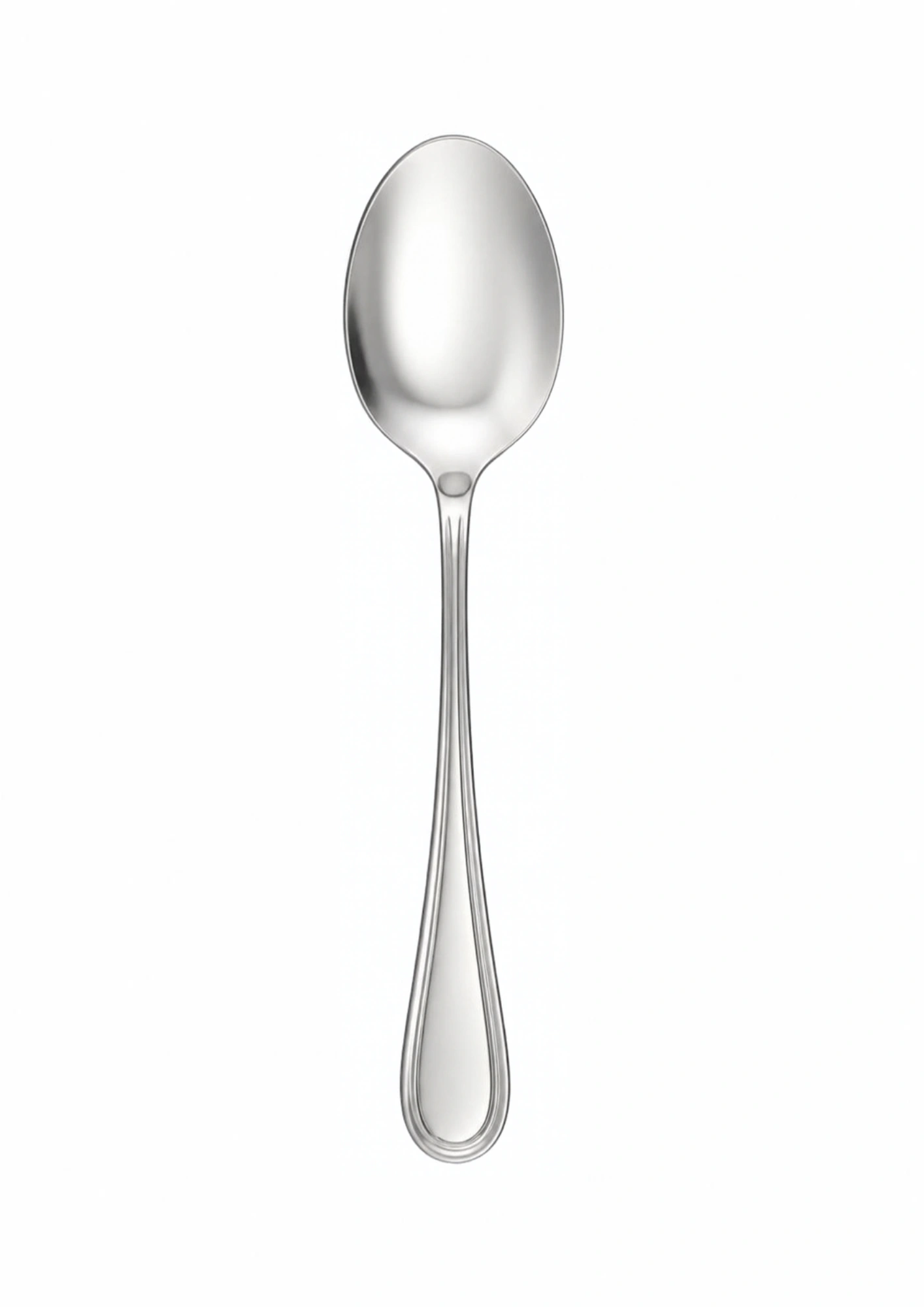
What is this?
A spoon is the mealtime scoop your baby has watched working since their first week. At 6–9 months their hands have caught up with their interest: they can grab, hold and wave the real thing. The card names the tool; the handover makes it theirs.
What does it mean?
The grab is understanding in action: a baby who snatches the spoon as it is offered has linked the word, the object and their own power to take it. Language plus motor skill arriving at the same moment — that is what this stage is for.
What does the child need to know?
The handover is the lesson: at mealtime, offer the spoon handle-first into your baby’s reaching hand and say the word as their fingers close. The card prepares the name; the meal supplies the grab. Say it once — the taking is loud enough on its own.
Why this matters
Meals give this word a stage several times a day, which no other card can match. And the spoon is destined to matter: in the coming months it becomes your baby’s own tool, and every self-fed bite will rest on the word-and-grasp partnership built here.
What it teaches
Reaching and grasping on request, tool recognition, hand-to-mouth journeys (self-feeding’s first drafts), and word-action pairing at real events.
Words to learn
spoongrabholdscoopmoreall done
Say this to your child
““Spoon! Here is the picture spoon, long and shiny. And here — take it! This is your very own spoon, handle first. Grab, hold, wave — that is exactly right. The spoon brings the food, and now it knows your hands. Best tool in the kitchen.””
Step by step
- Show the card at viewing distance: “Spoon! The busiest word in the kitchen.”
- Trace the bowl and the handle — this is a tool, and tools have parts worth knowing.
- At the next meal, offer a real spoon handle-first into your baby’s reach, saying “spoon” as they take it.
- Let the spoon be theirs for a minute — waved, gummed, bashed on the tray — then reclaim it calmly for the eating it came to do.
- Repeat the handover daily; within weeks the reach will start before the word finishes.
Look closer at the picture
The artwork is a shiny spoon, simple and clear — say that much. The live noticing: does the reach come before the word finishes, or after? Timing the reach against the word, week by week, is watching anticipation turn into understanding.
Ask your child
Watch the taking: does your baby’s grip aim for the handle or the bowl? Do they wave it or head straight for the mouth? Wonder aloud: “I wonder if you think the spoon is yours now. I have news for you — eventually it will be.”
What your child can say or do
A swift two-hand snatch, triumphant spoon-waving, gumming the handle with total commitment, or the spoon banged on the tray like a tiny drum — all of it is tool-familiarity, and every grab is your baby voting for self-feeding months early.
Out in the real world
Spoon moments happen at every meal: yours, theirs, the serving spoon, the little weaning set. With grabbing now online, each meal can carry one handover — the most-repeated lesson in the whole collection, served daily with lunch.
Try it together
Spoon ferry: hand the spoon over, open your palm, and let your baby give it back; then hand it over again. Three or four crossings. The ferry game builds voluntary release — harder than grabbing, and the social glue of every exchange to come.
Understanding check
Parent self-check: did the handover happen at a real meal today, and did the word land exactly on the grab? Precision beats frequency here — one perfectly-timed word teaches more than twenty that miss the moment.
Parent tips
If your baby grabs for the card instead, let the card be held too — then bring the real spoon in as the upgrade. Do not fight the gumming; the mouth is this age’s second pair of hands, and the spoon survives it.
Staying safe
The handed-over spoon is the baby’s own — soft-tipped, unbreakable, sized for small fists. Hot or loaded spoons stay with you; the handover happens with the clean starter spoon, before the messy course begins.
This lesson pairs with the Spoon flashcard in the library — print it, show it, keep it on the fridge. Back to Animals & Everyday Objects (Baby 1).