

Cup — a step-by-step lesson for grown-up and child
Your baby has met this word before, in the Infant sets — and meeting it again is not repetition but reinforcement: the spine of a first vocabulary is built from returns. This time, there is a new twist: hands.
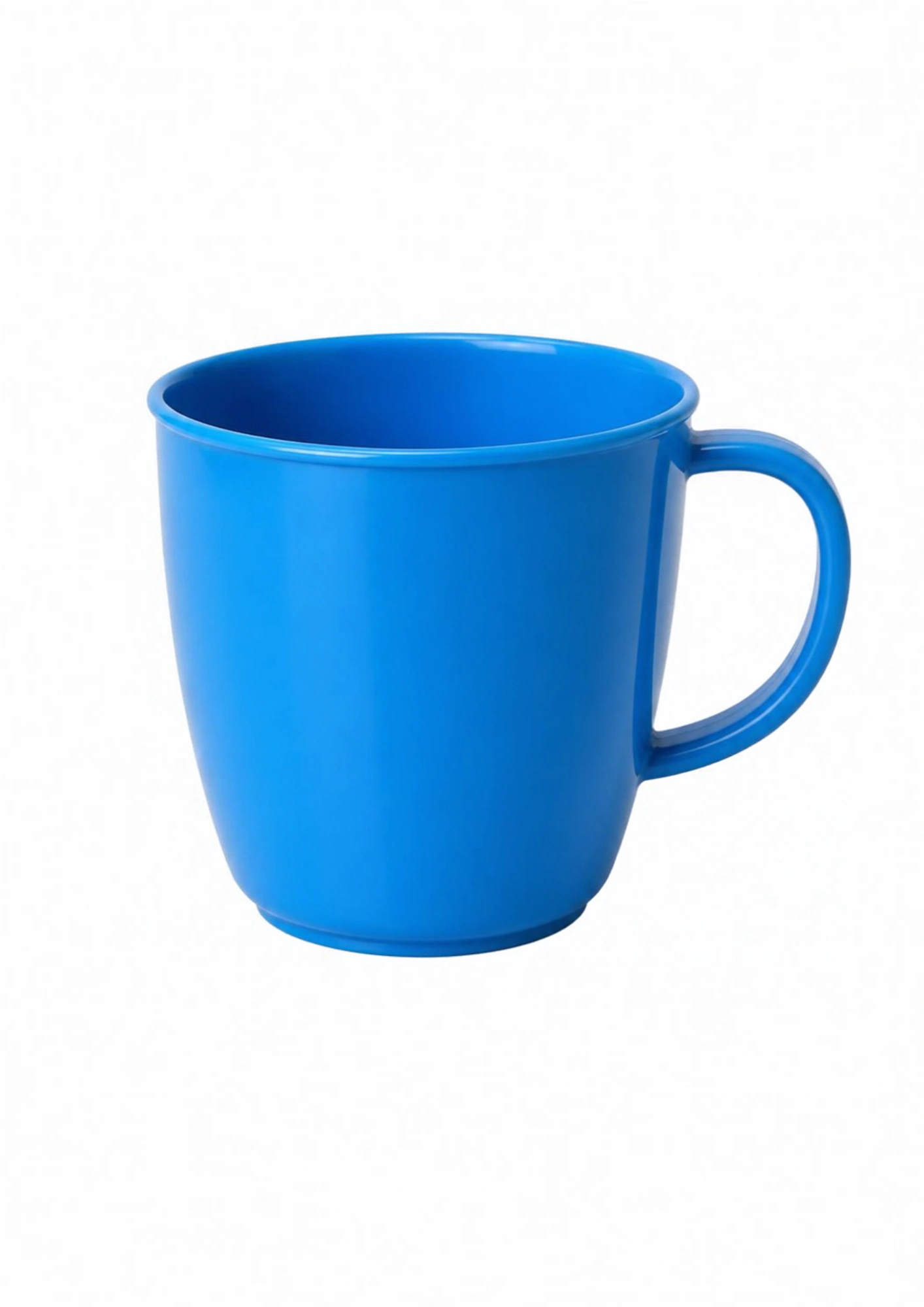
What is this?
A cup is the everyday drinking vessel your baby has seen at every feed of their life. In the earlier sets it was a word to hear; now, at 6–9 months, it is an object to hold — and holding changes what the word can mean.
What does it mean?
Memory works by returns: each re-meeting of a word in a new set, at a new ability level, deepens it. The grip is the new ingredient — your baby can now grasp the real cup themselves, which turns cup from a watched thing into a handled one.
What does the child need to know?
The upgrade is in the hands: during the card moment, put a real baby cup into your baby’s grip and say the word as they hold it. Holding and naming go together now. The word has not changed — your baby has, and the card is here to prove it.
Why this matters
Repeated words across sets are the architecture of vocabulary, not a flaw in the plan: cup heard at 3 months, held at 7 months, drunk from at 12 — each stage files the word deeper. This lesson is the holding instalment of a word your child will use for life.
What it teaches
Grasp-and-hold coordination, word-object mapping through touch, two-handed handling, and the satisfaction of holding the very thing the card shows.
Words to learn
cupholdgriptwo handsdrinkmine
Say this to your child
““Cup! Here is the picture cup. And now — here is a real one, just for your hands. Hold it! Feel how it goes — one hand, two hands, up and down. You are holding your cup. The same word as the picture, right there in your fingers.””
Step by step
- Show the card at viewing distance: “Cup! You know this one — you have known it for ages.”
- Trace the cup’s shape, then tap the card twice — old friends get a warm greeting.
- Fetch a real baby cup — light, clean, cool — and hold it out towards your baby’s hands.
- As their grip lands, say “cup” once. Let them hold it as long as they like: turning it, chewing the handle, banging it gently.
- End with the card and a summary line — “you held your cup!” — then let the real cup join ordinary playtime, where it belongs.
Look closer at the picture
The picture is a plain everyday cup, drawn simply and clearly. Once a real cup is in your baby’s hands, watch the handling science begin: swapping from hand to hand, banging, investigating the handle with their mouth. Every one of those experiments is exactly right for this stage — and the word cup goes with each attempt.
Ask your child
Watch the grip: is the hold steady now, or still tetchy? Does your baby look from the real cup to the card, checking that they match? Wonder aloud: “I wonder if holding it makes the word bigger in your head. It should — that is how this works.”
What your child can say or do
A firm two-handed grip, hand-switching practice, a proud bang on the tray, or the cup raised vaguely towards the mouth — drinking is months away from masterful, but the aimed lift is the milestone, and the word is riding on it.
Out in the real world
Cups keep appearing all day: at meals, in the bath, in other people’s hands. With holding now in your baby’s skill set, every sighting can become a holding attempt — which is exactly the trajectory this card is feeding.
Try it together
Pass-it-back: hand your baby the cup, hold out your palm, and let them give it back — then again. Giving and taking is the social side of handling, and it rehearses the turn-taking that all conversation, someday, will run on.
Understanding check
Parent self-check: did the real cup actually get held today, and did the word arrive at the moment of the grip? Timing is everything here — the word must land on the holding, not float near it.
Parent tips
If your baby would rather bang than hold, that is holding too, at this age — banging is handling with rhythm. Do not chase drinking skills; the cup-card lesson is about the word and the grip, and both are already working.
Staying safe
The holding cup is a baby cup: unbreakable, cool, empty or with water only — never hot, never full to the brim, never the sharp-edged family china. Chewing the handle is expected; check the cup for bite-marks before its next shift.
This lesson pairs with the Cup flashcard in the library — print it, show it, keep it on the fridge. Back to Animals & Everyday Objects (Baby 1).