
Look, then try.
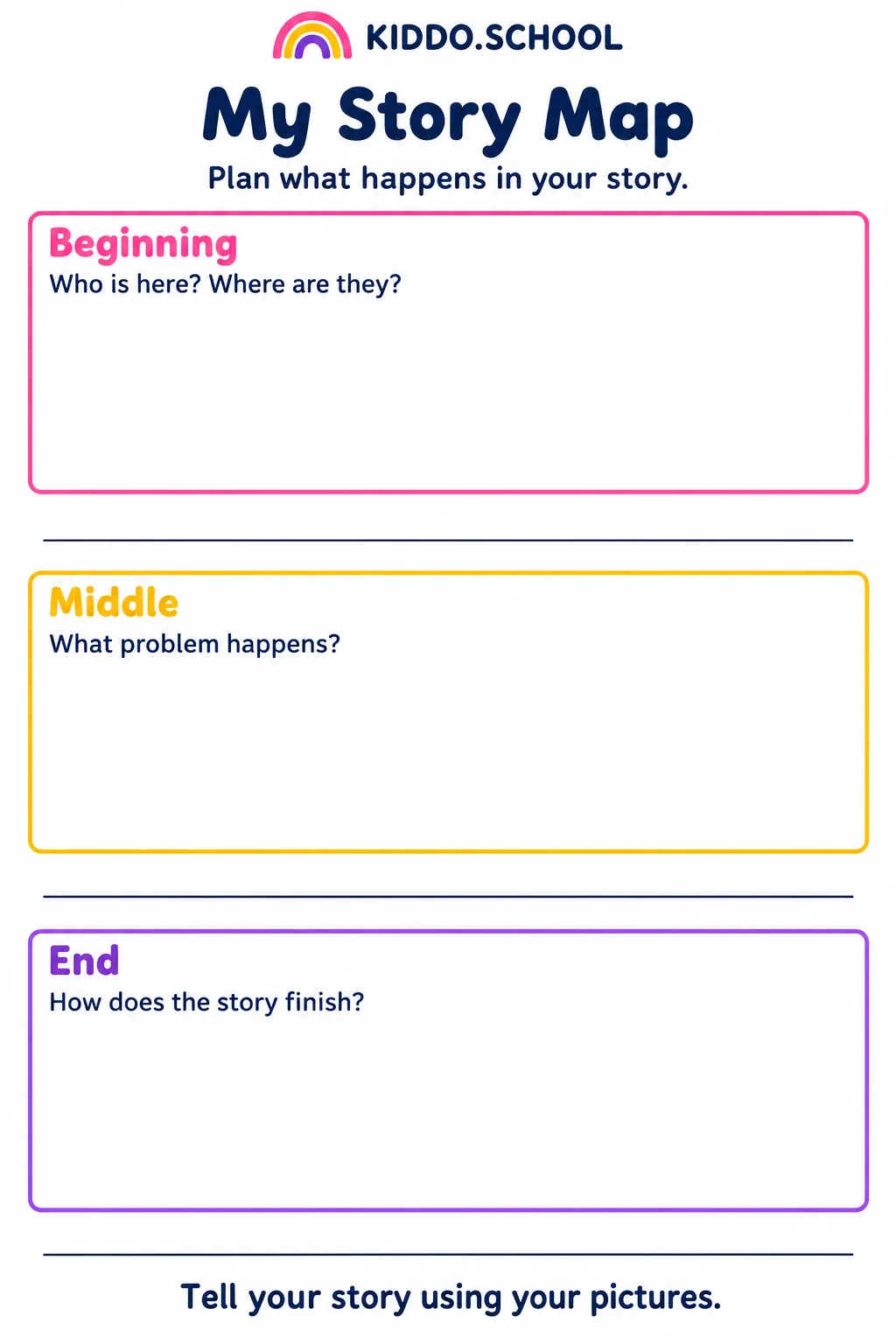
In the beginning, introduce the character and place. In the middle, show a problem and what the character tries. At the end, show what happens after their actions. Tell the story aloud and check that each part connects to the next.
An adult helps cut character cards. Keep small paper scraps away from younger children. You can draw, type or ask a grown-up to write your words.
Use a finger, stylus or mouse in each drawing box. Type below it, or ask a grown-up to write your words. Your work stays in this tab. Save before refreshing or leaving.
Beginning
Draw who is here and where the story starts.
Middle
Draw the problem and what the character does.
End
Draw how the story finishes.
Your ideas belong here. There is no score.
What are we learning?
Sequencing and cause-and-effect help a story make sense. An ending can show a change, a discovery or a solved problem.
Prefer a worksheet?
Open the individual cartoon activity sheet to print or save. Use portrait orientation and fit to page.
Open worksheet to save ↓Try another story activity.
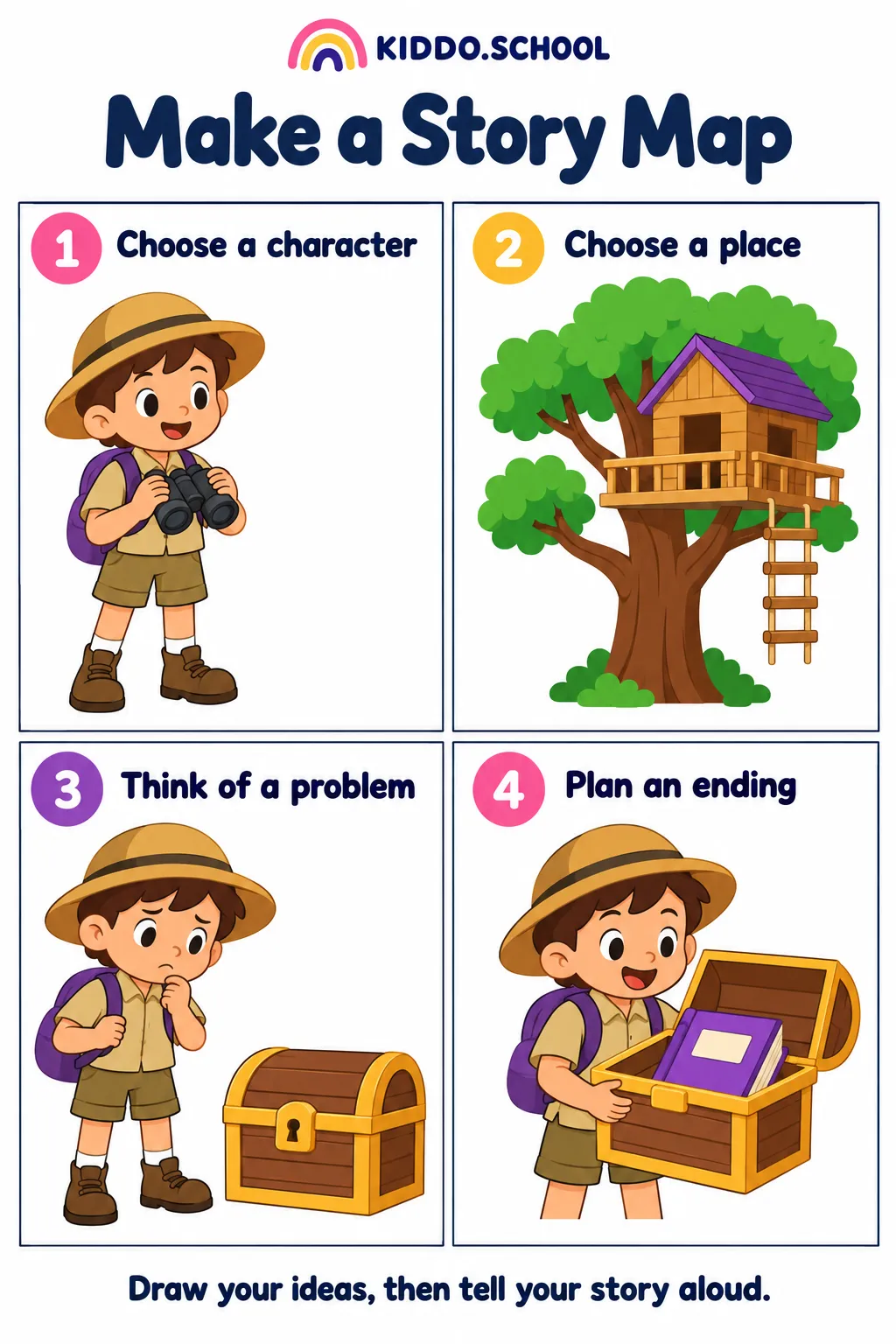 Make a Story Map
Choose a character, imagine a place and plan a story with pictures.
Draw · Type · Save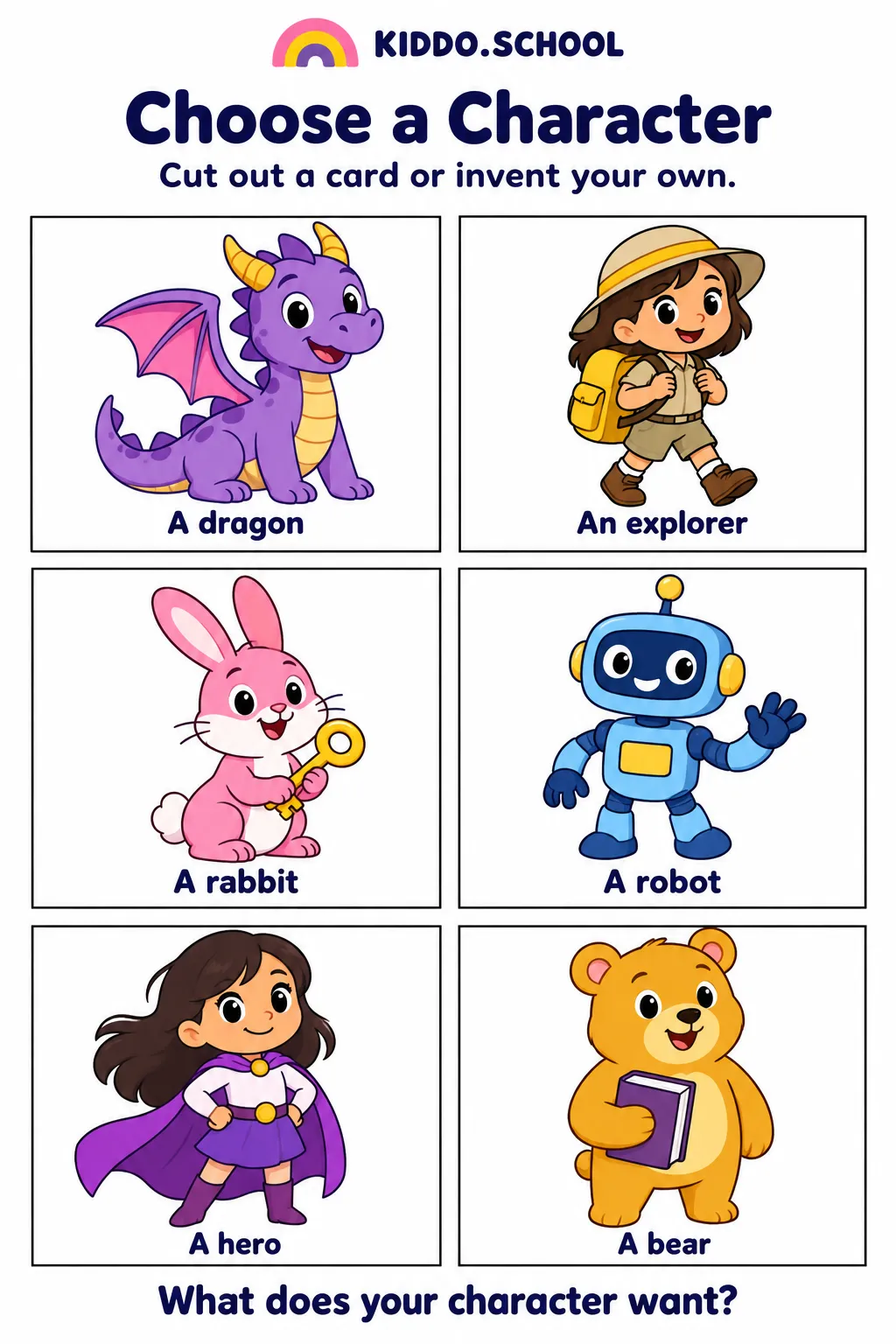 Choose a Story Character
Meet six picture characters or invent someone completely new.
Draw · Type · Save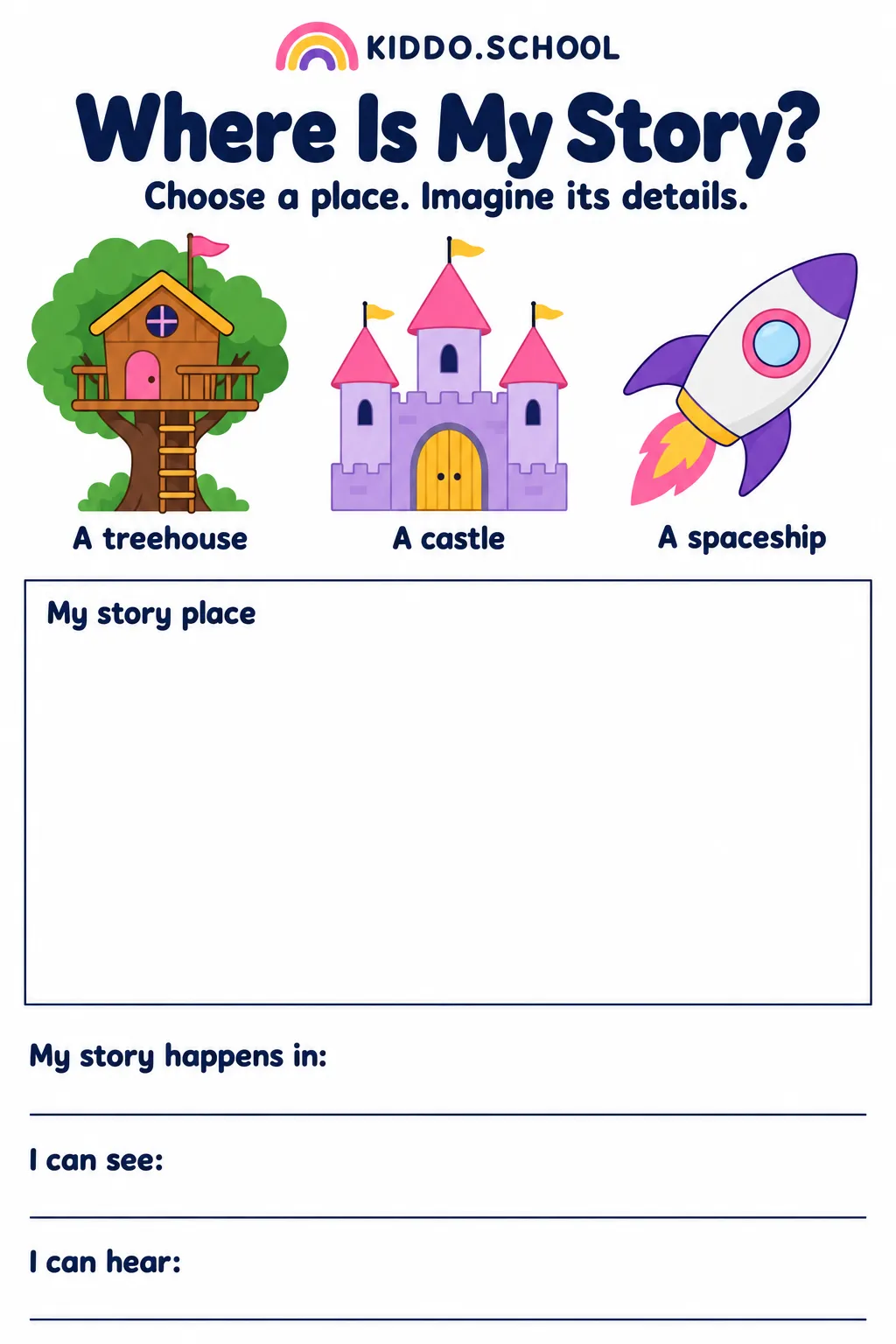 Where Is My Story?
Imagine a place and choose details that help someone picture it.
Draw · Type · Save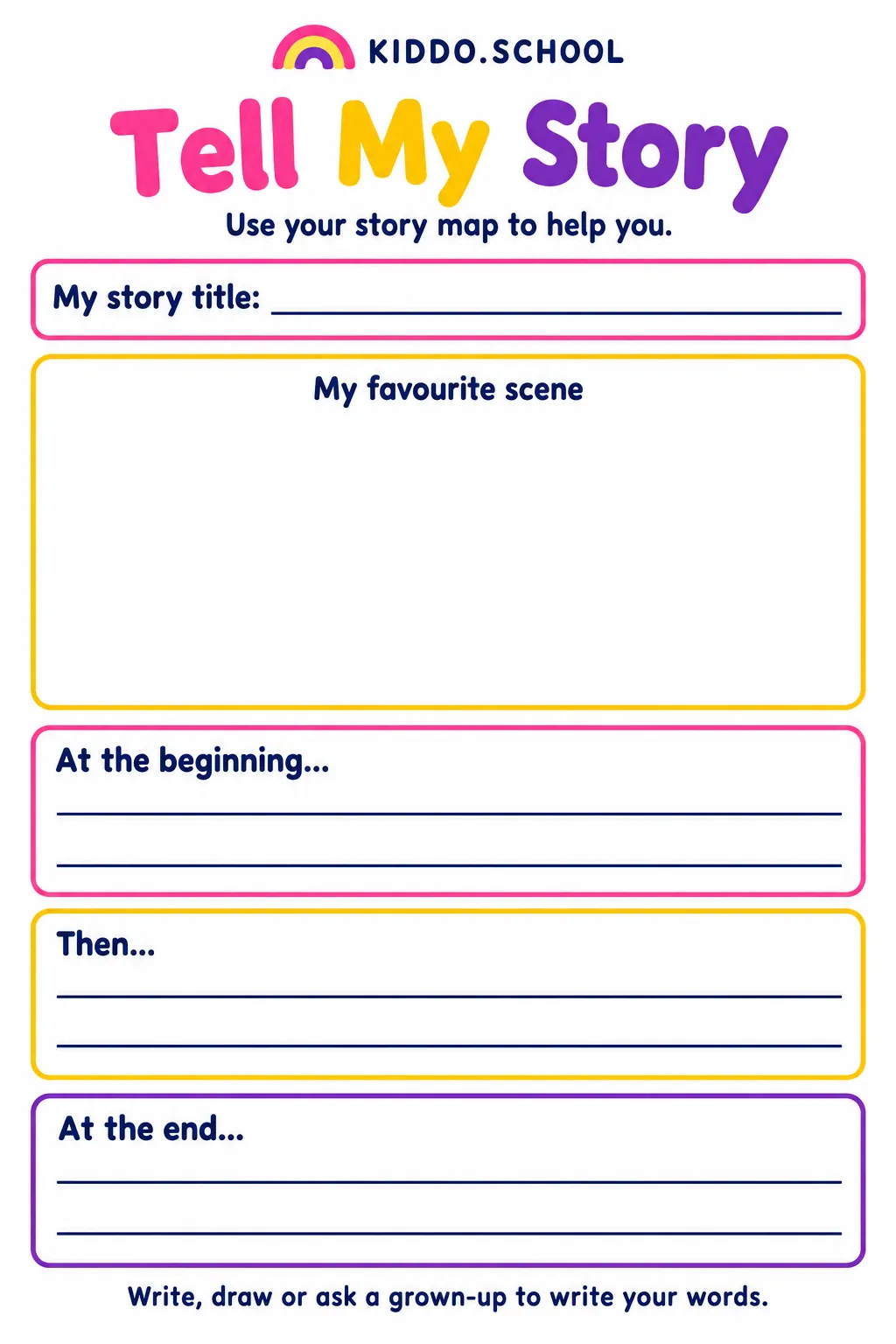 Tell My Story
Turn your picture plan into a story in your own words.
Draw · Type · Save