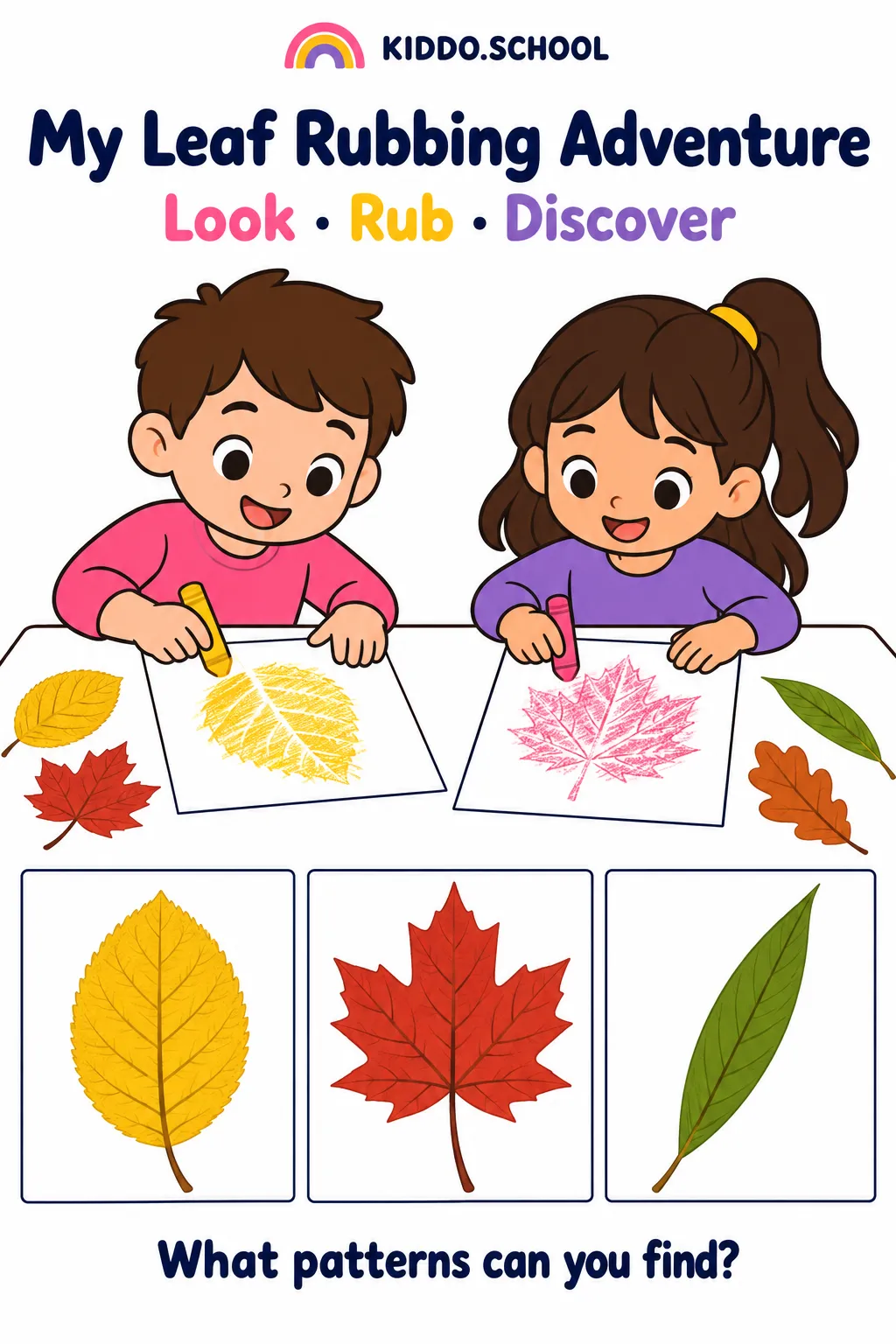
Make a leaf rubbing.
Lay a leaf down. Rub. Watch the magic appear.
Every leaf hides a pattern of veins and edges. With thick crayons and plain paper, children can lift that pattern into view, compare leaves side by side and turn their rubbings into creatures and big pictures. The five Leaf Studio pages below turn each step into a draw-and-save activity.
Five little leaf activities.
Draw, type and save your work on separate activity pages.
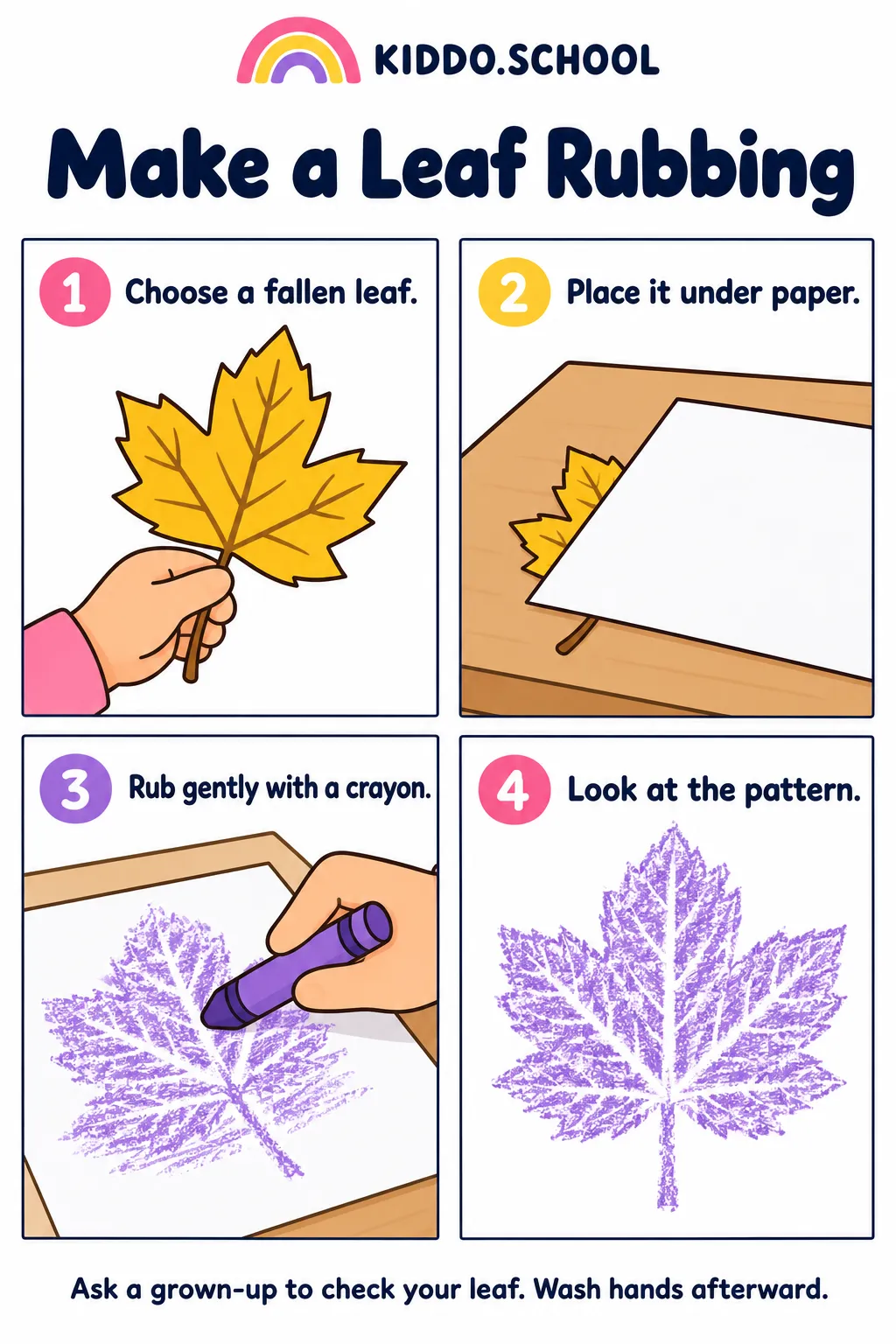 How to Make a Leaf Rubbing
Lay a leaf down, rub gently and watch its pattern appear.
Draw · Type · Save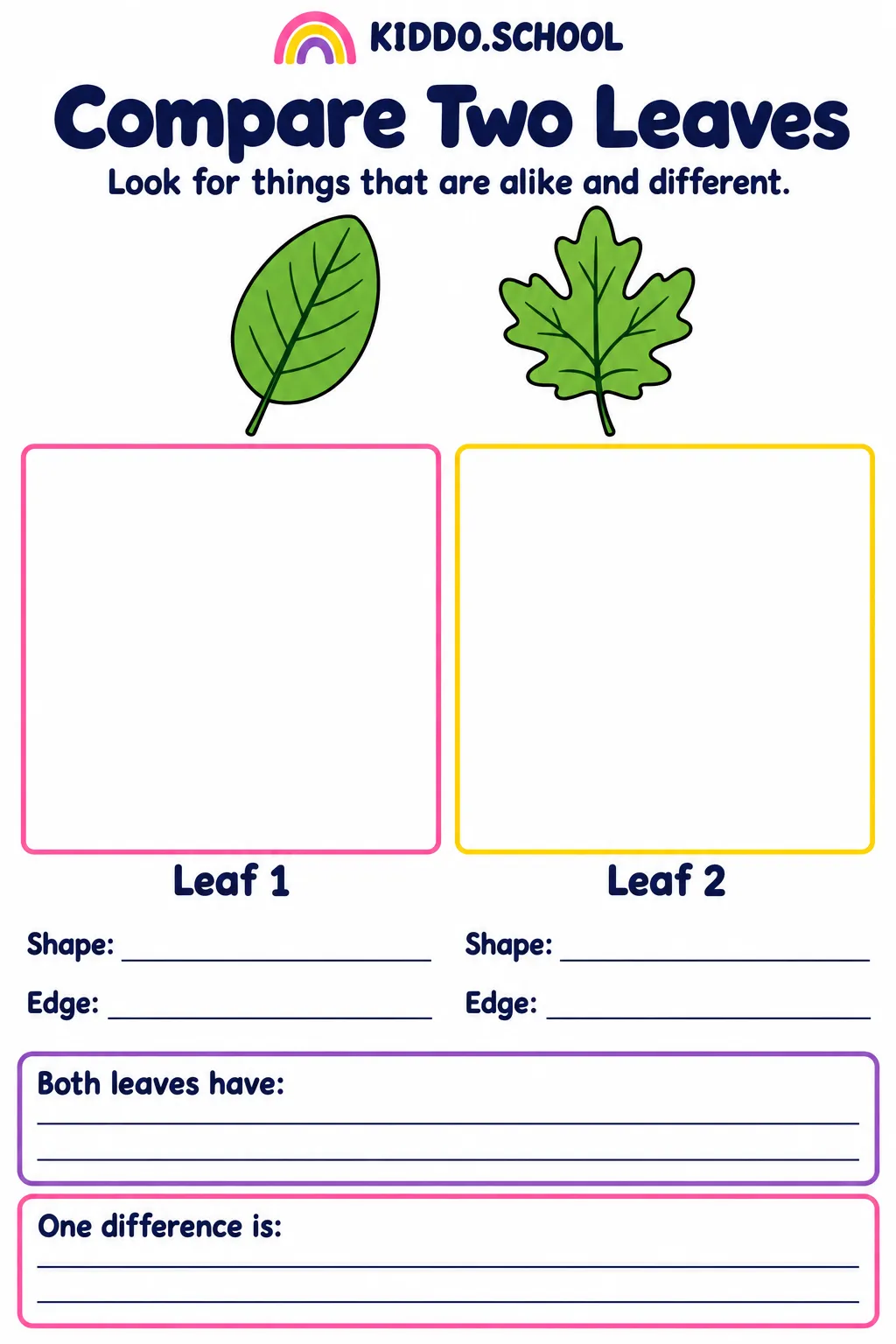 Compare Two Leaves
Put two leaves side by side. What is the same? What is different?
Draw · Type · Save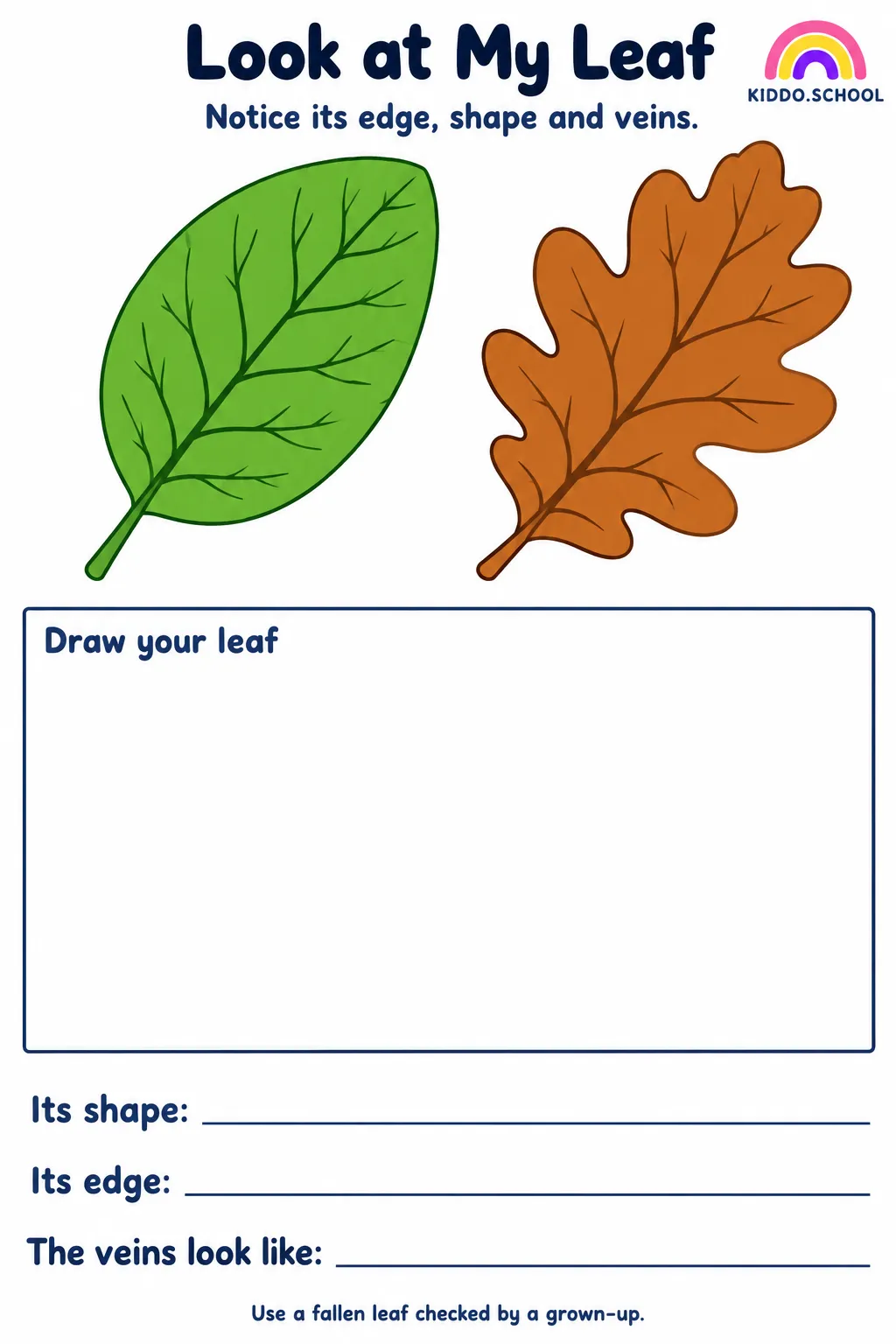 Look Closely at My Leaf
Become a leaf detective: the tip, the edge, the veins and the stem.
Draw · Type · Save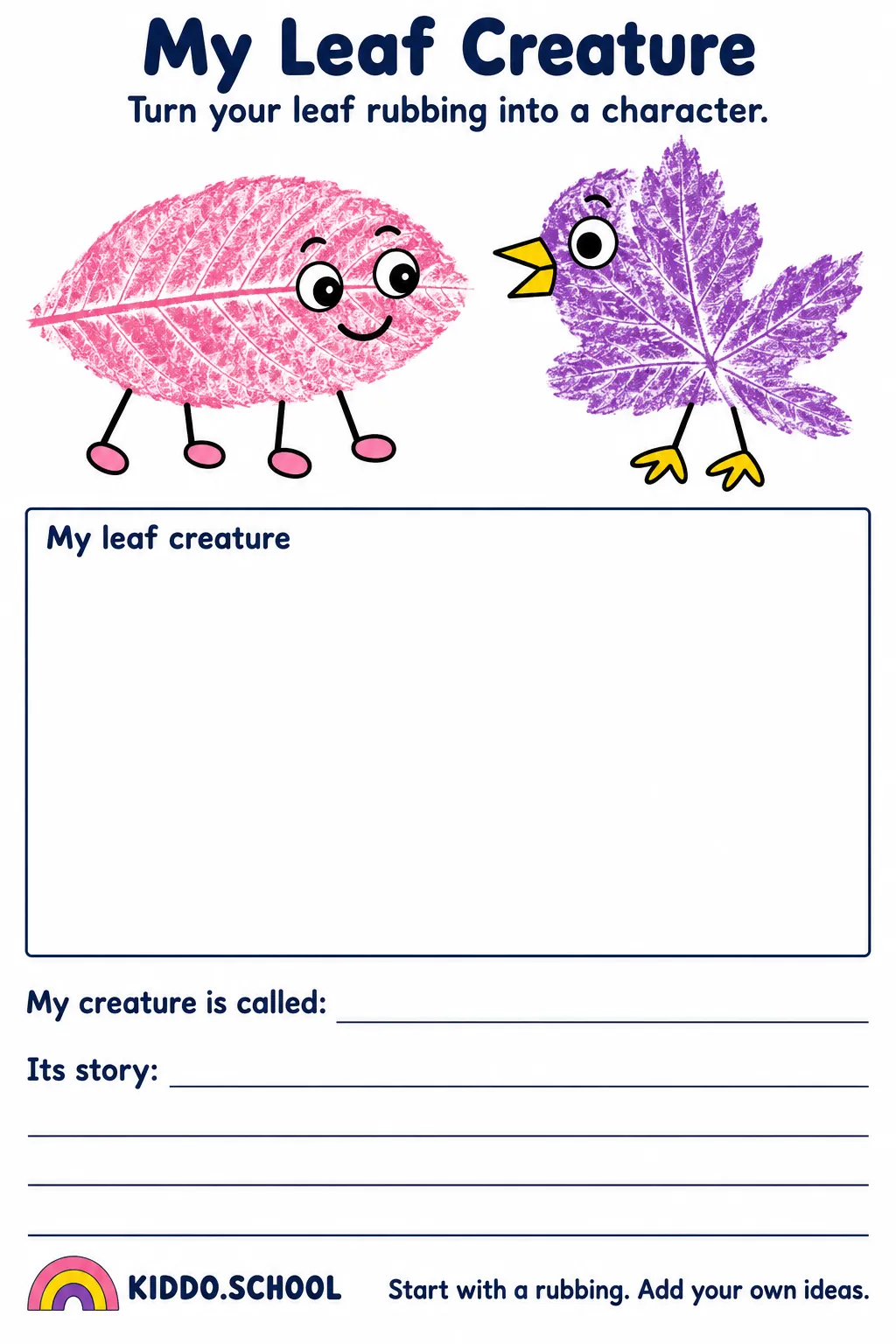 Make a Leaf Creature
Turn your rubbings into wings, scales, fur or feathers.
Draw · Type · Save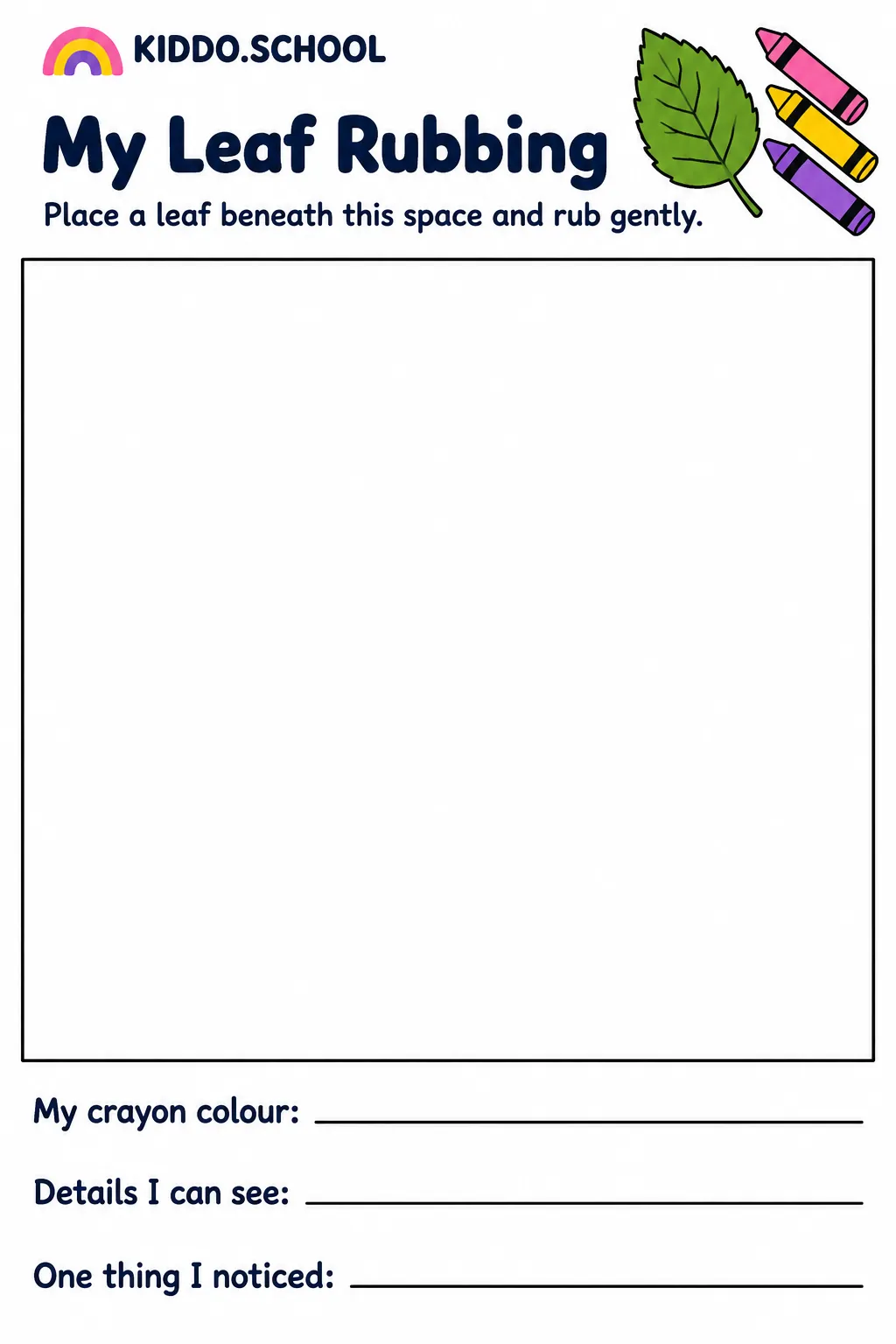 My Leaf Rubbing Art
Finish with one big picture made from every rubbing you have made.
Draw · Type · SaveLet's make it happen.
Go on a leaf hunt
Collect five or six fallen leaves in different shapes and sizes. Brush or wipe them clean and let them dry flat.
Set up your rubbing station
Lay one leaf vein-side up on the table, cover it with a thin sheet of paper and hold it still.
Make the rubbing appear
Peel the paper off a thick crayon, lay it on its side and rub gently across the paper. The leaf appears like magic.
Try pressures and colours
Rub the same leaf lightly, then harder. Try two colours on one leaf and talk about which version you like best.
Compare your leaves
Make a rubbing of two different leaves on one sheet. Look closely: what is the same and what is different?
Turn rubbings into art
Cut out your favourite rubbings and arrange them into a leaf creature or one big picture. Glue, then add details.
What's happening here?
A rubbing captures texture rather than shape alone: the veins, edges and bumps that make every leaf different. Noticing those details builds observation skills, and controlling crayon pressure builds steady hands.
Keep the wondering going.
- Which leaf made the darkest rubbing?
- What happens if you turn the leaf over before you rub?
- Can you find a leaf with teeth on its edge?
Make it work for you.
Keep it simple
Choose big, strong leaves with deep veins, such as sycamore or maple. Place your hand over your child's hand and rub together, naming the leaf parts as they appear.
Take it further
Sort your rubbings into a classification chart by edge shape or vein pattern, then label each group. Try hatching two colours across one leaf and predict the blended result.
Not quite going to plan?
If the rubbing looks patchy, the leaf has probably slipped. Tape the leaf to the table under the paper, or hold it steady with two fingers while you rub.
My leaf rubbing book
Draw your favourite rubbing, compare two leaves, then design a leaf creature.
Image · prints on A4 or Letter using “fit to page”. Plain paper works just as well.
Download the sheet Open image to print ↗You may print and use this original activity sheet at home or in your classroom. Please link to the activity page when sharing it online.