

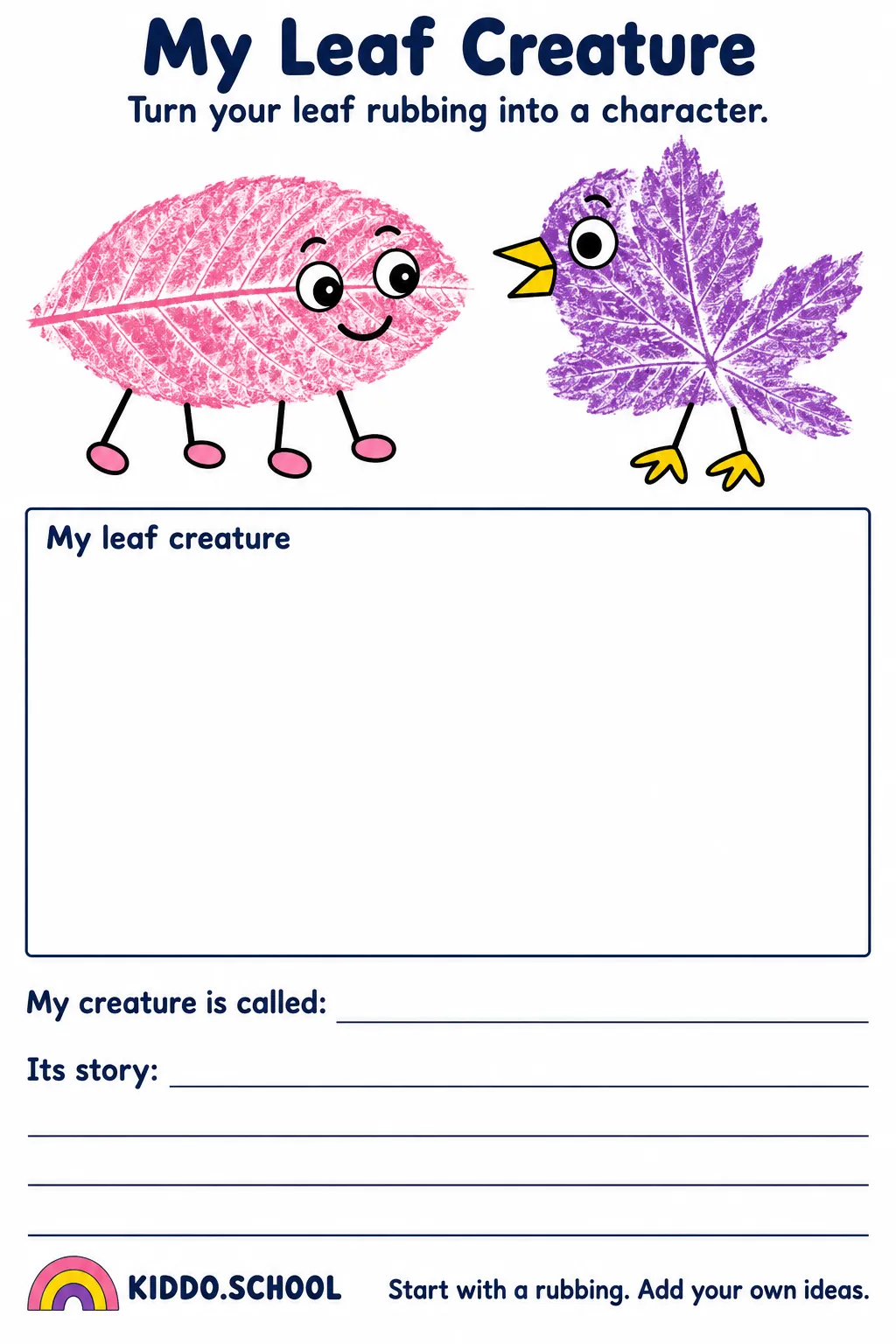
Look, then try.
Look at your rubbings and squint: a jagged rubbing might be a dragon's spiky back, a round one an owl's body, a long skinny one a cat's tail. Ask a grown-up to help cut out your favourite rubbings with safety scissors. Arrange the pieces on a fresh sheet without gluing first, moving them around until your creature appears. Then glue it down and add eyes, legs or a home with crayons. Your creature can be real or impossible: a leaf lion, a leaf spaceship, a leaf monster who loves salad.
An adult helps with scissors when cutting out rubbings. Collect fallen leaves from the ground, or pick with permission, and brush off dirt and insects. Wash hands after handling leaves. Nothing you find outside goes in your mouth.
Use a finger, stylus or mouse in each drawing box. Type below it, or ask a grown-up to write your words. Your work stays in this tab. Save before refreshing or leaving.
Plan my creature
Draw your creature idea first. Which rubbing will be the body? The head? The tail?
Build it
Cut, arrange and glue your rubbings. Then draw the extra details with crayons.
Tell its story
Every creature has a story. What does yours eat? What does it do all day?
Your ideas belong here. There is no score.
What are we learning?
Cutting, arranging and combining shapes builds spatial thinking and fine motor control. Inventing a creature from textures also grows imagination and storytelling.
Prefer a worksheet?
Open the individual cartoon activity sheet to print or save. Use portrait orientation and fit to page.
Open worksheet to save ↓Try another leaf activity.
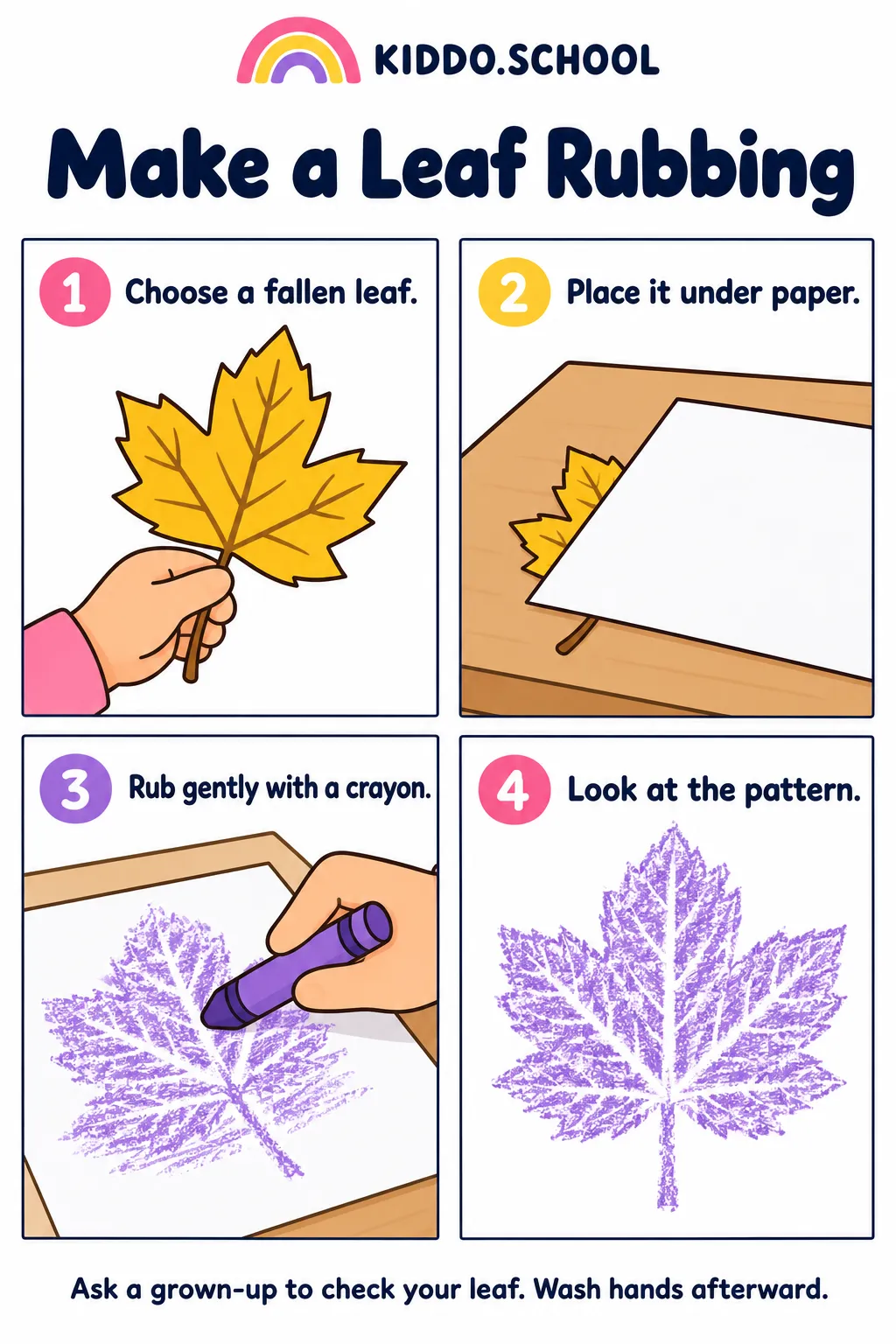 How to Make a Leaf Rubbing
Lay a leaf down, rub gently and watch its pattern appear.
Draw · Type · Save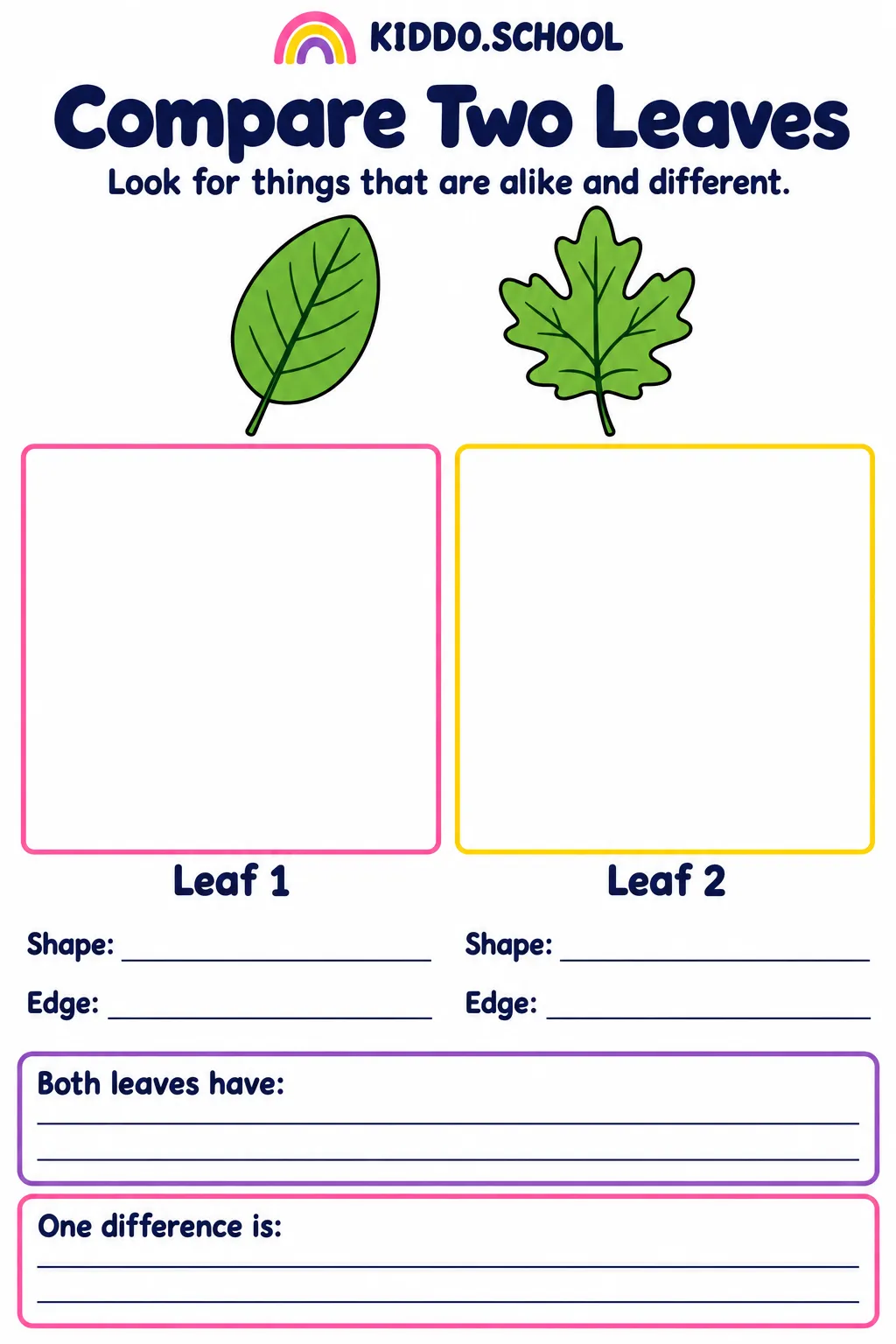 Compare Two Leaves
Put two leaves side by side. What is the same? What is different?
Draw · Type · Save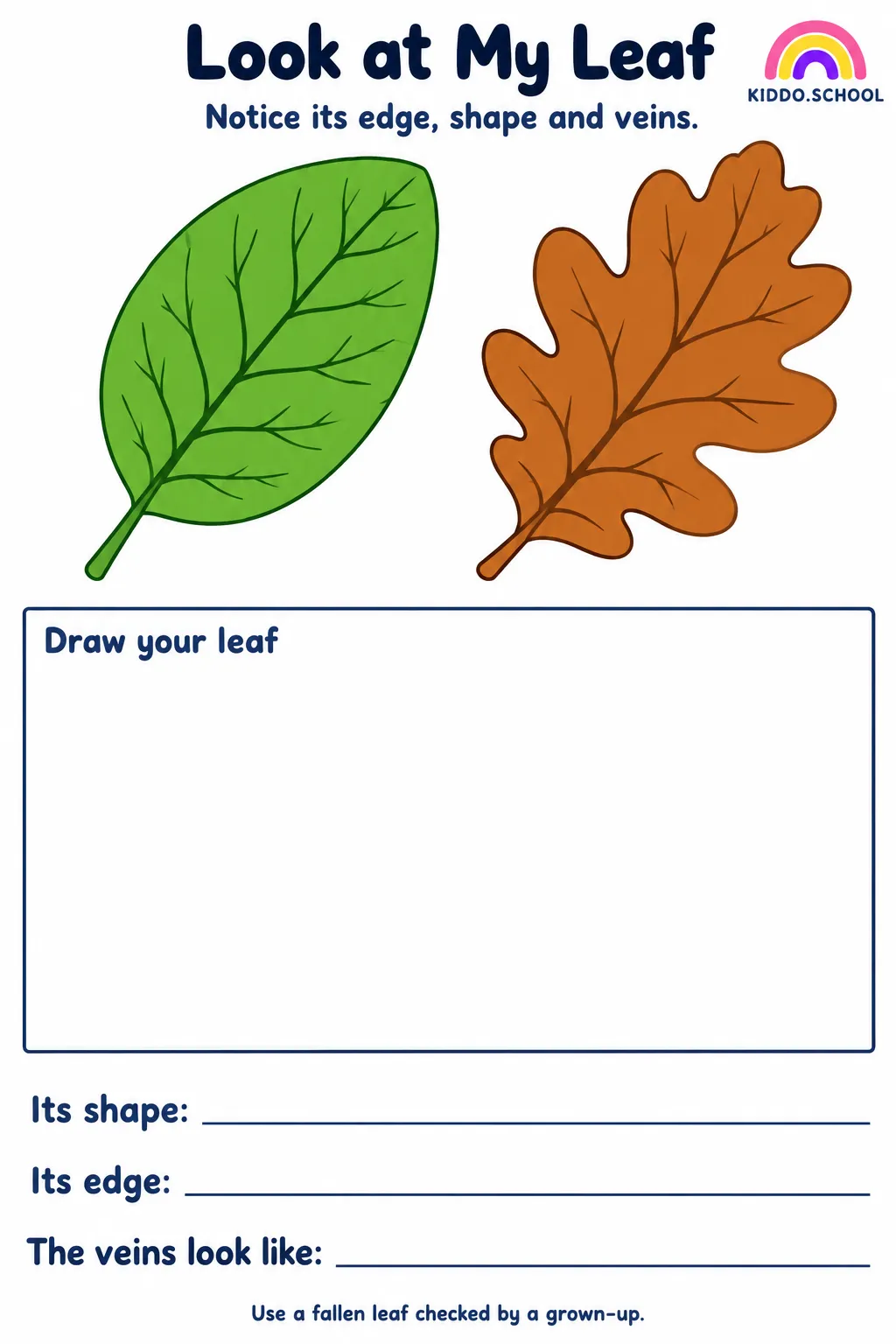 Look Closely at My Leaf
Become a leaf detective: the tip, the edge, the veins and the stem.
Draw · Type · Save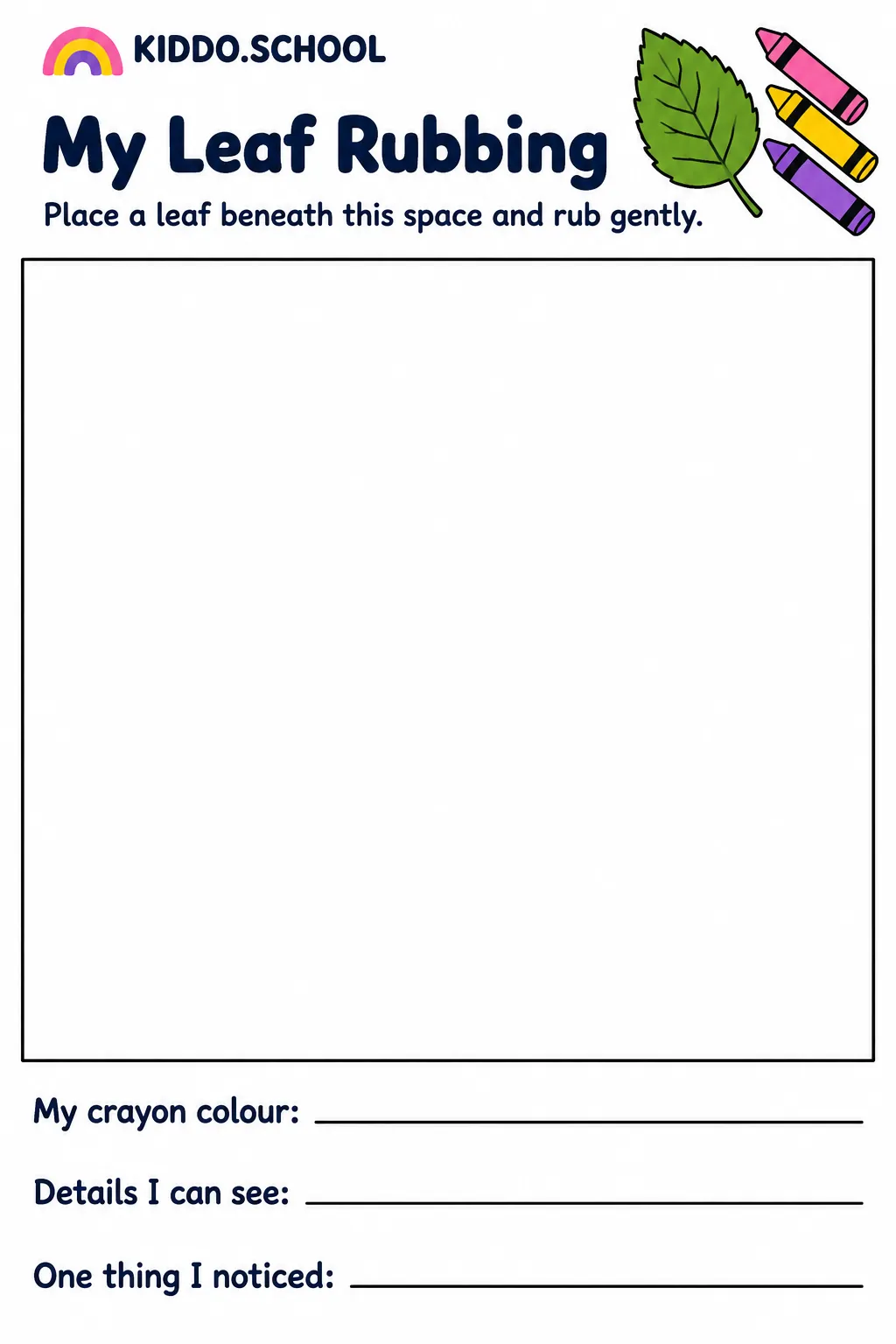 My Leaf Rubbing Art
Finish with one big picture made from every rubbing you have made.
Draw · Type · Save