
Chicken — a step-by-step lesson for grown-up and child
This lesson follows the busiest bird on the farm. Cluck is a small, busy sound — bok, bok, bok — and the hen on the card comes with two stories your child already eats: eggs at breakfast and the loudest alarm clock on the farm.
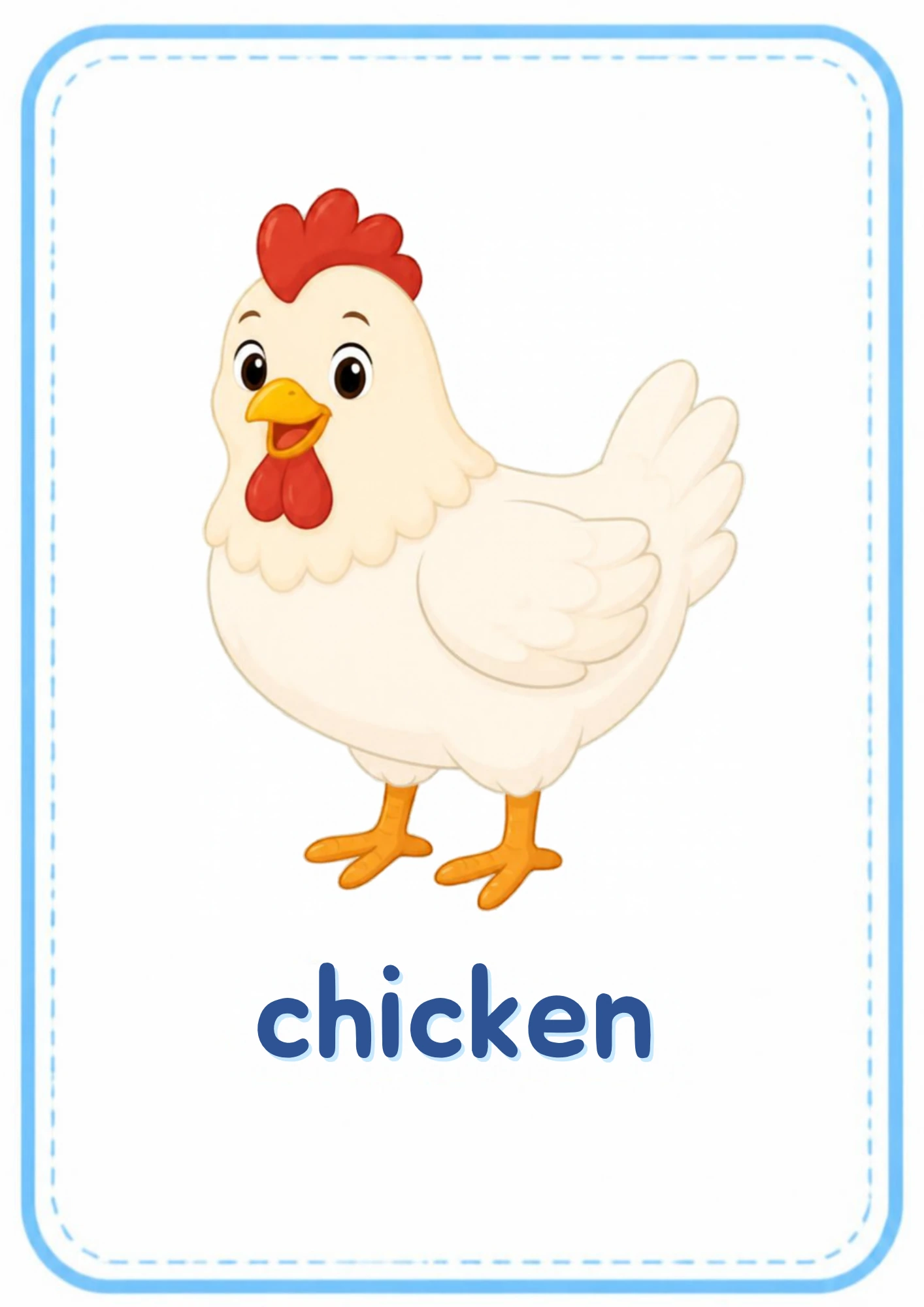
What is this?
A chicken is a farm bird that pecks at the ground all day, scratches for seeds and lays eggs. The card shows a hen — a grown-up chicken with a red comb on her head — and her busy chatter gets copied by people as cluck.
What does it mean?
Cluck is our copy of the hen’s busy sound. A hen clucks almost non-stop, chatting to keep her flock in touch the way families call from room to room. A rooster — the other kind of chicken — takes the loud morning shift instead: one enormous crow to start the day.
What does the child need to know?
Your child needs to know: the hen’s sound is written cluck in English, hens lay the eggs we eat, the red bit on her head is called a comb, and the rooster’s job is the dawn crow — cock-a-doodle-doo — while the hen does the all-day talking.
Why this matters
Cluck is the perfect busy-person sound: small, repeated, rhythmic. Copying it paces speech like a drum, and the egg story gives your child an answer to a question they have wondered about — where does breakfast come from? — since their first bite of scrambled egg.
What it teaches
Rhythmic repetition (bok-bok-bok as speech pacing), animal role vocabulary (hen, rooster, chick), the food story of eggs, fine head-movement control in the pecking game, and sorting sounds by who makes them.
Words to learn
chickenhencluckeggpeckcomb
Say this to your child
“"The hen says cluck! Cluck, cluck, bok bok bok — she talks all day long, busy busy! Hens lay the eggs we eat for breakfast. And the rooster? He saves one huge shout for the morning: COCK-A-DOODLE-DOO! Can you be the hen… and now the rooster?"”
Step by step
- Show the card and ask what the white bird says. Offer the real thing: cluck, cluck — bok, bok, bok — busy as a hen.
- Say the pair — the hen says cluck — and make it busy: small fast sounds, one after another, like tiny conversation.
- Look at the picture: this hen is white, with a red comb on her head. Point out the comb — every hen wears one, and no other farm bird does.
- Tell the egg story: hens lay eggs, eggs get collected each morning, and some of them become breakfast. An egg in the fridge is the exhibit A.
- Play the pecking game: quick head-nod pecks, one after another, while the clucking runs — then swap to the rooster for one giant cock-a-doodle-doo, hands as wings.
Look closer at the picture
Look at the picture together: what color is the hen? What sits on top of her head? What word is written with her? Does she look busy or sleepy?
Ask your child
"What does the hen say?" "What do we eat that hens give us?" "Who shouts in the morning — the hen or the rooster?" "Can you cluck and peck at the same time?"
What your child can say or do
Your child may cluck through every breakfast that features eggs, explain the comb to a puzzled grandparent, or deliver one room-shaking rooster crow at dawn — technically hours late for the job, artistically on target.
Out in the real world
Hens live at farms and city allotments alike, and eggs sit in nearly every fridge. The walk from hen to egg to breakfast plate is a food story short enough for a three-year-old to hold in one hand.
Try it together
The peck-and-cluck relay: scatter a few dry cereal pieces on a tray, and your child must move them one by one to a bowl — pecking with quick head-bobs, clucking all the while. It is fine-motor work, rhythm practice and chicken theatre, and the prize is the snack itself.
Understanding check
Ask: "What does the hen say? What do we eat that she lays? Who does the giant morning shout?" The busy cluck, the egg and one huge crow — that is the lesson landed.
Parent tips
Alternate hen-mode and rooster-mode on request — tiny busy sounds, then one giant one — because the contrast is the game and the volume control is the hidden lesson. A real egg carton makes the story tangible: shake it gently, name what laid it, cook it together.
Staying safe
Real hens at a farm get watched from the gate and touched only when the farmer says so — pecking is for pretend, and wash hands after any animal contact.
This lesson pairs with the Chicken flashcard in the library — print it, show it, keep it on the fridge. Back to Animals & Their Sounds.