
Cheeks — a step-by-step lesson for grown-up and child
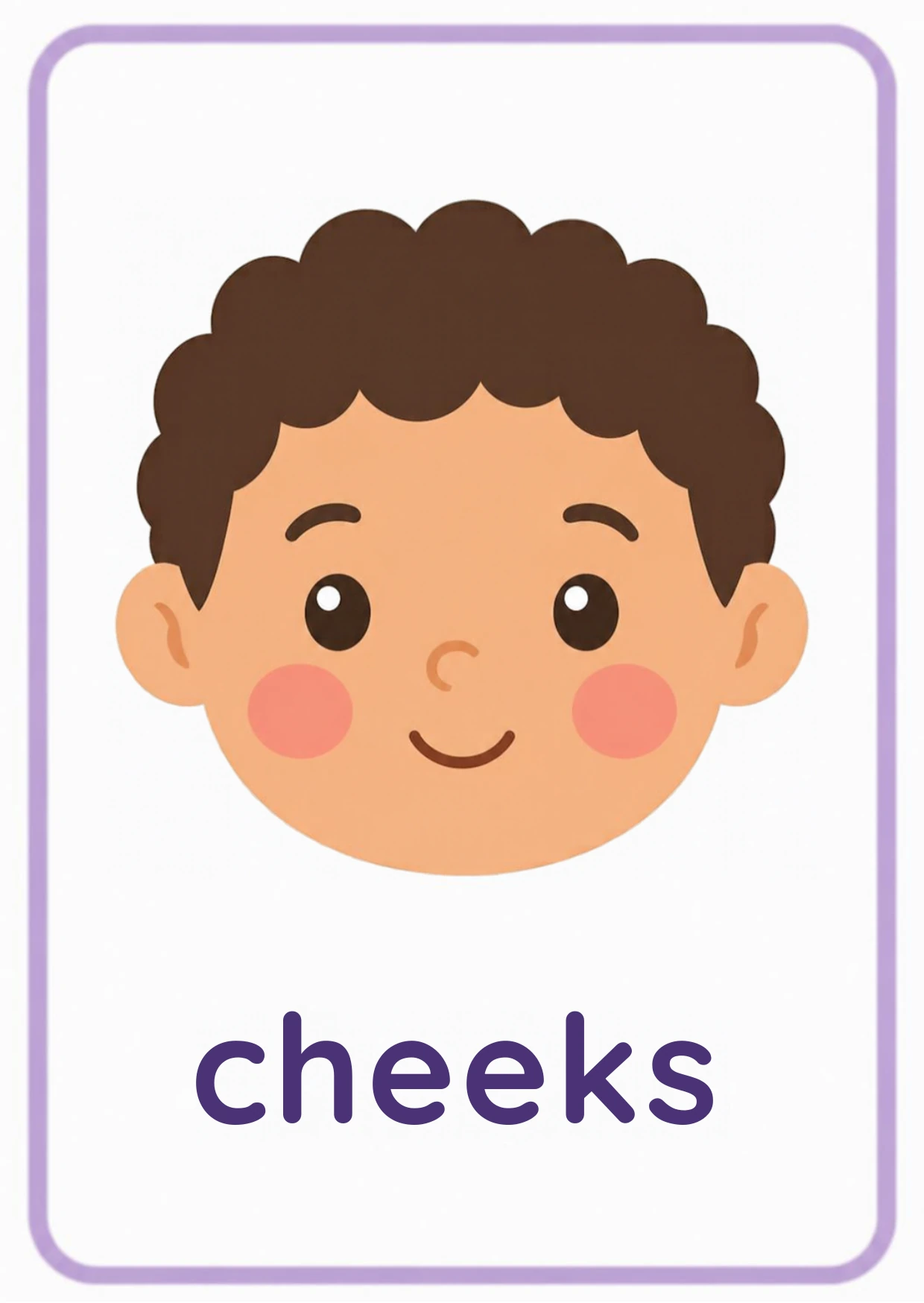
This lesson lands on the softest part of the face. Cheeks sit below the eyes and beside the smile; they puff, blush and hold kisses — and the card catches them at their best: rosy, round and grinning.
What is this?
The cheeks are the two soft round parts of the face, below the eyes and either side of the mouth. They puff out for blowing, lift high for a real smile, go rosy in the cold and hold still for kisses. Everyone has two, and no two pairs match.
What does it mean?
Cheeks are the face’s weather report and its mood ring: pink in the cold, flushed after running, puffed mid-bubble, dimpled mid-giggle. They are also the place people reach for first — a kiss lands there, a gentle pat calms there — which makes them the face’s comfort corner.
What does the child need to know?
Your child needs to know: cheeks are the soft parts either side of the smile, they puff like balloons for blowing, they show pink in cold weather and after running, and gentle pats and kisses land on them. Cheeks get gentle hands: no pinching, no squeezing.
Why this matters
Cheek words carry feelings — rosy, puffed, dimpled — and cold-weather talk: hat on, cheeks pink. Naming them gives your child the vocabulary for how a face shows what it feels, and the pat-pat game doubles as a calm-down trick that works on wobbly days.
What it teaches
Face-map vocabulary below the eyes, descriptive feeling-words (rosy, puffed, dimpled), oral-motor play through cheek puffing, gentle-touch practice, and the soothing ritual of the calm pat.
Words to learn
cheeksrosypuffpatsmilepink
Say this to your child
“"These are your cheeks — one here, one here, soft as pillows! They puff up like balloons — pfff — they go pink in the cold, they lift up when you smile, and they catch kisses. Pat them gently, pat-pat. Can you puff them up big? Now let the air out — pbbbbfft!"”
Step by step
- Show the card and find the cheeks: two soft rounds, one on each side of the smile. Then find your child’s — count them: one, two.
- Pat gently, both of you: pat-pat, like a tiny drum on dough. Gentle is the rule — cheeks are for soft pats, not pinches.
- Play the balloon game: puff both cheeks up full, then let the air out with a pbbbbfft. Try holding the puff while the other counts — three seconds is the record attempt.
- Test the weather report: puff and blow — cheeks working. Pretend to shiver — cheeks going pink. Big smile — cheeks lifting high. The face talks with its cheeks.
- Finish with the landing: where do grandma kisses arrive? On the cheeks! One kiss, one pat, and the cheeks are officially the family’s comfort corner.
Look closer at the picture
Look at the picture together: is the face smiling? What color are the cheeks — rosy? How many cheeks can you count? What word sits with the picture? Can you puff your own like balloons?
Ask your child
"Where are your cheeks — show me both!" "What do cheeks do when we blow? When we smile?" "What color do cheeks go in the cold?" "Who lands kisses on your cheeks?"
What your child can say or do
Your child may patrol the family for cheek-patting rights — gently, gently — puff on demand and deflate with full sound effects, or report the weather on every face: pink cheeks, cold day, hat needed.
Out in the real world
Cheeks report all day: rosy after the slide, pink at the bus stop, puffed over a bowl of bubble mix, lifted at the door when you come home. Name the report — your cheeks say you had fun — and the face gains a weather channel.
Try it together
The cheek orchestra: everyone puffs at the count of three, holds for two, and deflates on the conductor’s signal — louder, longer, higher on request. Then the slow movement: gentle pat-pat on your own cheeks, softer and softer until the hands rest. It is breath control disguised as a brass section.
Understanding check
Ask: "Where are the cheeks? What do they do when we blow? How do we touch them — gently or pinchy?" The pair, the puff and the gentle answer — that is the lesson landed.
Parent tips
The slow pat-pat is a real calming tool on wobbly days — softer, slower, quieter until the storm passes; children borrow the calm from the rhythm. And let blowing practice live here too: puffed cheeks are the first step toward candles, whistles and bubbles.
Staying safe
Cheeks are for gentle: no pinching, no squeezing, no grabbing faces, however cute the moment — the rule is said kindly and often. Cold, windy days chap little cheeks, so hats, scarves and a dab of cream do the guarding, and very sore or swollen cheeks get a grown-up’s check.
This lesson pairs with the Cheeks flashcard in the library — print it, show it, keep it on the fridge. Back to Body Parts & Five Senses Flashcards.