
Eyes — a step-by-step lesson for grown-up and child
This lesson meets the busiest pair on the whole body. Your child’s eyes have been working since before birth — watching, finding, reading the world — and now they get their name, their games and their care rules.
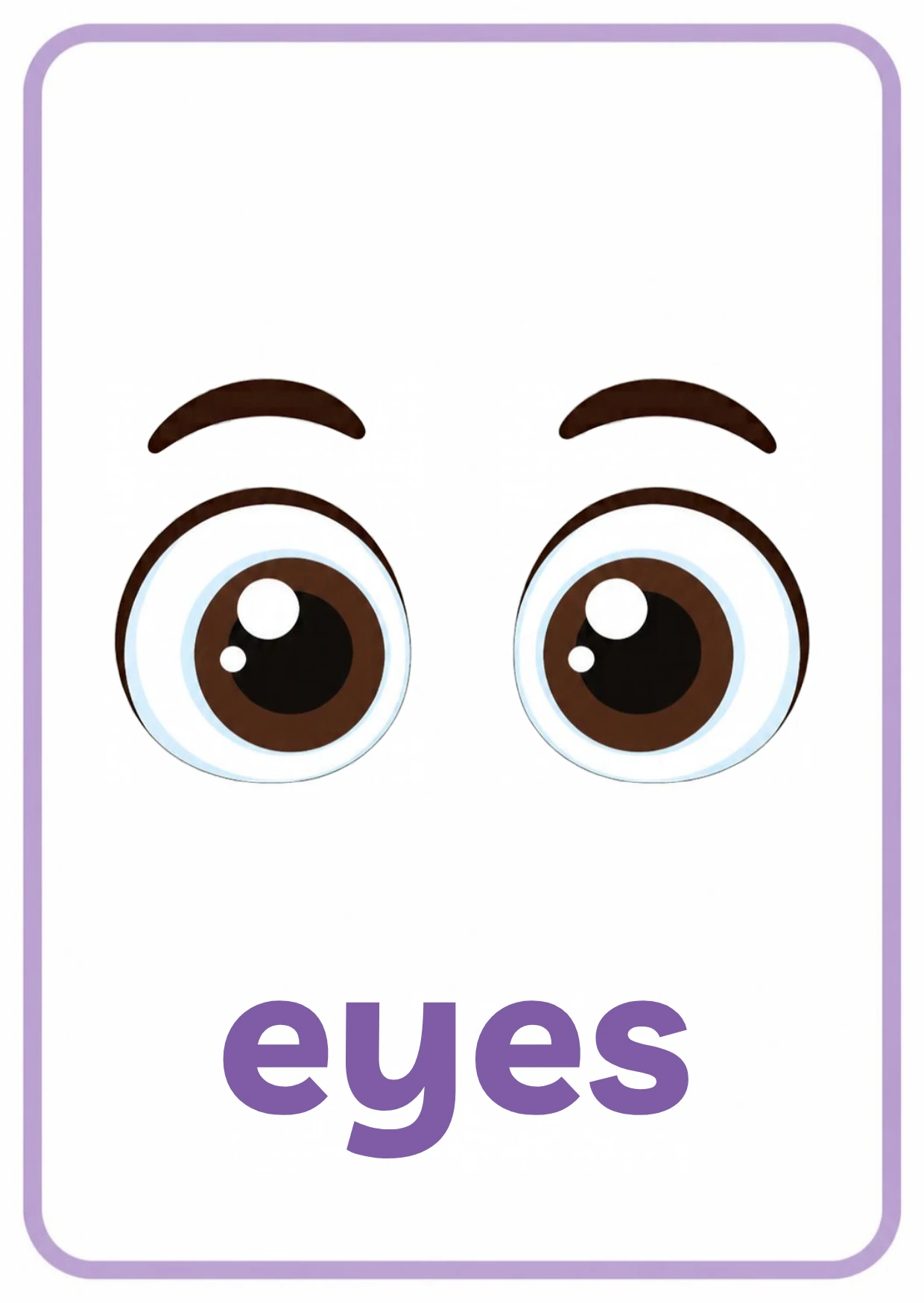
What is this?
Eyes are the two seeing parts of the body, sitting side by side in the face. They take in light and turn it into pictures inside your head — the dog in the garden, the page in the book, the face across the table. They work in a team: both eyes look at the same thing at once.
What does it mean?
Seeing feels effortless, which is exactly why it hides its own magic: light comes in, and pictures get made. The eyes also guard themselves — blinking spreads a tiny wash of tears that keeps them clean and comfortable, hundreds of times a day without anyone deciding to.
What does the child need to know?
Your child needs to know: eyes are for seeing, they come as a pair and work together, they blink all by themselves to stay wet and clean, and they are precious — no poking, no rubbing when hands are dirty, and no looking straight at the sun, ever.
Why this matters
The eyes carry most of the information a preschooler learns from — books, faces, puzzles, the world. A child who knows their eyes by name can also know their needs: it is too bright, I need to blink, my eyes are tired — the first steps of self-care for sight.
What it teaches
Body-part vocabulary, the seeing sense as a named ability, teamwork awareness (two eyes, one picture), self-protection habits, and observation games that train focus and visual attention.
Words to learn
eyesseeblinklookpairbright
Say this to your child
“"These are your eyes — one, two, a pair! They see the dog, the book, my face, everything. And they blink all by themselves, wash, blink, all day long, to keep themselves clean. Eyes are precious: gentle hands, no rubbing, and never looking at the sun. Deal?"”
Step by step
- Show the card and count the eyes together: one, two — a pair. Ask what they do, then name it: they see.
- Find your child’s eyes in a mirror: point to each one, then blink together. The blink is automatic — point out that nobody decides to do it.
- Play the staring contest: who can keep both eyes open the longest without giggling? Then flip it — who can blink the fastest, five blinks in a row?
- Prove the teamwork: hold one finger in front of your child’s nose and watch both eyes swing to meet it. Two eyes, one job.
- Set the care rules gently: eyes get clean hands around them, no poking, and never a look at the sun. Eyes are precious, and precious things get care.
Look closer at the picture
Look at the picture together: how many eyes are in the picture? What color are they? What word sits above them? Are they open or closed?
Ask your child
"What do your eyes do?" "Why do we blink — who decided that?" "What did your eyes see first thing this morning?" "What do we never look at, even for a second?"
What your child can say or do
Your child may announce blink counts at breakfast, catch their own reflection and name both eyes, or warn a teddy solemnly about the sun — the seeing pair, named and defended.
Out in the real world
Eyes work everywhere: spotting the bus, finding the missing shoe, following a ladybug across a leaf, choosing the reddest apple. Name what the eyes found — "your eyes spotted it!" — and the pair gets credit for a full day of work.
Try it together
Eye-spy points: take turns being the caller — "something red!" "something round!" "something high up!" — and the finder must point with their eyes before their finger. It is visual search practice, colour review and turn-taking in one fast game.
Understanding check
Ask: "What do your eyes do? How many are there? Why do they blink?" The seeing, the pair and the self-washing answer — that is the lesson landed.
Parent tips
Do the finger-to-nose teamwork demo once with your own eyes too — feeling your own eyes swing is surprisingly delightful for adults. And treat the sun rule as absolute, not negotiable: eyes and sunshine meet through hats, shade and sunglasses only.
Staying safe
Eyes are delicate: dirty hands stay away from them, no poking or prodding, and looking straight at the sun — even briefly, even through clouds — can damage sight for life. Bright days get hats and shade; anything that lands in an eye gets a grown-up and clean water, fast.
This lesson pairs with the Eyes flashcard in the library — print it, show it, keep it on the fridge. Back to Body Parts & Five Senses Flashcards.