
Touch — a step-by-step lesson for grown-up and child
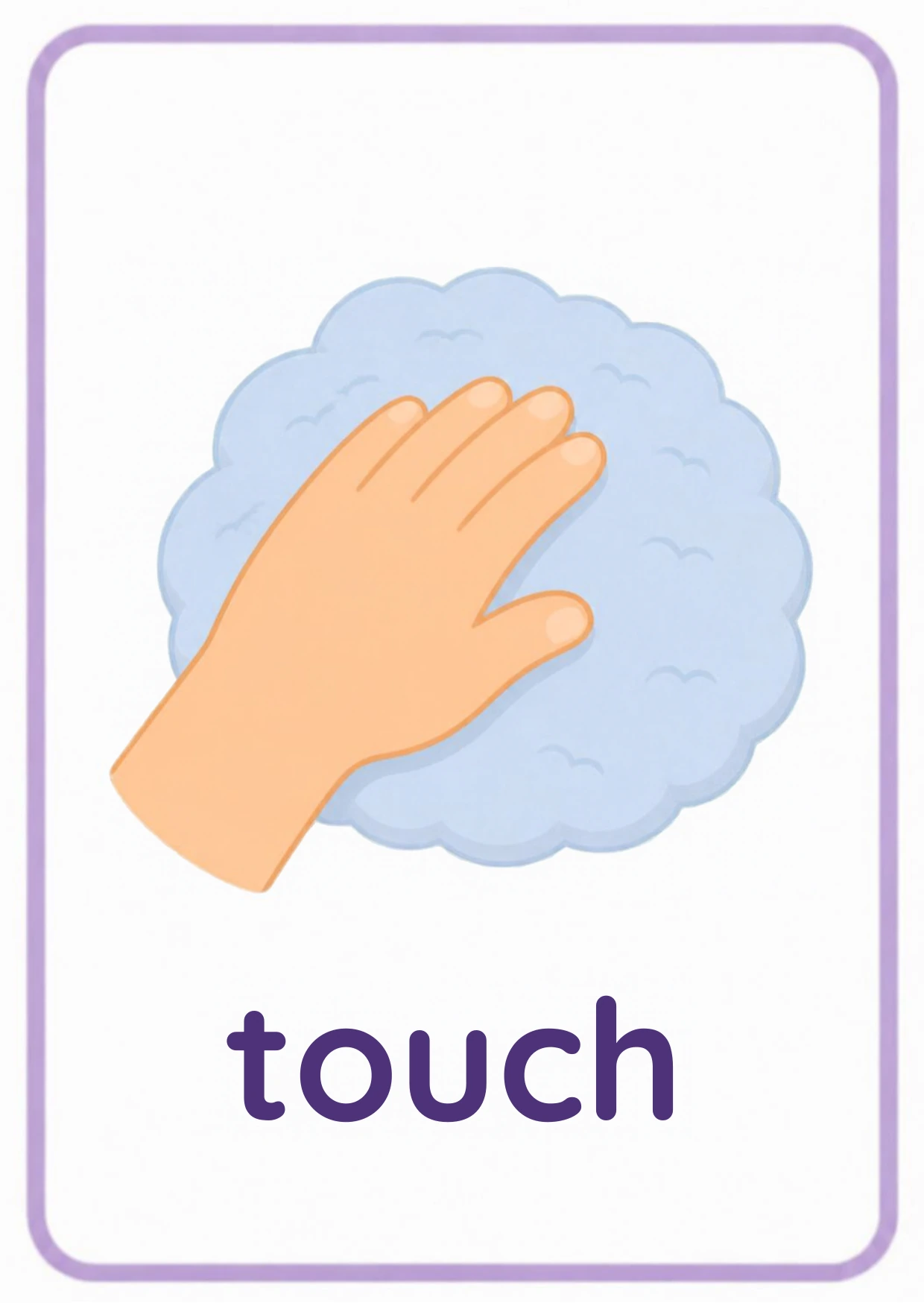
This lesson gives the fifth sense its doing-word. Skin does all the feeling, and touch is the word for it in action — and the card slows everything right down: one hand, laid on something soft and blue, taking its time.
What is this?
Touch is what skin does: it reaches out and reports what the world feels like — soft, smooth, bumpy, warm, cool, squishy. It is the fifth of the five senses, and the only one the whole body carries: hands, cheeks, toes — wherever skin goes, touch goes too.
What does it mean?
Touch is the sense of doing: the other four mostly take in, but touch has to reach out and meet the world first. That meeting is how babies learned everything at the start, and it is still how three-year-olds check a claim — one hand on it says more than ten words about it.
What does the child need to know?
Your child needs to know: we touch with our skin, touching is the fifth sense, the hands are its best tools — and gentle is the rule: slow hands, soft landings, while hot or sharp things are for looking at and naming, not touching.
Why this matters
Naming touch turns feeling into vocabulary — the rug is soft, the orange is bumpy, the window is cool — and those texture words power preschool talk. It is also where gentle hands get trained: a child who can name the sense can practise the manners that come with it.
What it teaches
Tactile words (soft, smooth, bumpy, warm, cool), the fifth-sense framework (touch as skin’s job), gentle-hands self-regulation, slow deliberate reaching instead of grabbing, and texture discrimination through the fingers.
Words to learn
touchskinsoftsmoothbumpygentle
Say this to your child
“"Touch! Your skin is the feeler — it tells you soft, smooth, bumpy, warm, cool. Reach out slowly, land gently, and hear what your hands find. Some things we touch, and some things — hot and sharp ones — we only look at and name. Show me your gentlest touch!"”
Step by step
- Show the card and slow everything down: what is the hand doing — resting, gently, on something soft? That careful landing is the whole lesson: touch.
- Name the tool: skin does the feeling, and the hands are its busiest workers. Press a palm flat on the table, then on a cushion — two reports, one sense.
- Play the texture hunt: find one soft thing, one smooth thing, one bumpy thing in the room. Touch each slowly and say its word out loud.
- Practise the gentle rule: reach out slowly, land like a butterfly, no grabbing. Try it on a teddy, on your own arm, on the rug.
- Set the boundary kindly: touch means gentle, and some things say look-don’t-touch — radiators, scissors, the stove. Those get pointed at and named, never handled.
Look closer at the picture
Look at the picture together: what is the hand doing — resting or grabbing? What color is the thing under the hand — blue? Does the hand look gentle or fast? Where does the word touch sit?
Ask your child
"What do we touch with?" "Which sense is touch — the fifth of how many?" "What is the softest thing in this room?" "What things in our house are look-don’t-touch?"
What your child can say or do
Your child may spend an afternoon patting the furniture and filing reports — bumpy, smooth, fluffy — land butterfly hands on every head in the family, or point at the stove and recite the look-don’t-touch list, finger and all.
Out in the real world
Touch reports arrive all day: the bumpy wall on the stairs, the smooth apple, the cold tap, the soft towel. Name what the skin sent — your hands found it! — and the fifth sense becomes a vocabulary your child uses without being asked.
Try it together
Mystery bag: hide three household objects — a spoon, a sponge, a small ball — inside a pillowcase. One hand in, no peeking: read it, guess, pull it out, check. Swap the cast daily. It is touch discrimination, patience and naming practice in one old sock.
Understanding check
Ask: "What does the skin do? Which sense number is touch? Show me a gentle landing." The feeling, the fifth and a butterfly hand — that is the lesson landed.
Parent tips
Keep the texture hunt to three objects a day — three good words beat ten rushed ones. And narrate your own gentle touches out loud — patting the cat, smoothing the duvet — because children copy the hands they watch, not the hands they are told about.
Staying safe
Touch has a look-don’t-touch list and it is real: hot oven doors, radiators, irons, scissors, knives and broken glass get pointed at and named, not handled. Gentle hands with pets and babies too — slow landings, no squeezing — and a grown-up for anything unknown.
This lesson pairs with the Touch flashcard in the library — print it, show it, keep it on the fridge. Back to Body Parts & Five Senses Flashcards.