
Watermelon — a step-by-step lesson for grown-up and child
Watermelon is the fruit that arrives like an event: enormous, heavy, and full of three colors that the other cards spent a whole class teaching. This lesson teaches the long word at the card, the growing — on the ground, on sprawling vines — and the tap-and-name game that turns a slice into a color review.
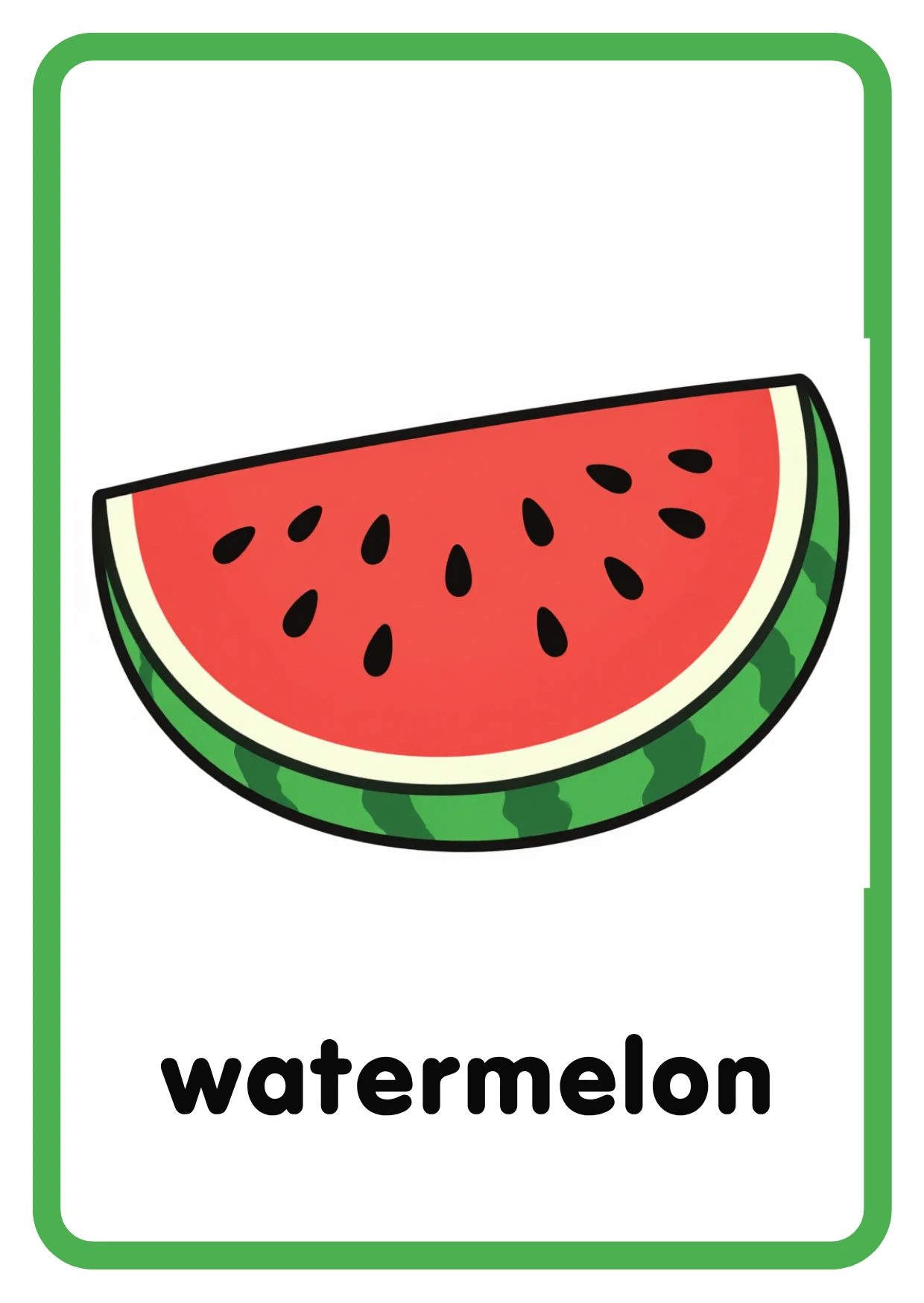
What is this?
A watermelon is a huge fruit that grows on the ground on trailing vines, resting on the soil until picked. The card shows a slice: green rind, red flesh, black seeds. The word is long — wa-ter-mel-on — and worth clapping out, because four parts is the longest rhythm in the fruit class.
What does it mean?
One slice, three colors: green, red, black — a watermelon is a color lesson wearing a snack. A child who names all three while tapping the slice is doing multi-property description — size, color, position — and the fruit makes the description feel like a drum solo instead of a test.
What does the child need to know?
Your child needs the word clapped at the card, the ground-growing story — this fruit does not climb or hang, it lounges — and one tap-and-name round on a real slice: tap the green, tap the red, tap a seed. Then the tasting: a grown-up cuts, cold wedges are served, and summer officially begins.
Why this matters
Multi-word description is the bridge from naming to telling: “the red part”, “the green outside”, “the black seeds” are little sentences about one object. Watermelon is the friendliest place to practise, because the object is delicious and the parts are unmissable.
What it teaches
Multi-property description (color and position), syllable clapping on a four-part word, size vocabulary (enormous, heavy), summer-food culture, and patient waiting — the biggest fruit in the shop also has the longest queue to the table.
Words to learn
watermelonredgreenseedsbigsummer
Say this to your child
““Watermelon! Wa-ter-mel-on — four claps for the biggest fruit we know! It grows on the ground, resting like a sunbather. Look at the slice: green outside, red inside, black seeds — three colors in one snack. Tap them and name them... now the best part: the crunching!””
Step by step
- Show the card and clap the word out — wa-ter-mel-on, four claps, the longest word in the fruit class, said twice.
- Tell the growing story: watermelons grow on the ground on sprawling vines — no climbing, no hanging, just lounging in the sun until big.
- The tap-and-name game on the card: tap the green rind and say green, tap the red flesh and say red, tap a seed and say black.
- Real-slice round: a grown-up cuts a wedge, and your child taps and names all three colors before the first bite.
- Eat cold, and rate the seeds — count how many ride home on the slice. The word got clapped; the colors got named; summer got eaten.
Look closer at the picture
Study the card together: it shows a watermelon slice with green rind, red flesh and black seeds, with the word watermelon underneath. Ask your child to point at each color in turn, and where the black seeds are sitting.
Ask your child
“How many claps does the word need?” “Where does a watermelon grow — up a tree or on the ground?” “What are the three colors in one slice?” “Which color is the outside?”
What your child can say or do
Your child might clap out wa-ter-mel-on for days, tap-tap-tap every fruit in the bowl, or report that the watermelon is “sleeping on the ground” — a fruit described as a sunbather is a fruit whose biography has been understood.
Out in the real world
Watermelons headline the summer: picnics, barbecues, the shop where whole ones sit like boulders. Each meeting repeats the long word and the three-color game — the loudest vocabulary lesson of the warm months, served cold.
Try it together
The three-color drum: a grown-up cuts a cold wedge, and your child taps it like a drum — tap the green and say green, tap the red and say red, tap a seed and say black — before the first bite. Then the seed count: how many rode home on the slice? Count them off the plate, and eat the winnings.
Understanding check
Ask: “Clap the long word. Where does it grow? Name the three colors in a slice.” Four claps, the ground, and green-red-black — that is the lesson landed.
Parent tips
If the four claps tangle, drop to two — mel-on — and grow the word back one clap at a time over the week. Long words are stairs, not walls, and every child climbs them at their own pace.
Staying safe
The cutting is all grown-up work: a whole watermelon defeats adult knives, so no small hands go near the job. Cold wedges for little eaters get served seeded or spooned, sitting down — the biggest fruit obeys the same sit-down rule as the smallest.
This lesson pairs with the Watermelon flashcard in the library — print it, show it, keep it on the fridge. Back to Fruits & Vegetables Flashcards.