
Cold ice cream — a step-by-step lesson for grown-up and child
This lesson takes the coldest picture in the set and pairs it with the warmest word. Cold is a whole-body feeling — children shiver it, say it and eat it — and the freezer holds the prop that makes the word land in ten seconds flat.
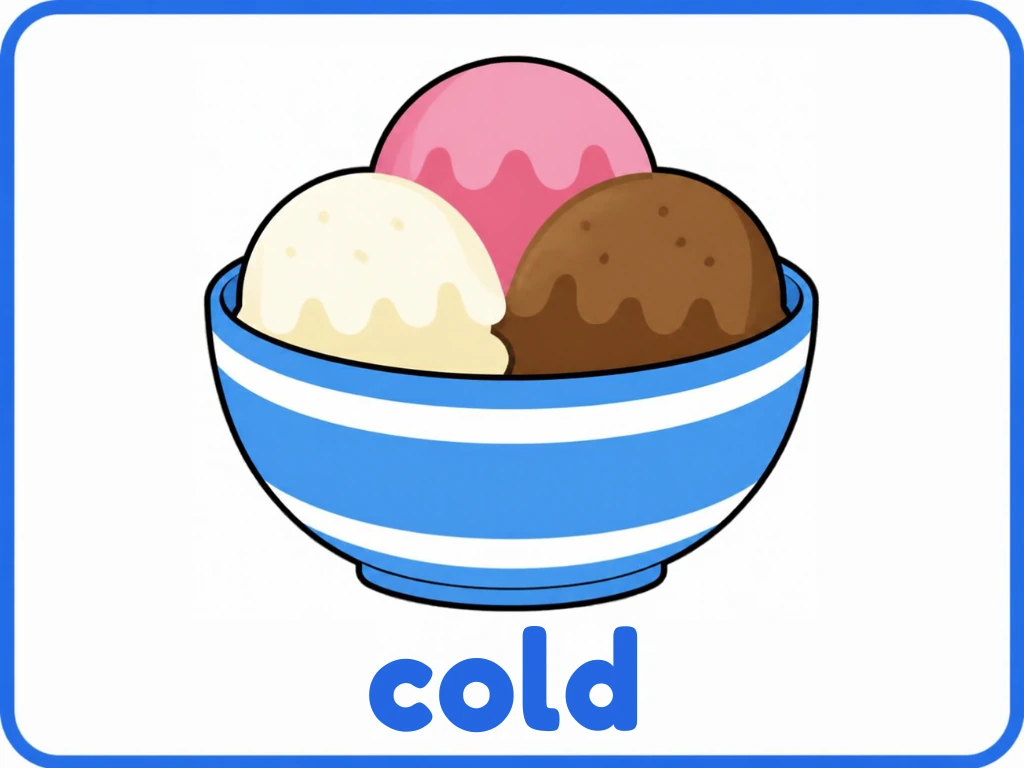
What is this?
Cold means much cooler than your body — the kind of temperature that makes you shiver and hurry. The ice cream on the card has three frosty scoops. Cold is a feeling your skin reports instantly: the cold spoon, the cold milk, the cold hands after a snowball.
What does it mean?
Cold and hot are a contest, and room temperature usually wins: ice cream melts because the air around it is warmer than the freezer was. That small piece of science — cold loses to warm over time — is visible on a plate in ten minutes, and a three-year-old can watch the whole argument happen.
What does the child need to know?
Your child needs to know: cold means the shivery temperature, the opposite is hot, and cold things warm up once they leave the cold place — which is why ice cream must be eaten quickly. The spoon game below gives the feeling a safe, ten-second home.
Why this matters
Temperature words are feeling words, and feelings teach fast. A child who can name cold, warm and hot is not just comparing — they are building the vocabulary of their own sensations, which later turns into dressing sensibly, testing a bath with a toe and understanding the kitchen rules.
What it teaches
Temperature vocabulary, body awareness (where do I feel cold?), observation of change as ice melts, self-regulation in the shiver-and-freeze game, and the honest first physics of warmth winning over time.
Words to learn
coldicemeltshiverfreezewarm
Say this to your child
“"Cold ice cream — brrr! Let me see your shivery wiggle! Cold means icy, straight from the freezer. And here is the secret: cold things melt when it is warm — that is why we eat ice cream quickly! Hot soup steams on one card, cold ice cream shivers on the other. Hot and cold, the two ends of everything."”
Step by step
- Show the card and shiver on cue: brrr! Three scoops, straight from the coldest place in the house.
- Say the pair with your bodies: arms wrapped tight for cold, fanning yourselves for hot. The shiver and the fan are the two halves of the word pair.
- Run the ten-second feeling game: a cold spoon straight from the freezer in one hand — cold! — then both hands wrapped around a warm mug — warm! Your child just met the whole scale in half a minute.
- Set an ice cube on a plate and visit it together every few minutes: smaller… puddle… gone. Cold things melt when they leave the cold place.
- Read the pair across both cards: steaming soup on one, frosty scoops on the other. Ask which one your child would eat in summer, and which in winter.
Look closer at the picture
Look at the picture together: how many scoops are in the bowl? Do they look frosty or melting? What words sit with the ice cream? Which card is warmer, this one or the hot soup?
Ask your child
"What does cold feel like — where do you feel it first?" "Why do we eat ice cream quickly?" "What happens to an ice cube in a warm room?" "What is the opposite of cold?"
What your child can say or do
Your child may deliver an award-winning shiver on the word cold, press a cold spoon to their cheek and report the temperature with scientific gravity, or narrate a melting cube: "it is getting smaller… now it is water!"
Out in the real world
Cold is a daily weather report: cold milk from the fridge, the cold tap and the warm one, cold hands in winter, the freezer with its icy breath. Name the temperatures as you move through them — the fridge and the freezer are a two-step field trip.
Try it together
The shiver game: dance warm and wiggly until you call cold! — then everyone freezes into a tight shivery ball with their best brrr face. Call hot! and it is loose wiggles again. The switching keeps both temperature words awake, and the freeze is the part they will beg to repeat.
Understanding check
Ask: "Show me cold. Show me hot. What happens to ice cream in a warm room?" The shiver, the fan and the melting answer — that is the word landed.
Parent tips
The freezer spoon is the whole lesson compressed into ten seconds — keep it as a regular mini-game, not a one-off. And let the melting cube run its full course at least once: watching cold lose to warm, unaided, is your child’s first self-narrated experiment.
Staying safe
Ice and frozen spoons are ten-second visitors — holding something frozen for a long time makes little fingers ache, and the ache arrives after the fun has already peaked. Keep the feeling games short, and keep real ice cream for eating, not for holding.
This lesson pairs with the Cold ice cream flashcard in the library — print it, show it, keep it on the fridge. Back to Opposites & Comparing (Preschool).