
Hot soup — a step-by-step lesson for grown-up and child
This lesson teaches hot carefully, the way children actually meet it: in a serious grown-up voice. Hot is a comparing word with a warning attached — and this card lets your child own the word from a completely safe distance.
What is this?
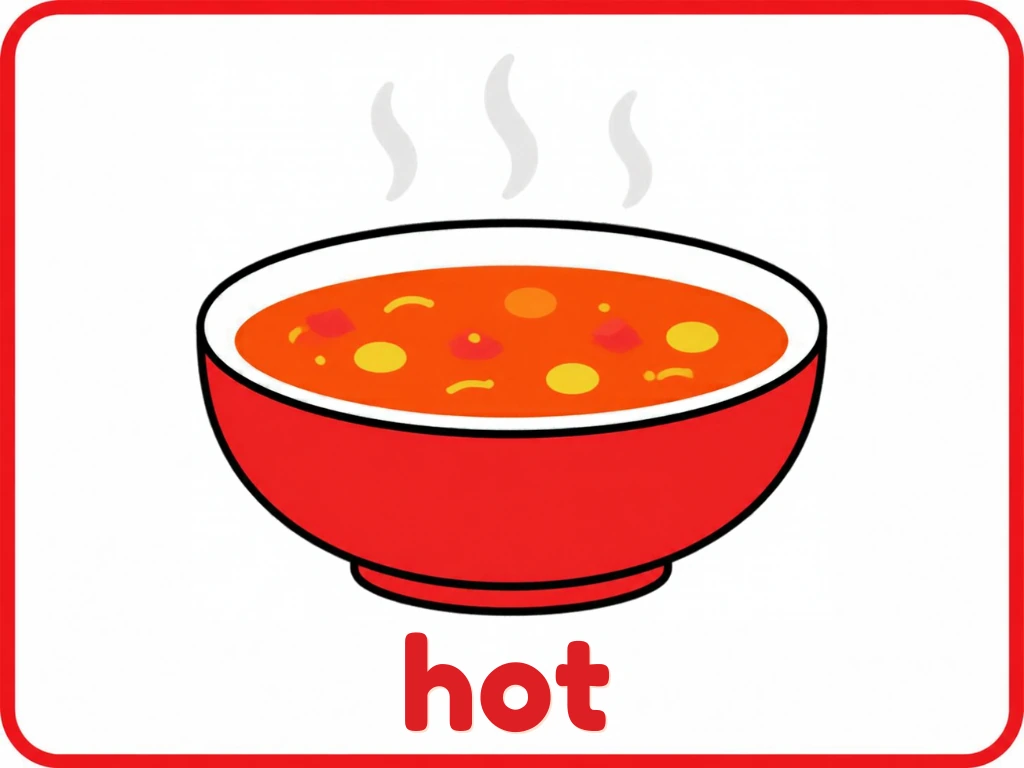
Hot means much warmer than your body — so warm it could hurt to touch. The soup on the card is steaming: the curls above the bowl are the heat escaping, showing itself. Hot is a feeling your skin knows first and your vocabulary learns second.
What does it mean?
Steam is the picture’s biggest gift: it is visible heat. Children cannot see warmth, but they can see steam rising from soup, from a kettle, from a bath — which makes hot one of the few safety words with a built-in signal. Learn to read the steam, and the word starts protecting its owner.
What does the child need to know?
Your child needs to know: hot means do-not-touch until a grown-up says otherwise, steam means the hot is escaping and the thing is still hot, real hot things — soup, tea, kettles, stoves — are grown-up jobs, and the opposite word is cold. The blowing game below practises the cooling ritual safely.
Why this matters
Hot is one of the words parents say in a different voice, and children notice. Owning the word — saying it themselves, spotting the steam, announcing it — turns a vague grown-up alarm into a rule they can read for themselves. That is real safety power for a three-year-old.
What it teaches
Temperature vocabulary (hot, warm, cold), reading signals (steam as visible heat), self-protective caution paired with confidence, oral-motor practice in the gentle blowing, and the discipline of a pretend game that stays pretend.
Words to learn
hotsteamwarmcoolblowcareful
Say this to your child
“"Hot soup — careful, hot! See the steam? That is the heat escaping, telling us to wait. We send soft little breezes at it — whoosh, whoosh — until a grown-up says it is ready. Hot things are grown-up jobs to touch, but you are the boss of the blowing. And the opposite of hot? Cold ice cream — brrr!"”
Step by step
- Show the card and point to the curls above the bowl: that is steam — the heat sneaking out. Steam means the soup is hot.
- Say the pair with your voice: hot soup in a serious voice, cold ice cream in a shivery one. The voice is part of the vocabulary.
- Play the blowing round over make-believe soup: hands cupped around nothing, gentle whoosh-whoosh blows, then a pretend taste — perfect temperature, delicious.
- Teach the ritual: real hot food gets blown, then a tiny test taste by a grown-up, then it is ready. Your child gets to do the blowing every single time.
- Walk the kitchen and name the hot things from a safe distance: the kettle, the oven, the pot on the stove. Hot is a kitchen map as well as a word.
Look closer at the picture
Look at the picture together: what is rising above the bowl? Where does the steam go — does it fade as it climbs? What words sit with the soup? Does the bowl look full?
Ask your child
"What does the steam tell us?" "What do we do before tasting hot soup?" "Who touches the hot things in our kitchen?" "What is the opposite of hot?"
What your child can say or do
Your child may blow fiercely on make-believe soup at every meal and wait, proudly, for the verdict, spot steam rising from the bath and announce "hot! wait!", or shiver dramatically on cue: "cold ice cream — brrr!"
Out in the real world
Steam is everywhere once you read it: the kettle, the shower, the pot of pasta, a warm loaf of bread. Each sighting is a repetition of the safety rule — steam means hot, and hot means wait for a grown-up.
Try it together
Pretend restaurant: a bowl, a spoon and a lot of imagination. The waiter brings "soup" — your child blows it cool, tastes, announces hot! or just right! — then serves you. Swap seats so they are the customer too; the ritual is what gets practised, safely, at both chairs.
Understanding check
Ask: "What does steam mean? What do we do before tasting hot soup? Who touches the hot things?" The answer "wait and blow", the ritual and the grown-up rule — that is the word landed.
Parent tips
Keep your serious voice for real hot moments only — if everything is hot, nothing is. The card, the pretend soup and the blowing game let the word be playful while the rule stays firm. Give your child the blowing job at every real meal: a ritual they own is a ritual they keep.
Staying safe
Real soup, tea, kettles, pots and the stove are grown-up territory — pot handles turned inward, hot drinks out of reach, and your child’s chair well back while anything hot pours or steams. The blowing is theirs; the touching and the pouring are yours.
This lesson pairs with the Hot soup flashcard in the library — print it, show it, keep it on the fridge. Back to Opposites & Comparing (Preschool).