
Short tree — a step-by-step lesson for grown-up and child
This lesson takes the low half of the tree pair and gives it full respect. Short is not the consolation prize — it is the other winner — and the crouching, curling, ground-level games prove it to every part of the body.
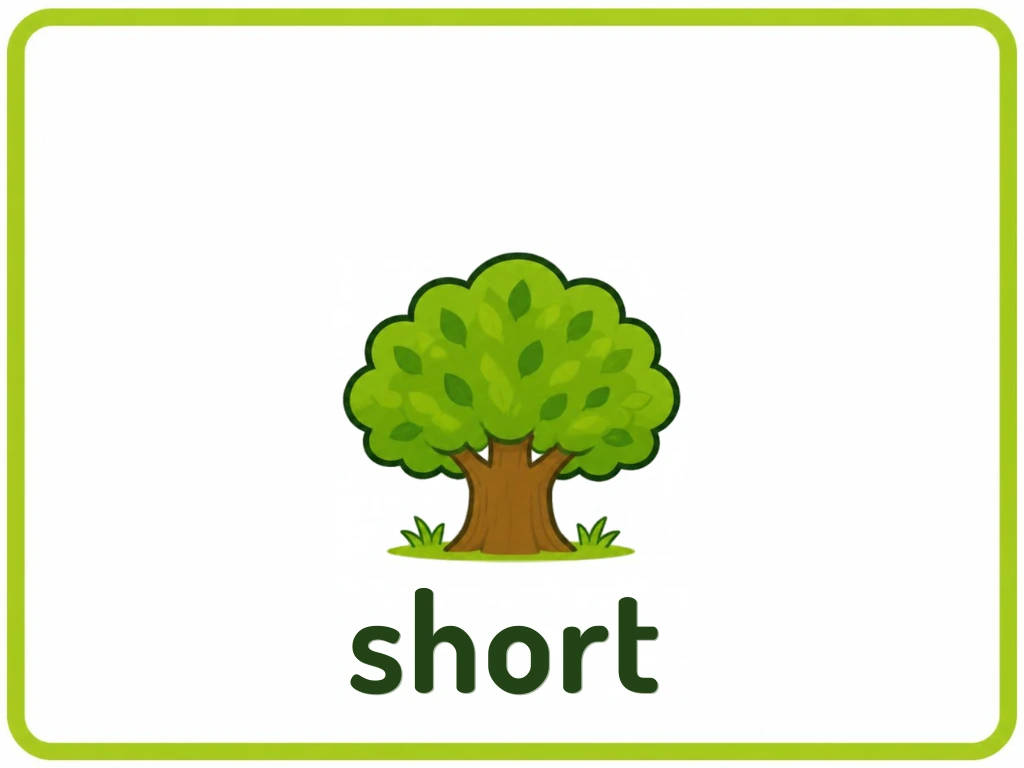
What is this?
Short means low, close to the ground — littler in height than the thing beside it. The little tree on the card stands about as high as your child, which makes the comparison instantly fair: neither one is embarrassed, both are just being their own height.
What does it mean?
Every comparing word has two winners, and short is the honest name for the lower one. Children usually accept short trees, short pencils and short cups warmly — the word only gets complicated when it lands on people. Keeping it on trees and objects in this lesson keeps the feeling safe and the learning quick.
What does the child need to know?
Your child needs to know: short means lower than the thing beside it, the opposite is tall, and the same tree that is short next to a big tree could be the tall one in a garden of saplings. Context switches the word — that is the deep idea, met through play.
Why this matters
A child who can say short about a tree without flinching owns the whole pair. The comparing vocabulary they build on objects is the same vocabulary the playground will later use on people — meeting it first on trees, with laughter, keeps it kind.
What it teaches
Downward spatial language (low, down, ground), crouching and curling — real gross-motor control — comparison thinking, and the social lesson that size words describe, they do not judge.
Words to learn
shorttalllowcrouchgroundlittle
Say this to your child
“"This tree is short — it stands low, close to the ground. The other tree stretched up; this one stays down here with us. Can you crouch like a short tree? Down low… hold it… and up! Short is not little-and-lesser — short is just the other direction."”
Step by step
- Show the card and trace the little tree with your finger, then hold up the tall tree card beside it: which one would a cat jump over?
- Be the short tree together: crouch down low, fold up small, balance. Hold it for three seconds — freezing is the funny part.
- Put the pair together and say both words in one breath: tall tree, short tree. Then swap the order and let your child lead the saying.
- Line the family up by height — plus any willing teddies — and let your child arrange everyone. Being the arranger beats being arranged.
- Hunt for short things: a short cup, a short chair, a short candle. Short things are everywhere once the word is awake.
Look closer at the picture
Look at the picture together: how high does the little tree stand — does it stay low on the card? How much sky is left above it? What words sit beside the tree? Which card is taller, this one or the tall tree?
Ask your child
"Which tree is shorter?" "Can you make yourself as short as the tree?" "What is the shortest thing in our kitchen?" "If this tree stood next to a tiny sapling, which one would be the tall one?"
What your child can say or do
Your child may fold into a crouch and shout "short tree!", delight in being shorter than you, or arrange the teddies by height and appoint the smallest one the short tree — all of it is the comparison, working.
Out in the real world
Short lives at child height: the short stool by the sink, the short fence, the short shelf with their own books. Point out that the world keeps a short version of nearly everything for children — steps, sinks, shopping trolleys — and that short has its own whole neighbourhood.
Try it together
Tall and short statues: dance while the music plays, then freeze as whichever tree you call — a stretched-up tall statue or a folded-down short one. Switch the calls faster and faster. The switching is the real game: it forces both words to stay awake at the same time.
Understanding check
Ask: "Show me short. Show me tall. Which tree is the short one?" The fold, the stretch and the little tree pointed at — that is the word landed.
Parent tips
Keep short about trees, pencils, cups and furniture for now — children copy how the family uses size words, and trees never mind. If your child asks whether they are short, answer honestly and warmly: "you are three, and three is exactly the right height for three."
This lesson pairs with the Short tree flashcard in the library — print it, show it, keep it on the fridge. Back to Opposites & Comparing (Preschool).