
Tall tree — a step-by-step lesson for grown-up and child
This lesson teaches tall the way children actually feel it — by stretching. Tall is upward comparing: the tree reaches past everything around it, and your child will too, on tiptoes, against the wall and back to back with you.
What is this?
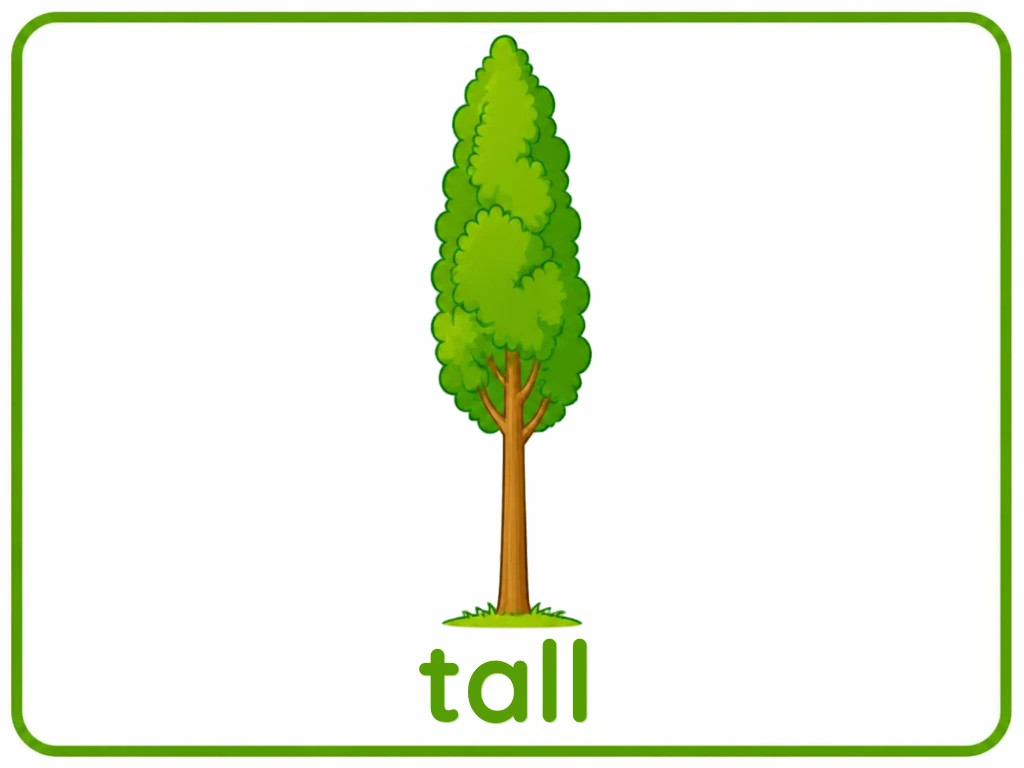
Tall means stretching upward, higher than the things around it. The tree on the card reaches nearly to the top of its picture, which is exactly what tall things do — they go up past the roofs, the fences and everyone standing next to them.
What does it mean?
Tall is a comparing word with a direction: up. Children meet it with their whole body — standing tall, stretching tall, growing up the doorframe. The tree card works because the comparison is visible in one picture: the tree goes up and up and the card has to stretch to hold it.
What does the child need to know?
Your child needs to know: tall means going up higher than what is nearby, the opposite word is short, and people, trees, towers and lamps can all be compared by height. Measuring themselves against a wall is the personal version of the lesson.
Why this matters
Height comparison is one of the earliest measurements a child cares about — usually because they want to be the tall one. That wanting is fuel: every who-is-taller game quietly builds the ordering and comparing skills that maths will ask for later.
What it teaches
Upward spatial language (high, top, up), body awareness and balance on tiptoes, comparison and ordering, self-measurement, and the vocabulary of growing — taller this month than last.
Words to learn
tallshorthightopstretchgrow
Say this to your child
“"Tall tree! Reach up, up, up — can your fingers touch the sky? Tall means it stretches higher than everything around it. Stand up tall like the tree… now find me something in this room that is tall too!"”
Step by step
- Show the card and trace the tree with your finger, bottom to top: up, up, up — all the way tall.
- Stand up together and be the trees: tiptoes, arms up, fingers reaching for the ceiling. Say tall while your whole body says it too.
- Stand back to back and hold a hand flat over both heads: who is taller? Then add a teddy to the parade — a proper height line-up needs a short friend.
- Measure your child against a wall or doorframe and mark it with a pencil. The mark matters less than the ritual — they will ask to be measured again next week.
- Compare the two tree cards and ask which tree the birds would pick for a nest, and why. Answering why is comparing with reasons attached.
Look closer at the picture
Look at the picture together: where does the tree start and where does it stop? Does it reach the top of the card or stop short of it? What words sit with the tree? How much of the card does the tree take up?
Ask your child
"Who is taller, you or me? Who is taller than both of us?" "What is the tallest thing in our house?" "Can a tree grow taller than it is today?"
What your child can say or do
Your child may go up on the very highest tiptoes and announce "I am tall like the tree!", demand a measuring mark of their own, or line the family up shortest to tallest — correct ordering, done for fun.
Out in the real world
Tall shows up all over town: the tall crane above the new building, the tall lamppost, the tall slide at the park, the tall tree you can see from the window. Ask "taller than what?" about each one — every answer is another comparison, done for free.
Try it together
Grow like a tree: start curled on the floor as a seed, then sprout slowly — knees, trunk, arms, fingertips — until you are the tallest tree in the room. Add a wind verse where the tall tree sways without falling. The slow growth is the point: tall is a direction, and the body just learned it.
Understanding check
Ask: "Show me tall. Show me short. Who is taller, the tree on this card or the tree on that one?" The stretch, the crouch and the taller card — that is the word landed.
Parent tips
Revisit the wall mark monthly and make a small ceremony of it: "you grew!" Height is one comparison a child experiences from the inside, and watching it change is deeply motivating. Expect tall and long to swap seats for a while — the line-up games sort them out all by themselves.
This lesson pairs with the Tall tree flashcard in the library — print it, show it, keep it on the fridge. Back to Opposites & Comparing (Preschool).