
Crescent — a step-by-step lesson for grown-up and child
The crescent is the shape children already dream about: the moon, in its favourite storybook form. This lesson names it through its own best description — a circle with a bite taken out — serves the shape as a banana slice, and ends at the window, where the real moon gets checked: crescent tonight, or round tonight?
What is this?
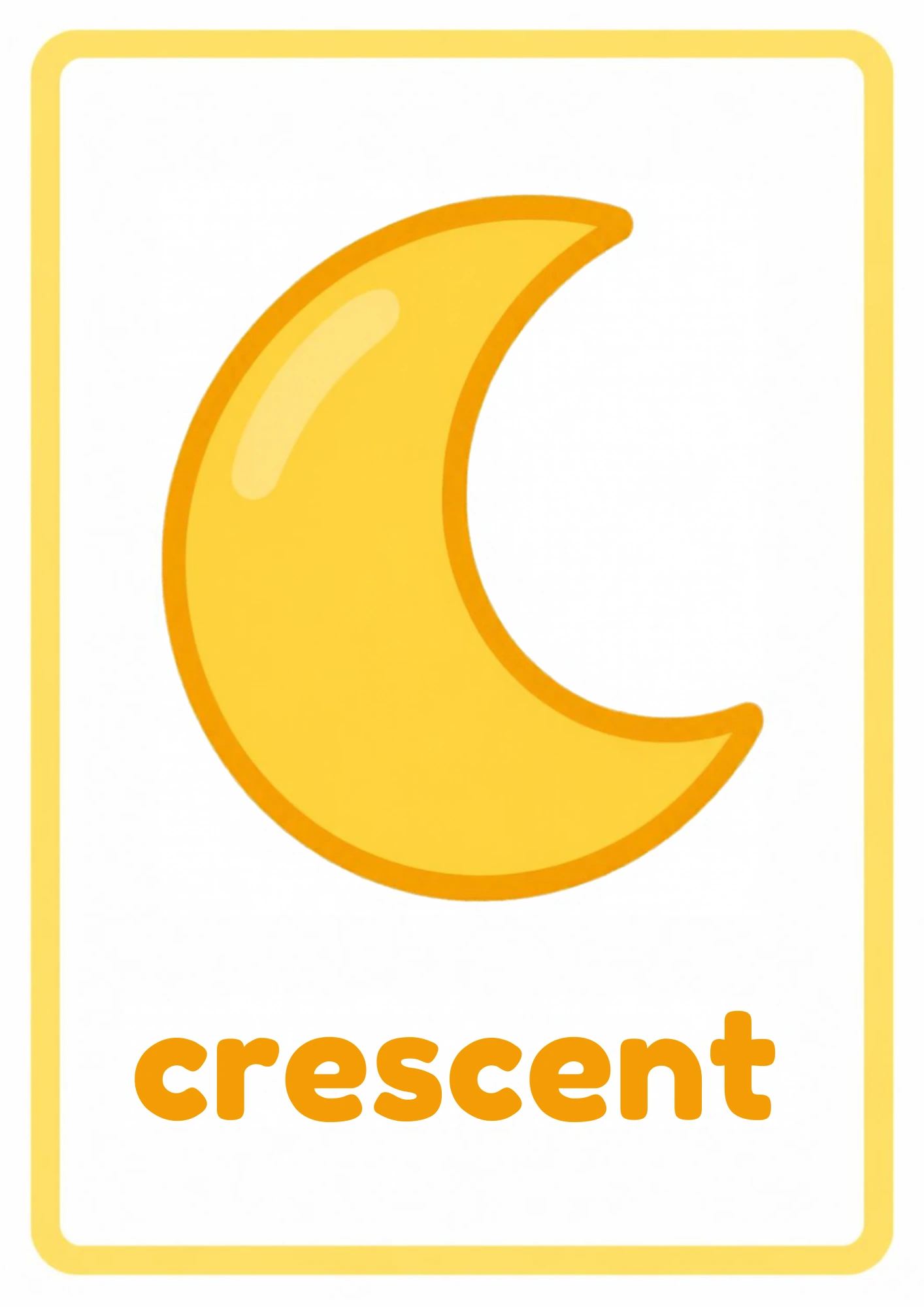
A crescent is a circle with a curved bite taken out of one side, leaving two points and a slim curve between them. On the card it is one big yellow crescent moon with the word crescent underneath. Bananas curve this way, croissants too, and the moon wears the shape for part of every month.
What does it mean?
A shape made by taking away: the crescent is what remains when a bite leaves a circle. That is negative space — the first shape your child will meet that is defined by a missing piece — and children adore it, because the bite is a story they can see. Two points, one curve, and an absence doing all the work.
What does the child need to know?
Your child needs the bite story and the two points — a crescent is the curve between them. The banana slice gives the shape a taste, and the moon check gives it a ritual that repeats all month for free, with the sky running the schedule.
Why this matters
Seeing what is missing is observation of a higher order: the eye must hold the whole circle in mind and subtract. That part-whole thinking is the same muscle that later hears cat inside caterpillar and six inside sixteen — and the moon trains it monthly, on schedule, in the night sky.
What it teaches
Part-whole thinking (a circle minus a bite), point-spotting at both tips, snack-time fine motor, lunar vocabulary (moon, crescent, round), and the patience of a night-sky ritual that changes over the month and rewards every check-in.
Words to learn
crescentmoonbitecurvepointsnight
Say this to your child
““Crescent! The moon’s shape — a round circle with a big sleepy bite taken out. Chomp! See the two pointy tips? The curve between them is the crescent. Now the banana slices — can you find the crescents on your plate? And tonight we check the sky: is the moon a crescent, or has it grown round again?””
Step by step
- Show the card and trace the curve from tip to tip — sleepy and slow, like a yawn.
- Tell the story: it is a circle with a bite taken out. Mime the bite — chomp! — and watch the delight land.
- The banana version: a grown-up slices a banana, and your child finds the crescent hiding in each round.
- Find the two points — the tips of the crescent — and touch each one on the card.
- Tonight’s moon check at the window: crescent tonight, or round tonight? Either answer wins — the question is the game.
Look closer at the picture
The card shows one big yellow crescent moon, with the word crescent underneath. Where are the two tips pointing? Is the curve slim or fat? Does the shape look like a circle with a piece missing — can your child say which piece went missing?
Ask your child
“What shape is the moon tonight?” “What happened to the circle in a crescent?” “Where are the crescent’s two points?” “What other foods look like crescents?”
What your child can say or do
Your child might mime the bite at every crescent sighting, inspect banana slices like an astronomer, or deliver the nightly moon report from the window — a shape with a story gets retold at bedtime, which is exactly where this one lives.
Out in the real world
Crescents at breakfast and bedtime: banana slices, croissants, the moon in storybooks, moon decorations on mobiles and nursery walls. And then the original, hanging in the sky a few nights a month — the only shape card with a live counterpart the child can point at from bed.
Try it together
Moon watch: each night this week, look at the moon together and report — crescent, round, or hiding. Draw what you saw on a paper chart by the bed. The moon itself runs the repetition schedule, and by the end of the month your child owns the vocabulary of the sky.
Understanding check
Ask: “What shape is a crescent? Where are its two points? What should we check tonight?” The bite, the tips and the moon — that is the lesson landed.
Parent tips
The moon changes shape all month, which can rattle a child who just learned the word — frame the sky as a game that keeps moving: “the moon plays with its shape; we keep score.” Checking together matters more than any single answer, and a wrong guess tonight is a reason to look again tomorrow.
This lesson pairs with the Crescent flashcard in the library — print it, show it, keep it on the fridge. Back to Shapes & Patterns (Preschool).