
Dolphin — a step-by-step lesson for grown-up and child
This lesson adds the ocean’s great twist: not everyone under the waves breathes water. The dolphin holds its breath like us, leaps to refill — and greets its family with a whistle that works like a name.
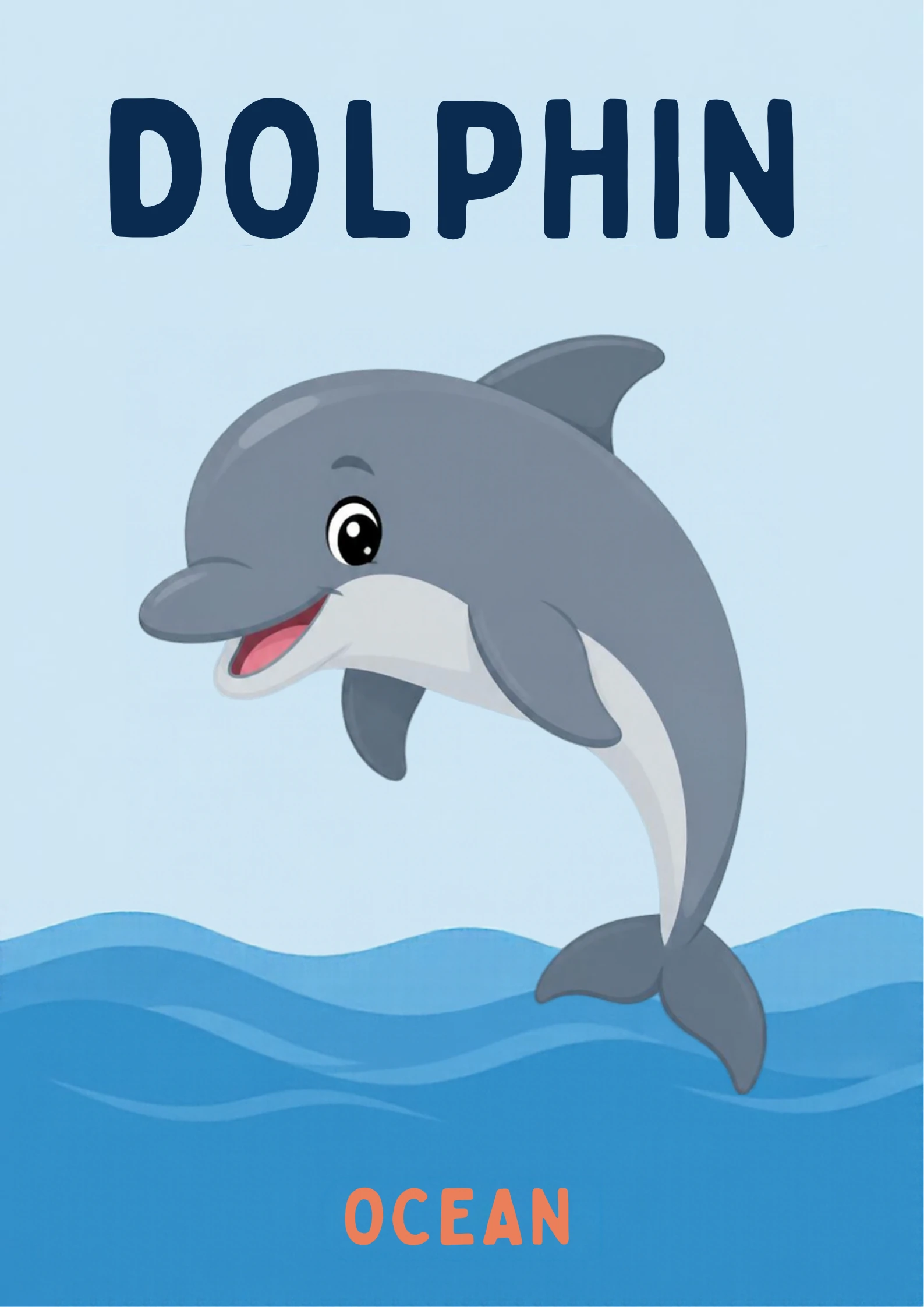
What is this?
Dolphins live in the open ocean and along the coasts, roaming in pods — chattering family groups that hunt fish, surf waves and leap in arcs that show their pale bellies to the sky.
What does it mean?
A dolphin is a mammal in a fish’s world: lungs, not gills. So life in the ocean is a rhythm — swim, swim, surface, BREATH, dive again. The leap is not showing off; it is breathing taken at speed. And each dolphin carries its own signature whistle — a sound it makes so others can call it, the closest thing in nature to having a name.
What does the child need to know?
Your child needs three dolphin ideas: dolphins breathe AIR with lungs, like us — they hold their breath underwater and leap up to refill; they talk in clicks and whistles, each dolphin with its own signature sound; and they swim in pods — families that stay together.
Why this matters
The dolphin completes the fish lesson: same ocean, two breathing plans — gills below, lungs leaping above. The signature whistle also gives children their first "animals have names for each other" moment, which is empathy-building of the strongest kind.
What it teaches
Breath-hold awareness (a real, feelable skill), mammal-fish contrast reasoning, sound-and-name concepts, and cooperative play — pods take turns, pods stay together, and so do good games.
Words to learn
dolphinbreatheleapblowholewhistlepoddive
Say this to your child
“"The dolphin lives in the ocean but breathes air, just like us. It swims, and swims, and then leaps up — hoo! — one big breath through the blowhole on its head, and down again. Its family calls it with its very own whistle."”
Step by step
- Show the card: "This is a dolphin, and this is its home — the ocean."
- Spring the twist: it lives in the sea but does NOT breathe water. Lungs, like yours! It holds its breath below and leaps up — whoosh — to breathe again.
- Find the blowhole: on top of the head, a little trapdoor for air. One jump can be one giant breath.
- Do dolphin talk: clicks and whistles. Every dolphin has its own signature whistle — call it, and it answers. A name made of sound.
- Play surface-and-breath (below), then close with the pod: dolphins travel together, eat together, breathe together.
Look closer at the picture
On this card a sleek grey dolphin with a pale belly, a friendly eye and a small beak-like smile arcs above rolling blue waves, its curved back and tail fin clear of the water. The word "ocean" sits below — mid-leap, mid-breath, exactly where a dolphin lives its best moment.
Ask your child
"Does a dolphin breathe water or air?" "Where is the blowhole?" "Why does it leap out of the water?" "What is a dolphin’s whistle like?"
What your child can say or do
Your child might say: "It breathes air — it jumps up for a big breath!" "The hole is on top of its head," or the name line: "Every dolphin has its own whistle, like a name!"
Out in the real world
Breath rhythm is testable in the bath: how long can your child hold a comfortable breath? (Three to five seconds, cheerfully.) That number IS the dolphin’s problem, felt in miniature. At any aquarium or beach, the surface-leap watch becomes a breath count.
Try it together
Pod relay: crawl-swim across the carpet, then "surface" at set points — touch the wall, stand, one huge breath with arms up as the blowhole opens, back down and glide on. Rule of the pod: nobody surfaces alone — the whole family leaps together, breathes together and giggles together.
Understanding check
Ask: "Does a dolphin breathe water or air? What is the hole on its head called? What is its whistle for?" Air, blowhole, calling its name — three answers and the pod leaps on.
Parent tips
Give each family member a signature whistle on the spot — a two-note hum each — and use them for a day of calling across rooms. The dolphin’s naming idea converts into a family game with zero props, and every call retells the lesson.
This lesson pairs with the Dolphin flashcard in the library — print it, show it, keep it on the fridge. Back to Animals & Their Habitats (Class 36).