
Whale — a step-by-step lesson for grown-up and child
This lesson ends the ocean trio with scale: the whale is the largest animal that has ever lived on Earth — bigger than any dinosaur find — and it got that way by eating some of the smallest meals in the sea.
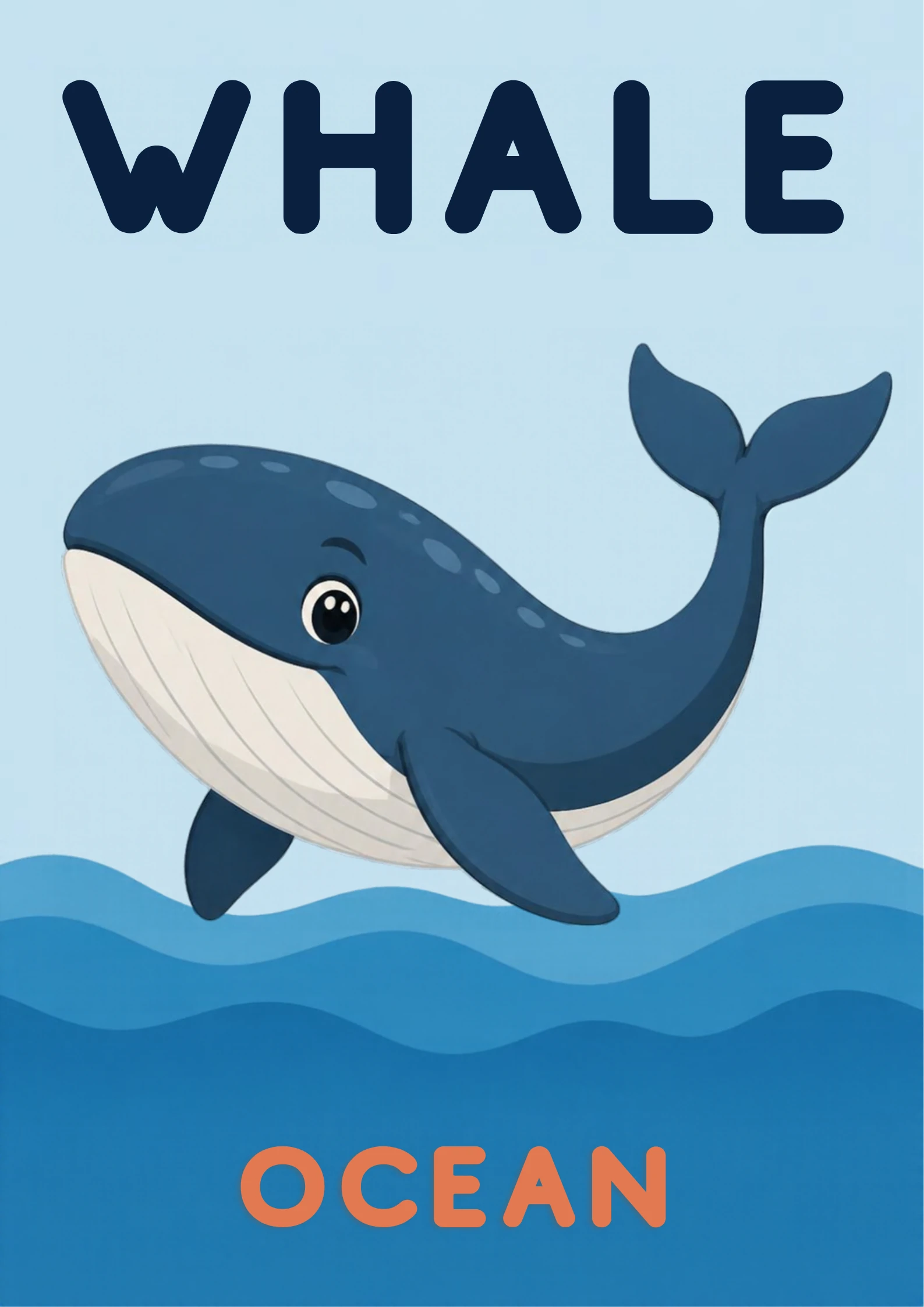
What is this?
Whales roam the whole ocean, from polar feeding seas to warm nursery bays. The biggest — blue whales — grow longer than three cars in a row, with hearts the size of a small armchair.
What does it mean?
Size like that runs on surprises. A whale breathes air at the surface through its blowhole — one mighty breath lasting minutes below. It sings — long, booming songs that travel whole seas, whale-to-whale. And the blue whale’s diet is among the tiniest: it gulps enormous mouthfuls of water and strains out clouds of shrimp-like krill, millions at a time. Biggest animal, tiniest meals, gentlest table manners.
What does the child need to know?
Your child needs three whale ideas: whales are the biggest animals that have ever lived — bigger than the dinosaurs we dig up; they breathe air at the surface through a blowhole, like the dolphin; and the biggest whales eat tiny krill by the million, strained from great gulps of sea.
Why this matters
Whales hand children their first true "wow beyond belief" fact that is also verifiable — and verifying it (pace it out, lie in it, fit the family inside) teaches the habit of checking wonder against reality. Big-and-gentle also stretches character thinking: the ocean’s giant is no one’s monster.
What it teaches
Scale measurement (pacing, comparing, lying inside the size), singing and sound-travel curiosity, food-chain inversion (biggest eats smallest), and calm confidence — giants are not scary when you know their manners.
Words to learn
whaleblowholekrillgiantsonggulpbaleen
Say this to your child
“"The whale is the biggest animal that has ever lived — bigger than a bus, bigger than the dinosaurs! It breathes at the top through its blowhole, sings songs that travel across the whole sea, and eats tiny little krill by the million. The biggest giant in the world is a gentle one."”
Step by step
- Show the card: "This is a whale, and this is its home — the whole wide ocean."
- Land the size slowly: the biggest animal that has EVER lived. Bigger than every dinosaur bone in every museum. Longer than a bus — often three.
- Breathe like a whale: one surface breath through the blowhole, then minutes below. (Same plan as the dolphin — the ocean has two breathing teams.)
- Sing the secret: whales sing songs that boom across whole seas to family far away. Deep water carries voices like nothing on land.
- Serve the surprise meal: the giant eats TINY food — a mouthful of sea, strained through baleen, millions of krill kept, water back out. Then pace the whale out, floor to hallway (below).
Look closer at the picture
On this card a deep-blue whale with a pale, ridged belly and a small kind eye glides above rolling waves, its long body and big tail fin filling the picture. The word "ocean" sits below — the giant itself, at ease in the only home big enough.
Ask your child
"Is the whale bigger or smaller than a bus?" "How does it breathe — gills or a blowhole?" "What does the biggest whale eat?" "Why does it sing?"
What your child can say or do
Your child might say: "It’s the biggest animal EVER — bigger than dinosaurs!" "It breathes through its blowhole at the top," or the surprise line: "It eats tiny krill — millions of them, in one gulp!"
Out in the real world
Whale scale is floor-space fun: three parked cars nose-to-tail, one long school corridor, a whole swimming lane plus a bit. Museums with whale hangs deliver the wow vertically. Sound-travel talk works anywhere loud: cup your ears — in the sea, a whale’s song would beat any speaker.
Try it together
Whale-length: heel-toe the family down the hallway or pavement until you reach whale length (three car-lengths, or about twenty of your child’s steps). Lie down in your whale, nose to toes, arms out — the whole family fits inside one whale with room to spare. Then one family blowhole-breath, together, and a hummed two-note whale-song to send it swimming.
Understanding check
Ask: "Is the whale the biggest animal ever? How does it breathe? What does it eat?" Yes — ever, blowhole air, tiny krill by the million — three answers and the giant swims on.
Parent tips
Let the size fact stay enormous — do not sand its edges with "about as big as". Children this age treasure one impossible-but-true fact above all toys; "the biggest animal ever is alive right now" is the one worth lending them. If asked what whales say, hum low and slow: whale songs are felt in the chest before the ears.
This lesson pairs with the Whale flashcard in the library — print it, show it, keep it on the fridge. Back to Animals & Their Habitats (Class 36).