
Elephant — a step-by-step lesson for grown-up and child
This lesson teaches what a savanna is and introduces the set’s biggest idea: some animals do not just live in their habitat — they look after it. The elephant digs, clears and paves the savanna for everyone.
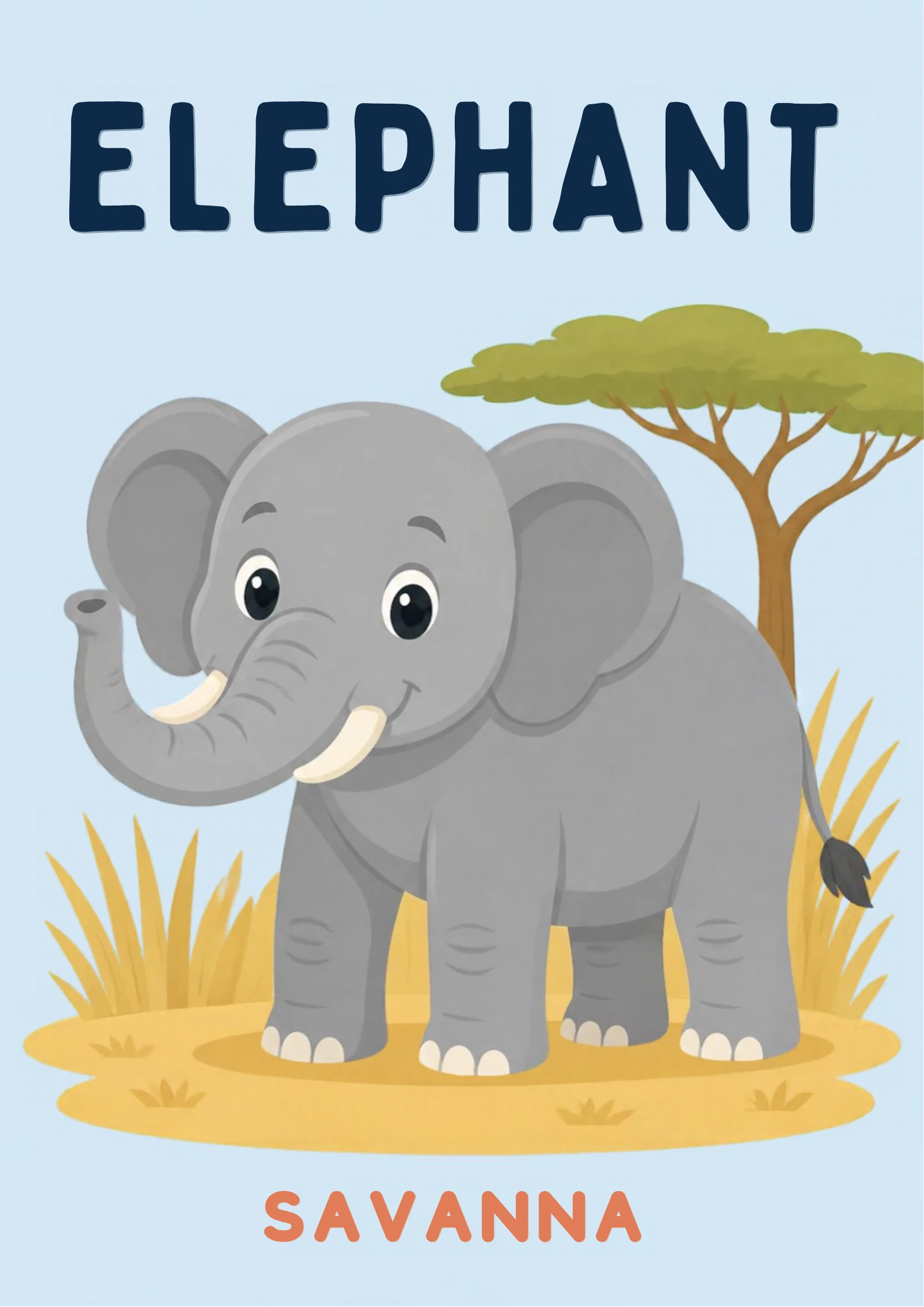
What is this?
A savanna is hot open country — tall dry golden grass, scattered flat-topped acacia trees, a wet season and a dry one. It looks empty from far away and is full of life up close.
What does it mean?
Through the dry months, water hides underground — and the elephant hears it. Digging with tusks and feet, it opens water holes that zebra, birds and lions drink from too. Its heavy footsteps clear walking paths through the grass that other animals use as roads, and its dung plants seeds along the way. Take away the elephant and the savanna loses its gardener.
What does the child need to know?
Your child needs three savanna ideas: the savanna is golden grass with scattered trees, hot and open; elephants dig water holes that everyone drinks from in the dry season; and elephants live in family herds led by the oldest female — the matriarch, who remembers where the water is.
Why this matters
The elephant carries the class’s deepest idea — habitat shapers — in the friendliest wrapper. Children who accept "the elephant helps everyone" have met ecology’s keystone concept years early, through an animal they already adore.
What it teaches
Ecosystem thinking (one animal’s work serving many), memory and leadership respect (the matriarch), trunk coordination, and scale play — the savanna’s distances and the elephant’s size both beg to be paced out.
Words to learn
elephantsavannaherdwater holetrunkmatriarchacacia
Say this to your child
“"The elephant lives on the savanna. When the rain stays away, it digs water holes with its tusks — and the zebras, the birds and everyone else come to drink from the elephant’s well. The oldest grandmother leads the family there. She remembers the way."”
Step by step
- Show the card: "This is an elephant, and this is its home — the savanna."
- Read the scene: golden grass, one shady acacia, big grey resident in the middle. Hot country with a wet season and a dry one.
- Tell the digging story: in the dry months water hides underground. The elephant hears it, digs with its tusks — and opens a water hole the whole neighbourhood drinks from.
- Meet the herd: elephants walk in families, and the boss is the oldest grandmother — she remembers, year after year, exactly where the water waits.
- Play the trunk games (below) and close with the title: the savanna’s gardener, on duty.
Look closer at the picture
On this card a large grey elephant with pale tusks, wide ears and a curled trunk stands in golden grass beneath a flat-topped acacia tree, a dark green bush at its feet. The word "savanna" sits below — the biggest gardener, standing in the garden it keeps.
Ask your child
"What does the elephant dig with?" "Who drinks from the water holes it makes?" "Who leads the elephant family?" "What colour is the savanna grass?"
What your child can say or do
Your child might say: "It digs wells with its tusks," "Everyone drinks the elephant’s water!" or the leader line: "The oldest grandma knows where the water is."
Out in the real world
Water-hole thinking works at any park tap or bird bath: "who else drinks here?" The savanna idea — one provider, many guests — maps straight onto the family kitchen too, and the matriarch’s job maps onto whoever in the family remembers where everything is kept.
Try it together
Trunk drills: move a sock across the room using only one arm as an elephant trunk — sweeping, curling and lifting, no hands allowed. Then the water-hole dig: bury a blue cloth in the sandpit and dig one-armed until the "water" shows, trumpet loudly, and lead the toy animals over in a line, oldest toy first. Gardener’s duties, played in full.
Understanding check
Ask: "Where does the elephant live? What does it dig, and who drinks it? Who leads the herd?" Savanna, water holes for everyone, the oldest grandmother — three answers and the well is open.
Parent tips
Do not skip the grandmother — leadership-by-memory is the fact children quote back most, and it dignifies every older person they know. If your child asks whether the elephant minds sharing its water: that is the whole point of the lesson — on the savanna, the digger digs for everybody.
This lesson pairs with the Elephant flashcard in the library — print it, show it, keep it on the fridge. Back to Animals & Their Habitats (Class 36).