
Lion — a step-by-step lesson for grown-up and child
This lesson corrects the biggest lion misconception before it settles: the king of the savanna is a champion rester. Hot hours belong to the shade, the pride naps together — and the prowling comes later, when the air cools.
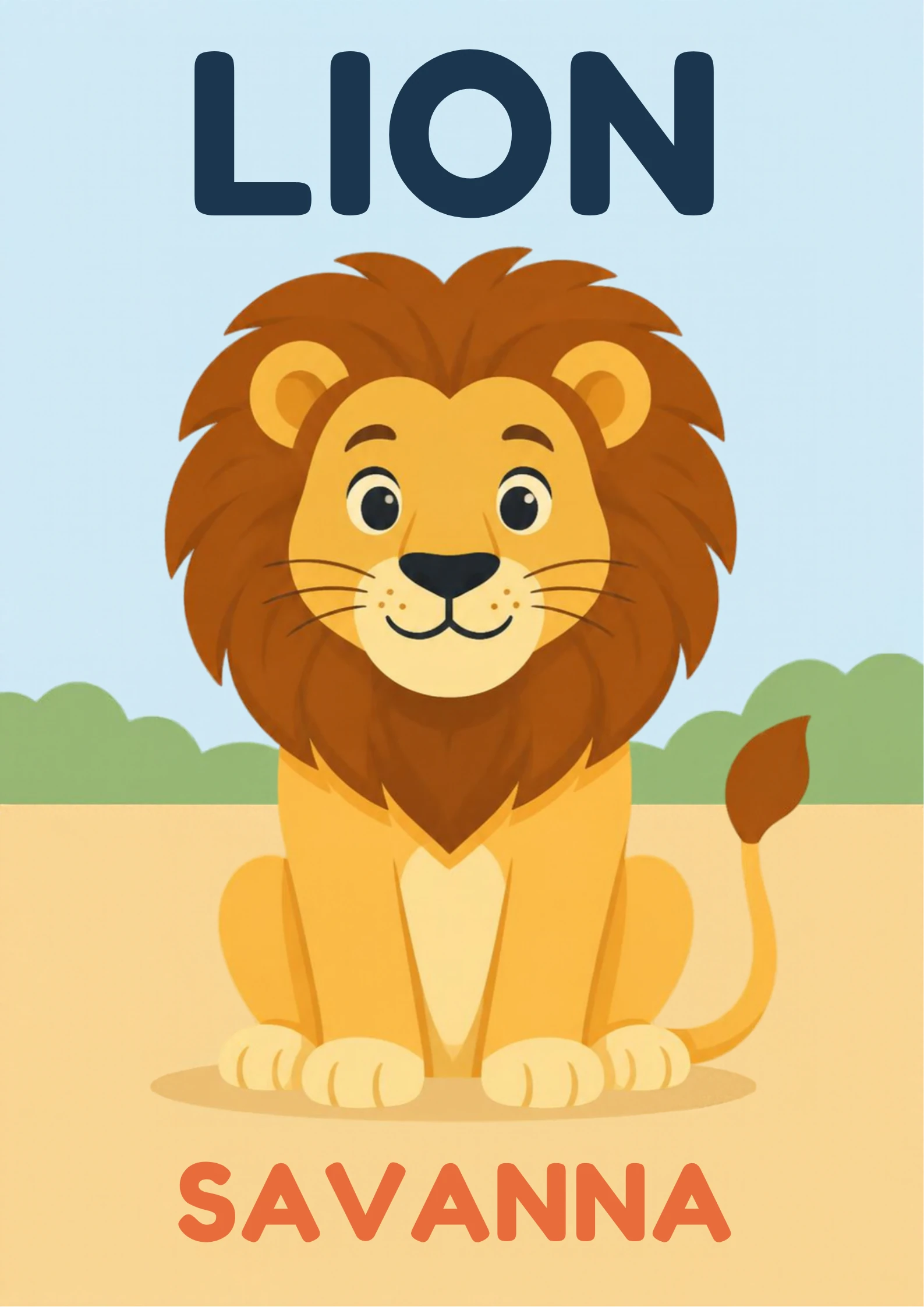
What is this?
The savanna heats up hard in the middle of the day. Shade under an acacia, a warm patch of sand and a pile of family is what a lion’s daytime looks like: rest, doze, groom, repeat — with tufts of tall grass and green bush nearby.
What does it mean?
Hunting is expensive and midday heat is brutal — so the lion’s plan is timing. Sleep through the hot hours on a full stomach’s worth of patience; hunt at dusk and dawn when the air cools and the prey’s eyes struggle. The tawny coat matches the dry grass exactly, and the pride — the lion family — shares the shade, the cubs and the hunt.
What does the child need to know?
Your child needs three lion ideas: lions rest up to twenty hours a day, usually together in the shade; a lion family is called a pride and the lionesses do most of the hunting; and a lion’s tawny coat disappears against dry grass — camouflage it wears like a uniform.
Why this matters
The lion flips the loudest story children know (fierce, always chasing) into a truer one (patient, rested, tactical). That correction is a thinking lesson in itself: the real king of the savanna wins by resting well and timing well — not by roaring all day.
What it teaches
Energy and rest concepts (why hunters save their strength), time-of-day thinking (cool hours versus hot hours), family-structure vocabulary (pride, lioness, cub), and color-matching reasoning — coat against grass, disguise against background.
Words to learn
lionpridemaneshadeprowltawnyroar
Say this to your child
“"The lion lives on the savanna and rests in the shade nearly all day — the pride naps together, cubs and all. When the air turns cool, the lionesses rise, stretch and prowl through the tall grass, quiet as shadows, their coats the very colour of home."”
Step by step
- Show the card: "This is a lion, and this is its home — the savanna."
- Flip the story gently: the lion looks fierce — and it is — but its favourite thing is a very long nap in the shade. Up to twenty hours a day.
- Ask why: hunting is hard work, midday is hot, and big runners overheat. So the pride rests together and hunts in the cool of morning and evening.
- Point at the coat: golden-tawny, exactly the colour of dry grass. Standing still, a lion half vanishes — the grass hides it.
- Meet the pride: lionesses hunt together; cubs tumble in the shade; the big dark mane says "grown-up". Finish by playing prowl-then-nap (below).
Look closer at the picture
On this card a golden lion with a full dark-brown mane and a calm, friendly face sits upright on warm sand, green shrubs and pale sky behind it, tail curled at its side. The word "savanna" sits below — the king at rest, between patrols.
Ask your child
"What is the lion doing most of the day?" "Why does it rest in the shade?" "What is a lion family called?" "Which lions do most of the hunting?"
What your child can say or do
Your child might say: "It naps in the shade — twenty hours!" "The daddy lion has the big dark mane," or the prowl line: "The lionesses hunt together when it gets cool."
Out in the real world
Shade mathematics is everywhere: on a hot day, measure the cool with your child — under the tree versus on the path, one hand each. The lion’s midday plan is a park-bench plan. And at dusk, point out when the birds and bats swap shifts: the cool hours belong to the prowlers.
Try it together
Prowl-then-nap: everyone lies in a shade pile for a slow count of twenty — proper pride napping, shoulders touching. Then the lionesses rise, stretch long, and prowl one silent circle of the room, feet soft, bodies low. Only after the prowl comes the roar — one big family roar, then straight back to the nap. Energy saved, timing learned.
Understanding check
Ask: "Where does the lion spend the hot hours? What is its family called? What colour is its coat, and what does it match?" In the shade, a pride, tawny like the grass — three answers and the pride sleeps on.
Parent tips
Keep the mane clear without fuss: it is a grown-up boy-lion feature, the way a beard is. And if your child is disappointed the lion naps so much, lean in — that is the twist the whole lesson hangs on: the mightiest cat on the savanna wins by being still. Rest is not the opposite of fierce; it is what makes it possible.
This lesson pairs with the Lion flashcard in the library — print it, show it, keep it on the fridge. Back to Animals & Their Habitats (Class 36).