
Seal — a step-by-step lesson for grown-up and child
This lesson stays in the polar region to meet the seal — the neighbour who is half-in and half-out of the water: sleek torpedo below the surface, contented loaf above the ice, wrapped in the sea’s warmest coat.
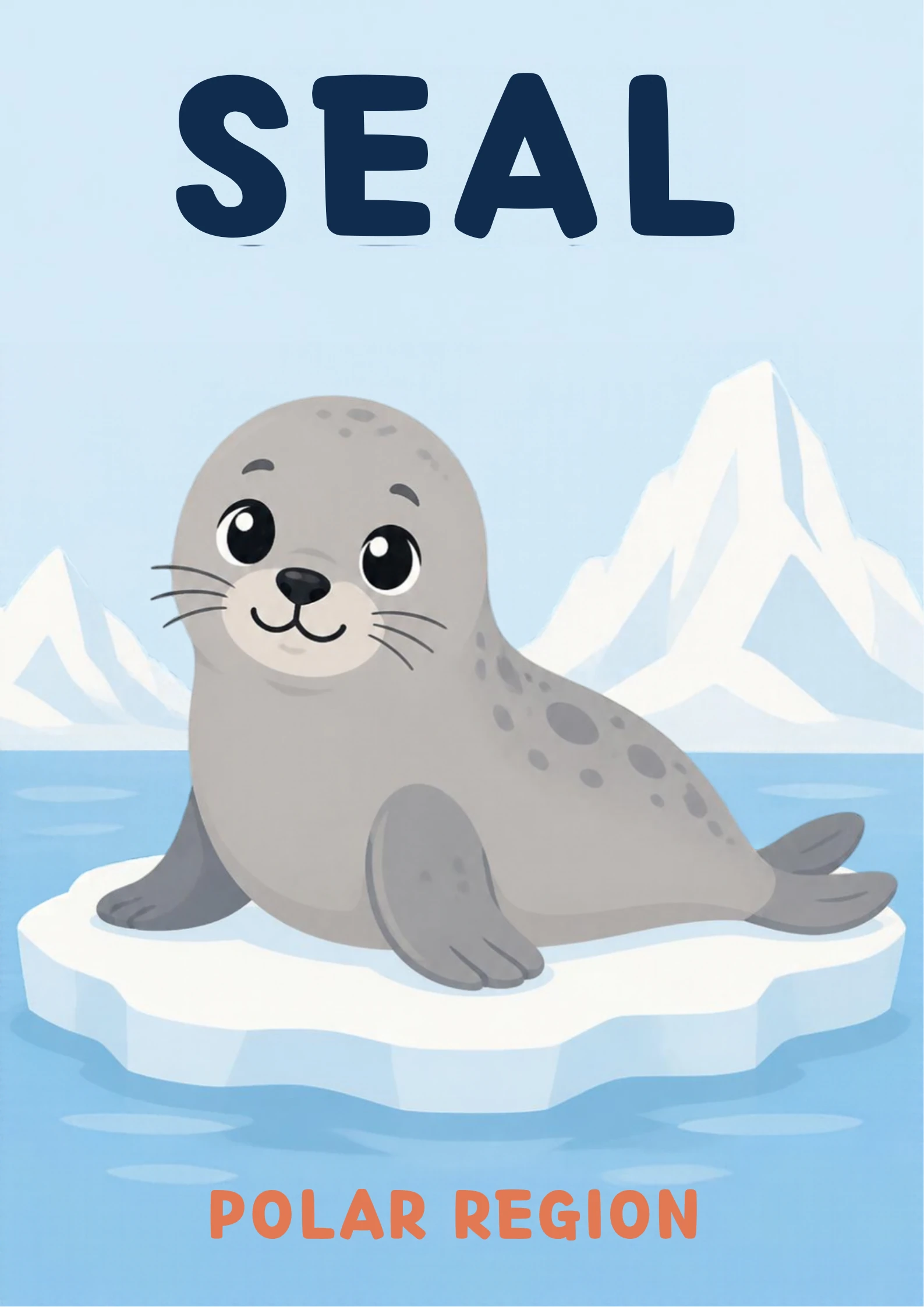
What is this?
Polar seas freeze at the top into floes and ice shelves while staying liquid below. Seals need BOTH: open water to hunt fish, and solid ice to haul out on — for resting, napping in the sun and raising pups.
What does it mean?
The seal’s secret is blubber: a thick layer of fat under the skin that works like a wetsuit the seal never takes off — holding body heat in the water that would freeze us in minutes. On the ice it flops and dozes; below it swims like a bullet, steered by back flippers, hunting by feel: its whiskers are so sensitive they read the water itself, feeling fish move in the dark.
What does the child need to know?
Your child needs three seal ideas: seals split their lives between ice (rest) and water (hunting); blubber — a thick fat layer — is their built-in warm coat; and their whiskers can feel fish swimming past in dark water, like fingers that read the sea.
Why this matters
The seal delivers the class’s best do-it-yourself science: the blubber-glove experiment is safe, quick and unforgettable. It also rounds the polar picture — penguin huddles on the surface, seal below it — showing one habitat hosting different answers to the same cold.
What it teaches
Insulation experimenting (blubber-glove test), touch-sensitivity concepts (whiskers as feelers), two-world scheduling (ice shifts and water shifts), and gentle body-play — the seal scoot is comedy with core strength in it.
Words to learn
sealblubberfloehaul outwhiskersflipperdive
Say this to your child
“"The seal lives in the polar region — it rests on the ice and hunts in the sea. Under its skin it wears blubber, a thick warm coat it never takes off. Its whiskers feel the water in the dark, so no fish swims past unnoticed. Half its life is a nap; the other half is a hunt."”
Step by step
- Show the card: "This is a seal, and this is its home — the polar sea and its ice."
- Split its day: below the water — torpedo, hunting fish; on top of the ice — a happy loaf, dozing in the sun. Both halves are home.
- Introduce blubber: under the seal’s skin sits a thick coat of fat called blubber — the reason icy water feels like a cool bath to it. We will test how it works in a minute.
- Meet the whiskers: each one is a feeler that reads the water. In the dark under the ice, a seal’s face finds fish by feel alone.
- Run the blubber-glove test (below), do the seal scoot, and close with the address: ice to rest, sea to hunt.
Look closer at the picture
On this card a silver-grey seal with dark spots, long whiskers and a gentle face rests on a low white ice floe, snowy peaks rising behind it on the pale sea. The words "polar region" sit below — hauled out, warm inside its coat, between two naps of its two-shift day.
Ask your child
"Where does the seal rest, and where does it hunt?" "What is blubber?" "What can its whiskers feel?" "Why can WE not swim in that water?"
What your child can say or do
Your child might say: "It sleeps on the ice and eats fish in the sea," "Blubber is its warm coat — like a wetsuit!" or the whisker boast: "It feels the fish with its whiskers in the dark!"
Out in the real world
Cold-water feel: one hand in a bowl of cold water bare, the other inside a bag-glove — the temperature gap between protected and bare skin IS the blubber lesson, felt in thirty seconds. Winter coats, wetsuits and duvets are all family blubber once named.
Try it together
Blubber-glove lab: one hand bare, one hand inside a plastic bag lined with thick fat (shortening) or doubled mittens — both into bowls of icy water side by side. Count the seconds until the bare hand begs out while the blubber hand stays cosy. Then the seal scoot: flat on the tummy, push up on palms, flop forward three times across the room — hauling out, at home.
Understanding check
Ask: "What are the two halves of a seal’s day? What keeps it warm in freezing water? What do its whiskers do?" Ice-and-sea, blubber, feel the fish — three answers and the floe is occupied.
Parent tips
Run the glove test fairly — same bowls, same minute — so the result is the child’s discovery, not your claim. If asked whether blubber is heavy, answer honestly: yes, and that is fine — in water, heavy and floaty are friends. Seals sink to swim; the coat does double duty.
This lesson pairs with the Seal flashcard in the library — print it, show it, keep it on the fridge. Back to Animals & Their Habitats (Class 36).