
Squirrel — a step-by-step lesson for grown-up and child
This lesson teaches what woodland is and how the squirrel earns its living there: climbing, collecting and caching — and how the squirrel’s forgetfulness quietly grows the next forest.
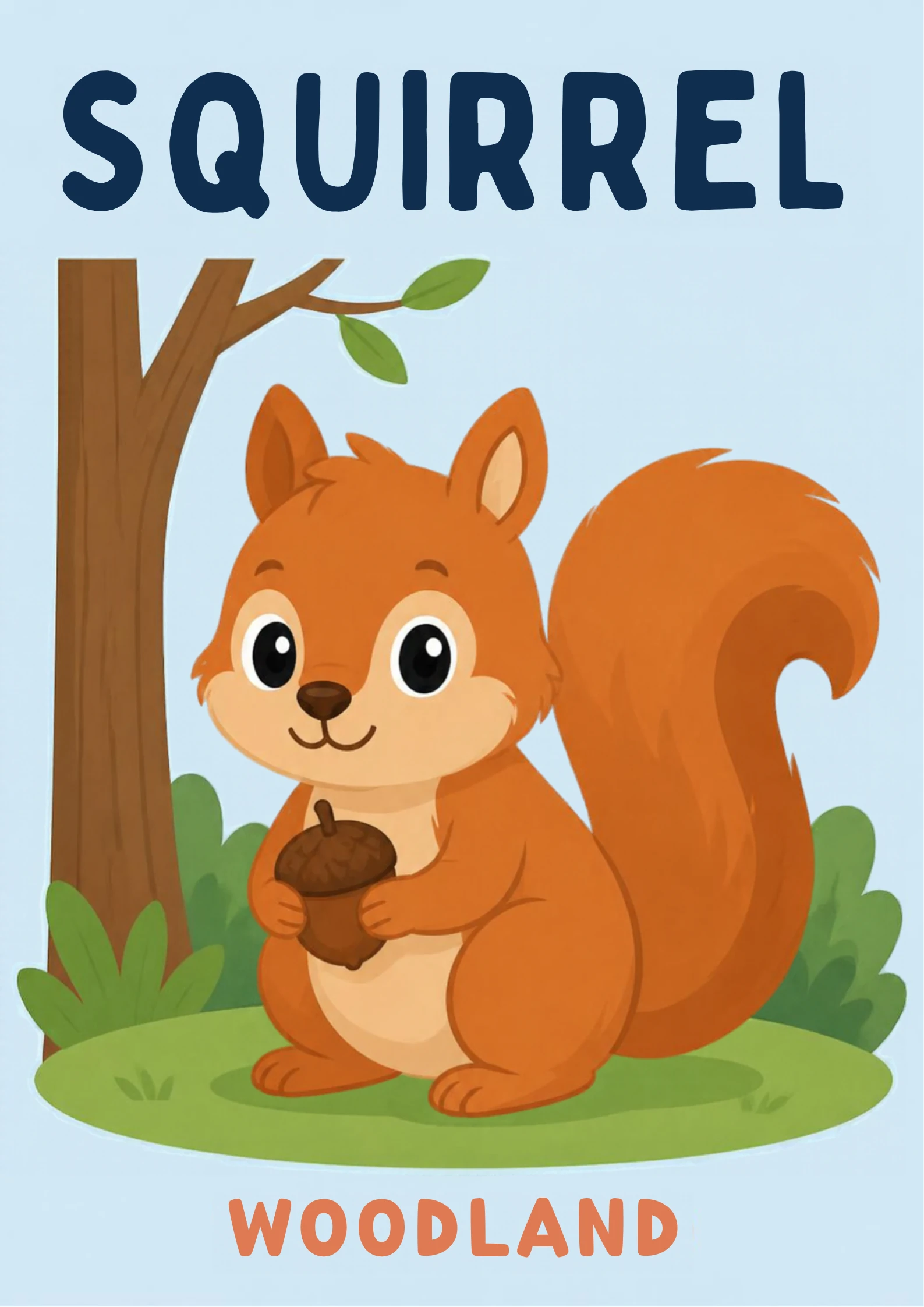
What is this?
Woodland is a landscape of many trees with open, airy ground between them — lighter and bushier than deep forest. Acorns, seeds and mushrooms grow there, and tree trunks stand like apartment towers.
What does it mean?
For the squirrel the woodland is a supermarket that closes in winter. All autumn it gathers nuts and hides them in hundreds of separate spots — and in winter it digs them up again. The trees feed the squirrel; the squirrel spreads the trees. Two neighbours helping each other without knowing it.
What does the child need to know?
Your child needs three woodland ideas: woodland is tree-country with food on the ground; squirrels prepare for winter by hiding nuts in many secret places; and some hidden nuts are never found again — those grow into new trees.
Why this matters
The squirrel teaches foresight — work now, eat later — which is a genuinely new idea for four-year-olds, delivered by a twitchy, charming animal. The accidental-forester twist adds a cause-and-effect gem: today’s lost acorn is next century’s oak.
What it teaches
Planning and future thinking ("winter is coming — gather now"), spatial memory through hiding games, tree-part vocabulary (trunk, branch, acorn), and the mutual-help idea that runs all through nature.
Words to learn
woodlandacorngatherhidewintertrunkstash
Say this to your child
“"The squirrel lives in the woodland. All autumn it gathers acorns and hides them in secret places for winter. It forgets some of them — and those grow into new trees! The squirrel is the forest’s little gardener without knowing it."”
Step by step
- Show the card: "This is a squirrel, and this is its home — the woodland."
- Point at the acorn in the paws: the squirrel is holding its winter plans. In autumn it hides hundreds of nuts — not one big pile, but hundreds of little secret stashes.
- Tell the twist: the squirrel forgets some of them. Those forgotten nuts sleep in the ground and wake up as baby trees. Squirrels plant forests by accident.
- Ask where the squirrel lives in the trees — up in a drey, a round leafy nest, high in the branches.
- Play the gather-and-remember game (below), then close with the cycle: tree makes nuts, squirrel hides nuts, forgotten nuts make new trees.
Look closer at the picture
On this card a red-brown squirrel with a cream chest and tufted ears holds one acorn in both front paws, sitting beside a thick brown trunk with a leafy branch overhead. The word "woodland" sits below — tree, squirrel and acorn, the whole partnership in one scene.
Ask your child
"What is the squirrel holding?" "Why does it hide nuts instead of eating them all now?" "What happens to the nuts it forgets?" "Where up in the tree does it sleep?"
What your child can say or do
Your child might say: "It hides acorns for winter," "It forgot some — they grow into trees!" or the proud memory claim: "I can find all five of mine!"
Out in the real world
Under any big tree in autumn, hunt for acorns and half-eaten stashes — teeth marks on a dropped acorn are squirrel evidence. In parks, watch real squirrels dig, pause, and dig elsewhere: a cache being checked, or a fake burial to fool watchers.
Try it together
Gather-and-remember: hide five "acorns" around a room while your child watches, then send the little squirrel to gather them all into one stash. Next round, your child hides and you gather. Hardest round: hide them, play something else for ten minutes, then search — winter is long and squirrels’ memories are tested by time.
Understanding check
Ask: "Where does a squirrel live? What does it do all autumn? What grows from its forgotten nuts?" Woodland, hides nuts, new trees — three answers and the pantry is stocked.
Parent tips
Let your child be better than the squirrel — remembering all five is a real triumph worth a cheer. The forget-some part is not failure; it is the forest’s plan. Keep that framing warm: mistakes that grow trees are the best kind.
This lesson pairs with the Squirrel flashcard in the library — print it, show it, keep it on the fridge. Back to Animals & Their Habitats (Class 36).