
Turtle — a step-by-step lesson for grown-up and child
This lesson teaches the coast as the meeting of two homes — land’s sand and sea’s waves — through the turtle, an animal that keeps one flipper in each: swimming all day, basking ashore, and hatching its babies right on the beach.
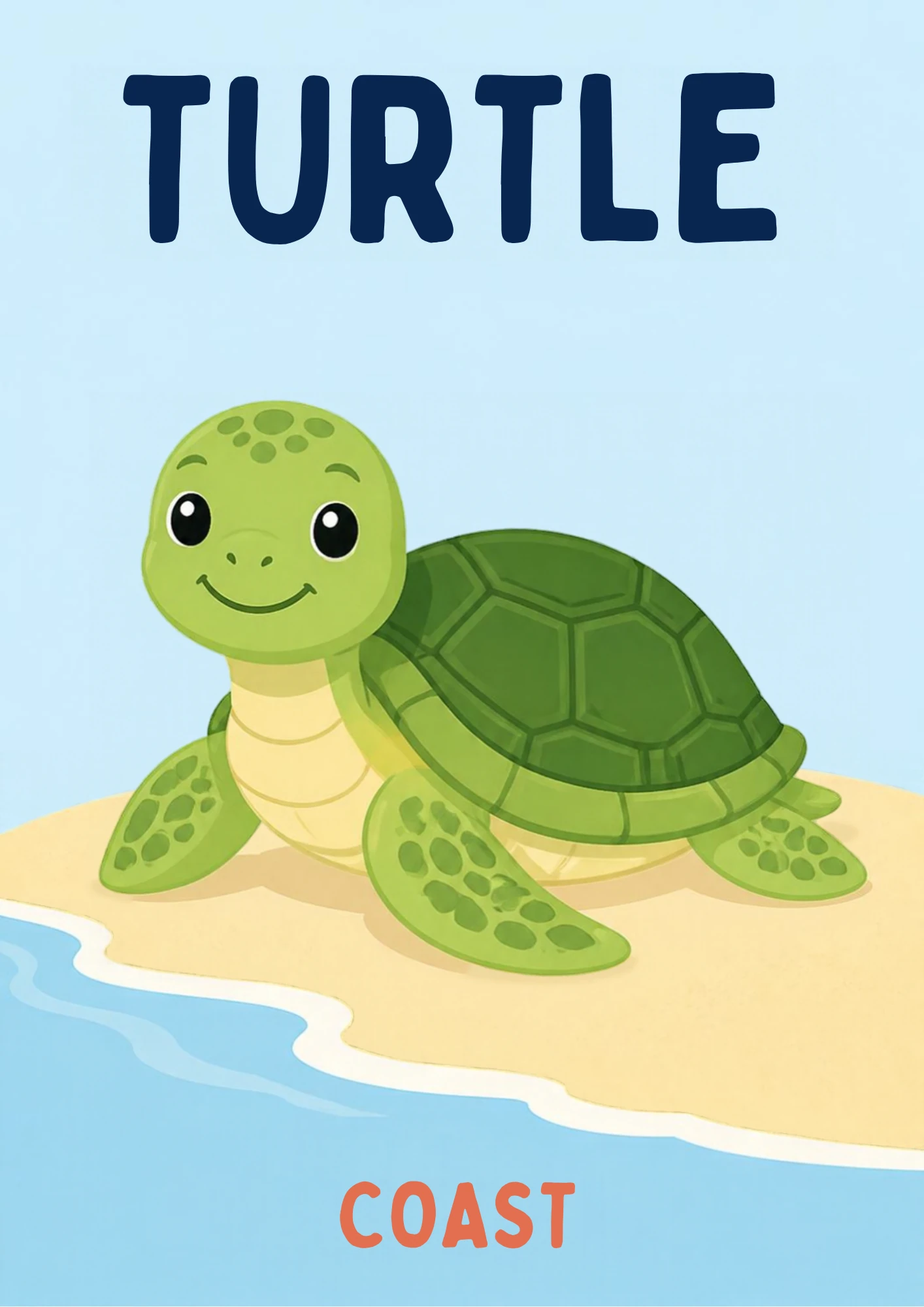
What is this?
The coast is where the sea meets the land: sandy beaches, wet sand at the wave-line, dunes behind, shallows ahead. It belongs to neither world and both at once.
What does it mean?
The turtle uses both halves of the coast. The sea feeds it — seagrass and jellyfish in the waves. The beach serves it — warm sand for basking, and, one night in a mother turtle’s life, the nursery: eggs buried in a sand nest above the tide-line, where the sun keeps them warm until the tiniest turtles dig out and dash for the waves.
What does the child need to know?
Your child needs three coast ideas: the coast is where beach meets sea — two habitats touching; sea turtles swim in the surf but rest on the sand; and baby turtles hatch from eggs buried in the dunes and walk to the water on their very first night.
Why this matters
The turtle holds the set’s first two-address life, and the baby-dash story is nature’s greatest cliffhanger — a journey every child can retell with their whole body. Coasts are also where most families actually meet the sea, so this card converts holidays into habitat lessons.
What it teaches
Two-category thinking (land home and water home in one life), sequencing the hatchling story, wave-and-sand sensory vocabulary, and empathy with fragility — the tiniest turtle against the gulls makes care feel urgent.
Words to learn
turtlecoastbeachwavesandnesthatchling
Say this to your child
“"The sea turtle lives at the coast, where the sand meets the sea. It swims among the waves all day and rests on the warm sand. And do you know where baby turtles are born? In a nest in the sand — then they dash to the sea, the very night they hatch!"”
Step by step
- Show the card: "This is a sea turtle, and this is its home — the coast."
- Split the scene: one side sand, one side sea. Ask which half the turtle uses — and reveal the answer: both. Swim in the sea, rest on the sand.
- Tell the nursery story: a mother turtle hauls up at night, digs a nest above the waves with her back flippers, and buries her eggs in the warm sand.
- Tell the dash: weeks later the eggs hatch, and the tiniest turtles ever dig out and walk, wobble and sprint to the waves — their first journey, the night they are born.
- Play the hatchling dash (below) and close with the address: sea for lunch, beach for bed.
Look closer at the picture
On this card a green sea turtle with a patterned shell, scaly flippers and a smiling face rests on pale wet sand at the exact line where a gentle blue wave curls up the beach. The word "coast" sits below — half sand, half sea, both home.
Ask your child
"What are the two parts of the coast?" "What does the turtle do in the sea? On the sand?" "Where are turtle eggs laid?" "What do the babies do the night they hatch?"
What your child can say or do
Your child might say: "It swims in the sea and sleeps on the beach," "The eggs are in a sand nest," or the dash line: "The babies run to the water as fast as they can, the first night!"
Out in the real world
Beach holidays become habitat audits with one question: which half is this — turtle sand or turtle sea? Wave-line footprints, tide marks and dune grass all feed the lesson, and any lifeguard-flag chat doubles as the safety briefing below.
Try it together
Hatchling dash: mark a "nest" line at one end of the room and a "sea" of blue cloth at the other. Hatchlings crouch low in the nest, count to three, then make the run — wobbly flippers on the arms, fastest dash allowed. A "gull" player swoops a scarf overhead to make the run honest. Reach the sea and you may swim in circles, shouting the good news.
Understanding check
Ask: "What two homes meet at the coast? Where does the mother lay her eggs? What do the babies do?" Sand-and-sea, a sand nest, dash to the waves — three answers and the lesson crawls safely home.
Parent tips
Keep the gull playful, never scary — the dash is a triumph story, and most hatchlings make it. If your child asks how the babies know where the sea is: the horizon glows brighter over the water, and the waves whisper. True, and just magical enough to retell.
Staying safe
Beach rules are turtle rules: swim between the flags with a grown-up, never turn your back on the waves, and if you ever find a real nest, look with eyes only — the sand nursery must not be touched.
This lesson pairs with the Turtle flashcard in the library — print it, show it, keep it on the fridge. Back to Animals & Their Habitats (Class 36).