
Beaver — a step-by-step lesson for grown-up and child
This lesson introduces the one animal in the class that constructs its own habitat: the beaver fells sticks, dams the stream, and pools the river into a pond deep enough to hide a front door under water.
What is this?
A river is moving fresh water — running from hills to sea, edged with reeds, willows and stones. It flows, it ripples and it changes its banks with every season.
What does it mean?
Moving water is a poor bedroom — so the beaver changes the speed. It drags branches and stones into the stream, packs the gaps with mud, and the backed-up water spreads into a still pond. In the middle it builds its lodge: a dome of sticks with the entrance UNDER the water, safe from hungry visitors. One busy builder, and the running river becomes a quiet, deep, private home.
What does the child need to know?
Your child needs three beaver ideas: rivers are running fresh water with grassy banks; beavers build dams from sticks and mud that turn the flow into a pond; and they live in a lodge with an underwater front door, reached by diving.
Why this matters
The beaver is engineering made visible at bath-toy scale: block the flow, still the water, build the house. It is also the set’s bridge between habitats — the beaver’s pond becomes frog-and-fish housing, planting the idea that one builder’s work opens homes for many.
What it teaches
Construction play and sequencing (gather, stack, pack), cause-and-effect with real water, tool reasoning (teeth as axes, tails as rudders), and generosity concepts — building that benefits the whole neighbourhood.
Words to learn
beaverriverdamlodgepondpaddle tailsticks
Say this to your child
“"The beaver lives by the river — but first it fixes the river. It piles up sticks and mud until the water stops and makes a pond, then builds a round stick house with its door hidden under the water. Dive in, pop up inside: home. And the new pond welcomes everyone."”
Step by step
- Show the card: "This is a beaver, and this is its home — the riverbank."
- State the problem like a builder: rivers RUN — too fast for a quiet house. So the beaver does something no other animal here does: it rebuilds the river.
- Walk the build: drag sticks and stones into the water, pack the gaps with mud — the water backs up and spreads into a still pond. That wall is called a dam.
- Tour the lodge: a dome of sticks in the pond, and the front door is UNDER the water — you get home by diving.
- Build a mini dam (below) and close with the generosity: the new pond becomes a home for frogs, fish and birds too.
Look closer at the picture
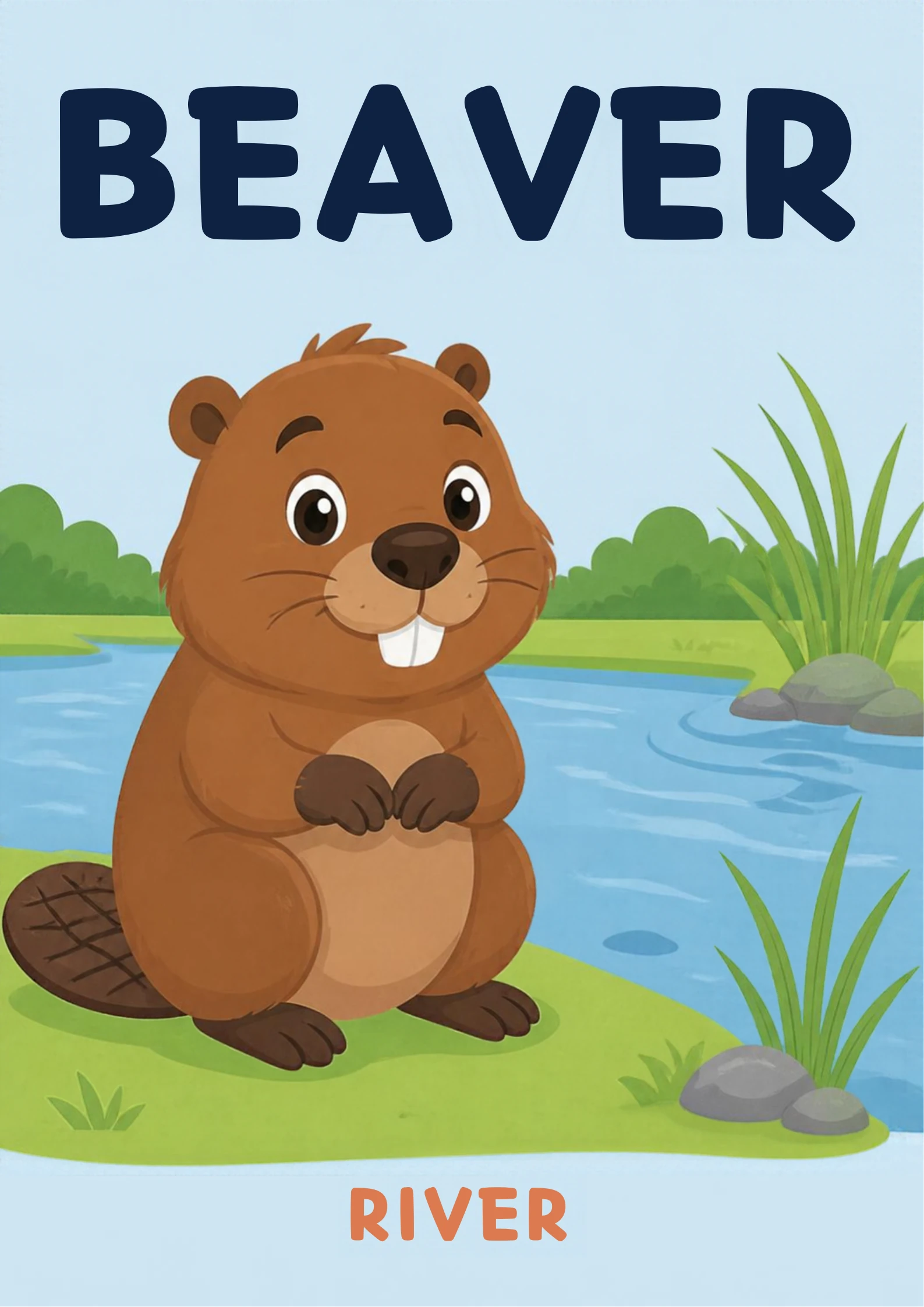
On this card a chestnut-brown beaver with a cream muzzle, two big front teeth and a flat paddle tail sits on a grassy bank beside blue water, reeds and bushes at the edges. The word "river" sits below — the builder on its own riverfront, sticks nearby.
Ask your child
"Why does a beaver build a dam?" "What is the dam made of?" "Where is the lodge’s door?" "Who else comes to live in the beaver’s pond?"
What your child can say or do
Your child might say: "It blocks the river with sticks and mud," "Its door is under the water — it dives home!" or the neighbour line: "The pond is for the frogs and fish too!"
Out in the real world
Any flowing water is a beaver lecture: watch the current push a leaf and ask "could you build a house in water this fast? What would you do first?" Concrete tip: look for gnawed sticks and stumps with tooth-scarves — beaver country signs, in real parks.
Try it together
Bath or basin dam: tilt a slow trickle from the tap or a jug, then let your child stop it with a dam of twigs, duplo and foil, watching the water pool behind. Then the flood test — remove one stick and watch the leak teach engineering faster than any explanation. Dry-run version: build the dam with blocks across a hallway "river" of blue cloth.
Understanding check
Ask: "What does a beaver build first? What is the wall called? Where is the front door of the lodge?" A dam, sticks-and-mud, under the water — three answers and the pond is filling.
Parent tips
Say "engineer" out loud and often — a four-year-old who calls the beaver an animal engineer owns a word most meet at school age. And when the dam leaks, celebrate: leaks are how real dams teach. The beaver patches with mud; your child patches with one more block.
Staying safe
Real rivers and ponds earn the standing rule: grown-up hand within arm’s reach at any natural water, no leaning over banks, and hands washed after water play. The beaver dives safely; small people stay on the bank.
This lesson pairs with the Beaver flashcard in the library — print it, show it, keep it on the fridge. Back to Animals & Their Habitats (Class 36).