
Bus Mechanic — a step-by-step lesson for grown-up and child
This lesson scales up from one car to a whole fleet: the depot where buses sleep, the mechanic who checks every one, and big-vehicle safety rules.
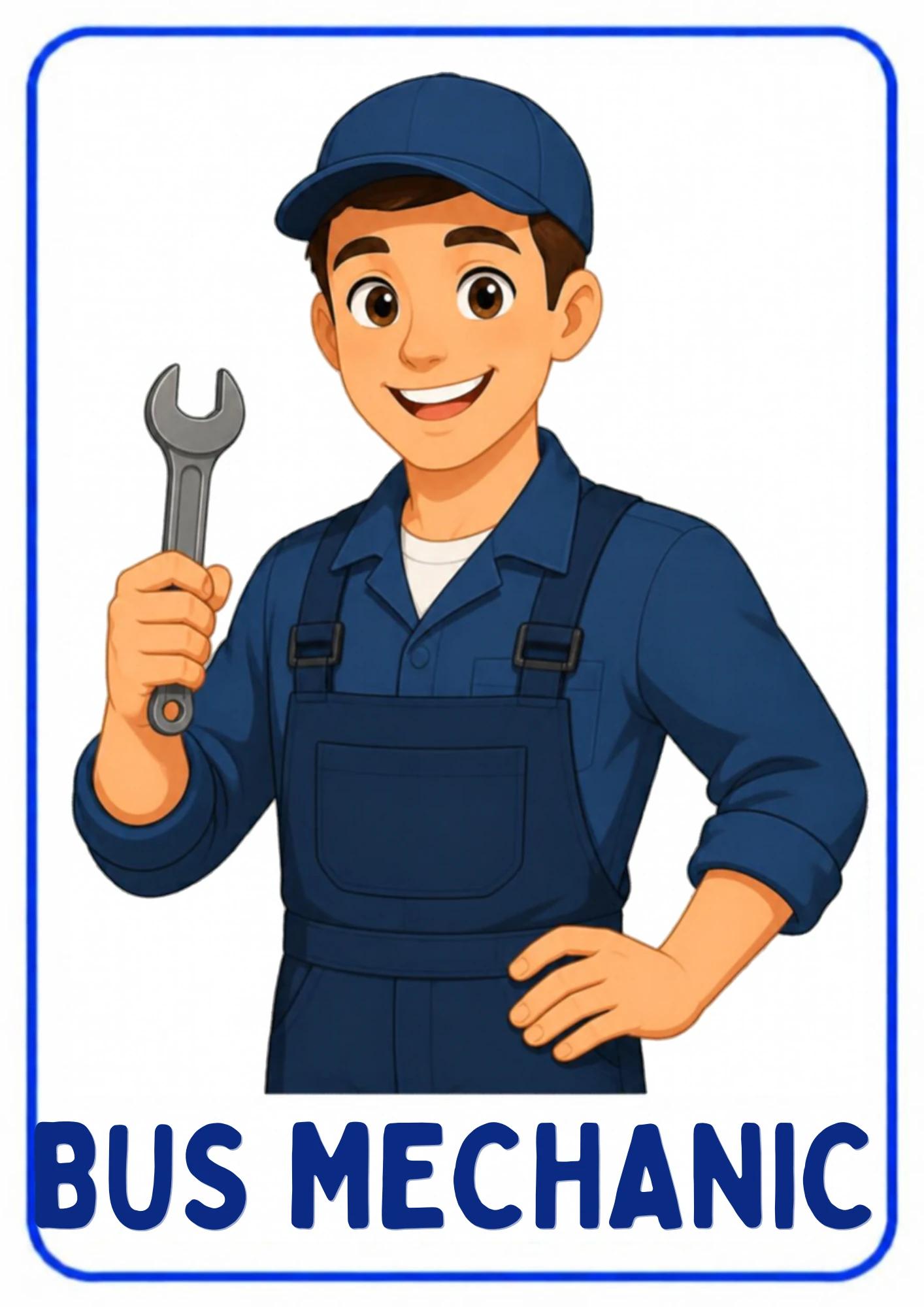
What is this?
A bus mechanic is a big-vehicle helper who keeps a whole fleet of buses safe, checked and ready each morning.
What does it mean?
The depot is a giant garage where buses park, get washed, fuelled and fixed. Bus mechanics test brakes, check doors and ramps, change huge tyres and give every bus a safety check before it carries people again.
What does the child need to know?
Depot know-how: a fleet means EVERY bus must be safe, not just one; big vehicles have big blind spots; we never climb on, under or behind parked buses.
Why this matters
The fleet idea stretches thinking: dozens of buses, every single one, every single day. It is responsibility at scale — and depot pits and lifts are unforgettable machinery.
What it teaches
Scale comparison (car vs bus parts), systematic checking (one bus, then the next), big-vehicle safety habits, fleet-and-route thinking, and inspection vocabulary.
Words to learn
bus mechanicdepotfleetsafety checkbrakesinspection
Say this to your child
“"Bus mechanics check every bus before it drives: big brakes, big tyres, big doors. If every bus passes the check, everyone rides safely. We never climb on parked buses — even sleeping ones."”
Step by step
- Show the card: "This is a bus mechanic. They check every bus so every ride is safe."
- Find the big bus, the lift, the tools. "Everything on a bus is bigger — the tyres, the wrenches, the sounds!"
- Explain the fleet: "In the depot sleep MANY buses. The mechanic checks them one by one — brakes, doors, lights, ramps — before any bus carries people."
- Contrast with the car garage: one car today; a whole fleet every morning. That is a big, important job.
- Set the big-vehicle rule: parked buses are sleeping giants — we never climb on, under or behind them.
Look closer at the picture
Ask: what is the mechanic checking? How many buses can you find? What is bigger on a bus than on a car? Where do you think buses sleep at night?
Ask your child
"Who checks the buses? What gets checked — doors, brakes, what else? Why must EVERY bus be checked? Do we climb on parked buses?"
What your child can say or do
The depot line: "Every bus checked, every bus safe!" And the big-vehicle rule: "Parked buses are sleeping giants — we keep away."
Out in the real world
Any bus ride gains a layer: "the mechanic checked these brakes." Depot spotting from the road (far back); some depots run open days — pit views are jaw-droppers.
Try it together
Depot inspection: line up toy buses. Your child the mechanic checks each: brakes (block behind wheels), doors (open-close count), lights (draw them glowing), ramp (fold-out). Stamp a paper "PASSED" per bus — the whole fleet must pass before the route starts.
Understanding check
Ask: "Who keeps buses safe? What does the mechanic check? Do we climb on parked buses?" Bus mechanic + brakes-doors-lights + never = pass.
Parent tips
Scale talk is the gold: "the mechanic’s wrench is THIS long for bus nuts!" Compare car and bus side by side. Fleet-checking games quietly teach systematic, complete work — the scholar’s habit.
Staying safe
Depots and parked buses are real workshops with pits and heavy vehicles — never climb on, under or behind any bus. Watch big vehicles from far back: they cannot see small people.
This lesson pairs with the Bus Mechanic flashcard in the library — print it, show it, keep it on the fridge. Back to Community Helpers & Our Neighborhood (Class 33).