
Chef — a step-by-step lesson for grown-up and child
This lesson opens the restaurant kitchen door: what chefs do, how an order becomes a meal, and which kitchen jobs belong to little hands.
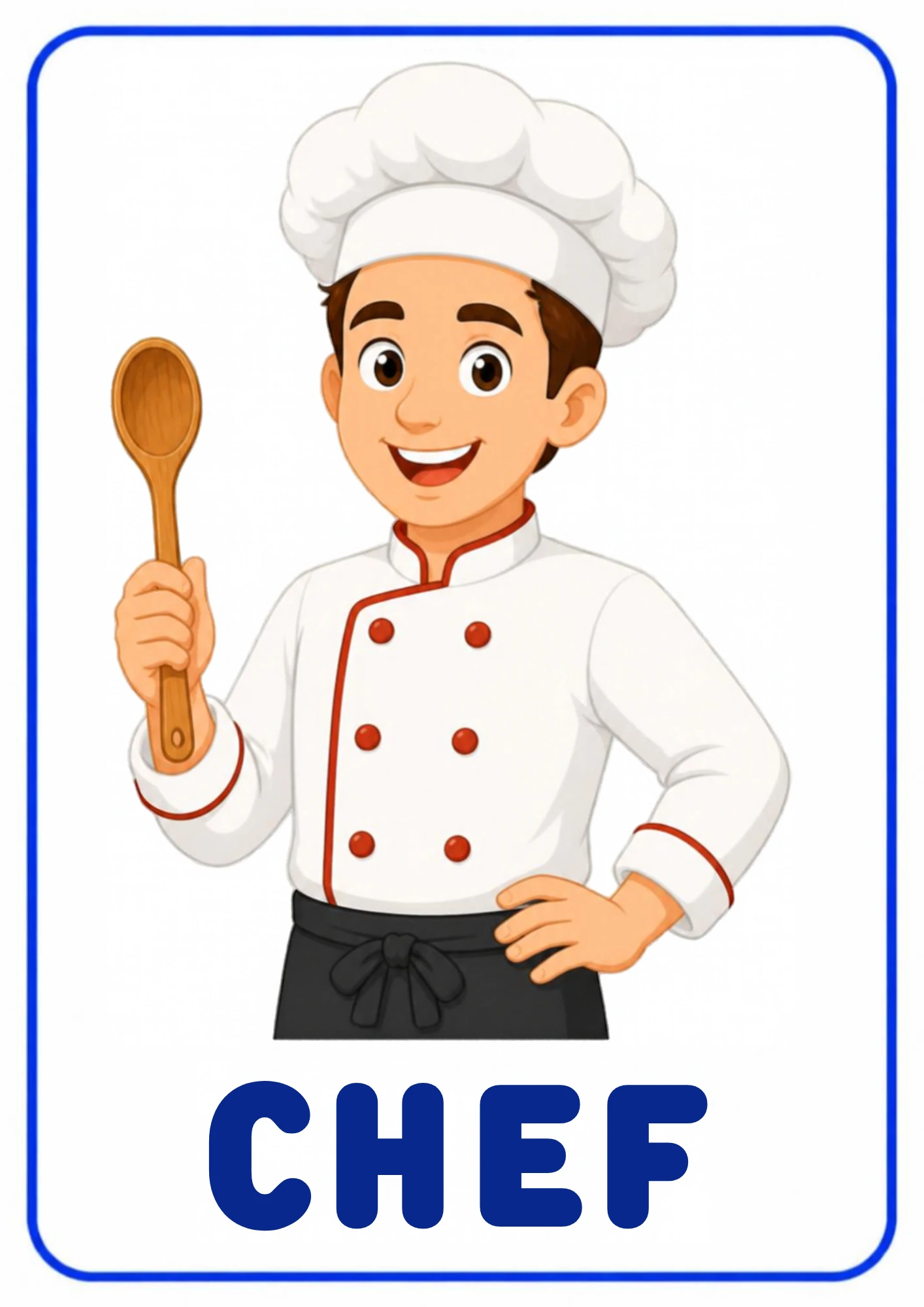
What is this?
A chef is a food helper who cooks meals in a restaurant kitchen for many people at once.
What does it mean?
Restaurant kitchens are busy teams: orders come in, chefs chop, cook, taste and plate, and servers carry plates out. Chefs wear aprons; many wear tall hats.
What does the child need to know?
Kitchen know-how for fours: meals are built in steps (choose → cook → plate → serve), tasting and adjusting is part of cooking, and hot things and knives are grown-up tools.
Why this matters
A restaurant visit becomes a discovery tour when your child knows the machinery behind the menu. Sous-chef jobs at home also grow brave, curious eaters.
What it teaches
Sequencing (order→cook→plate→serve), measurement and counting in real cooking, sensory vocabulary (sizzle, tangy, fresh), team-role thinking, and brave-tasting pride.
Words to learn
chefkitchenmenuorderingredientplate
Say this to your child
“"In a restaurant you choose your food from the menu, and the chef cooks it for you. Chefs taste as they cook — that is how they know it is just right."”
Step by step
- Show the card: "This is a chef. Chefs cook food for many people in a big kitchen."
- Find the hat, the pans, the stove. "Everything in a kitchen has a job — just like the chef."
- Tell the order’s journey: you choose from the menu → the waiter tells the chef → the chef cooks and plates it → the waiter brings it out. Four beats, hand to hand.
- Name the smells and sounds: onions sizzle, garlic smells strong, pans clatter. Kitchens talk to your nose and ears.
- Assign a real sous-chef job tonight — the lesson lands in your own kitchen.
Look closer at the picture
Ask: what is the chef cooking? What can you smell on this card (imagine!)? How many pans or bowls can you count? Is the kitchen calm or busy?
Ask your child
"Who cooks the food in a restaurant? What does the chef do first — chop, cook or plate? Which kitchen jobs are for grown-ups? What would YOU put on a menu?"
What your child can say or do
The sous-chef call-out: "Yes, chef!" And the tasting words: "Mmm, needs more…?" — trying a taste and describing it out loud.
Out in the real world
At a restaurant, watch the kitchen window: orders go in, plates come out. At home, name the chef moments: "this whisking is chef work!"
Try it together
Home restaurant: paper menus with three dishes (drawn or glued pictures), your child takes the order, "cooks" with play food or helps with the real easy dish, plates it with a leaf garnish, and announces: "Table two, ready!" Swap chef and waiter roles.
Understanding check
Ask: "Who cooks in a restaurant? What comes first — order or cooking? Which jobs are yours in our kitchen?" Chef + order-first + safe-jobs = pass.
Parent tips
Give the tasting job before the eating job — chefs taste, and tasting without pressure grows food bravery. One real task (tearing lettuce, stirring) beats an hour of toy cooking.
Staying safe
Stoves, ovens and knives are grown-up tools — a child’s kitchen jobs are washing, tearing, stirring and sprinkling. A grown-up stays in the kitchen the whole time.
This lesson pairs with the Chef flashcard in the library — print it, show it, keep it on the fridge. Back to Community Helpers & Our Neighborhood (Class 33).