
Farmer — a step-by-step lesson for grown-up and child
This lesson follows food from soil to plate and hands your child a real farmer’s job: growing something from seed, day by day.
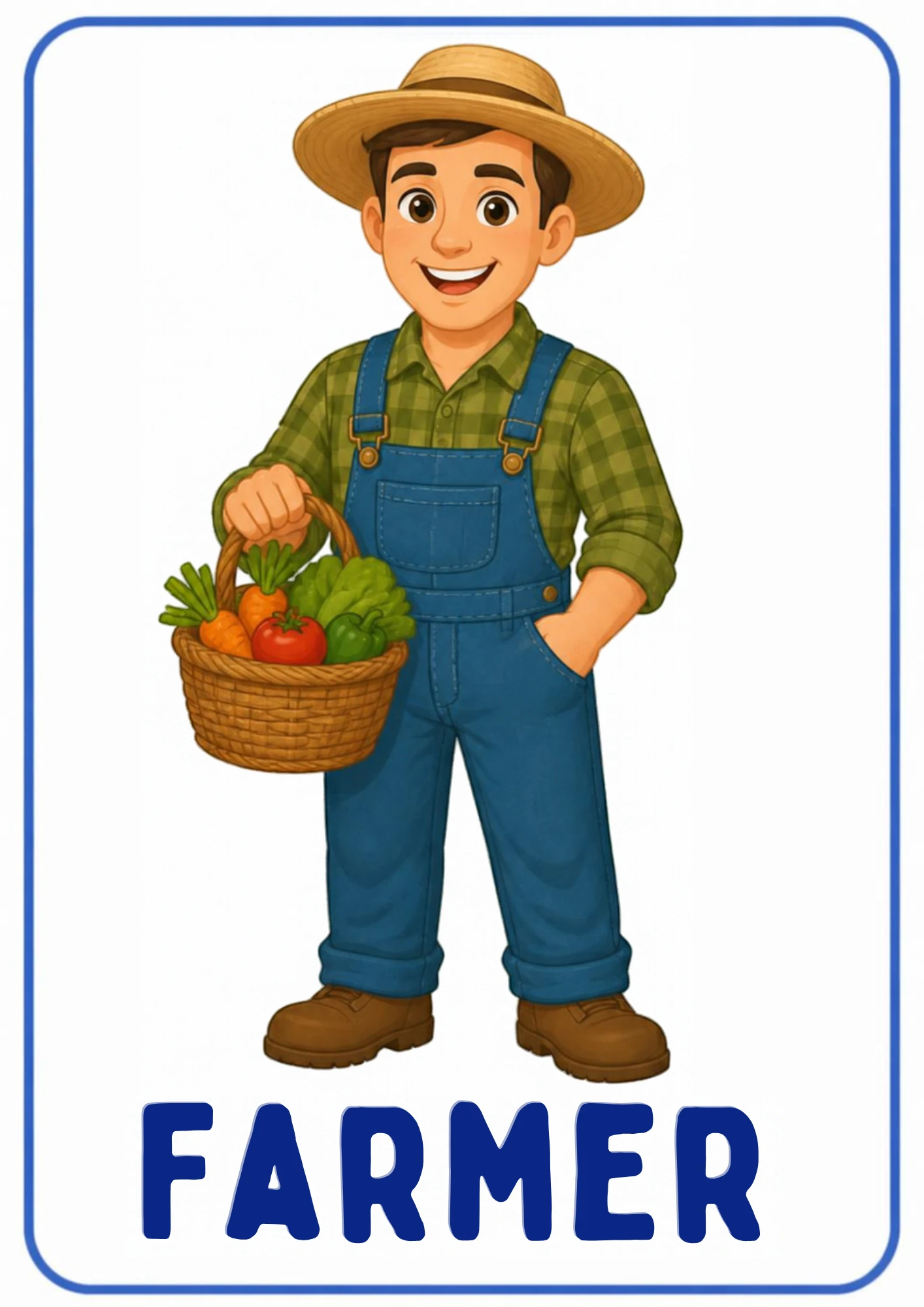
What is this?
A farmer is a food helper who grows vegetables, fruit and grains, and cares for farm animals.
What does it mean?
Farms have fields, greenhouses, barns and tractors. Farmers plant, water, weed, harvest, feed animals and carry the food to markets and shops for all of us.
What does the child need to know?
Food knowledge for fours: food grows in soil or on trees and plants, animals give us milk and eggs, and every carrot in the shop was grown by someone.
Why this matters
"Where does food come from?" is a four-year-old’s favourite mystery. Knowing the farmer grows brave eating — children try foods they helped imagine from seed.
What it teaches
Patience across days (the farmer’s core lesson), plant-life-cycle sequencing, responsibility routines (daily watering), nature vocabulary, and food-to-farm mapping.
Words to learn
farmerseedharvestcropsbarnsoil
Say this to your child
“"Farmers grow our food. A carrot starts as a tiny seed — the farmer waters it and waits, and waits, until one day it is ready. Farmers are patient helpers."”
Step by step
- Show the card: "This is a farmer. Farmers grow the food we eat and take care of farm animals."
- Find the fields, the tractor, the animals. "The tractor helps the farmer work the big fields."
- Tell the seed story: seed into soil → rain and sun → roots drink → sprout → grow → harvest → shop → OUR plate. Use your arm as the growing stem.
- Match tonight’s dinner to farms: "This potato? A farmer dug it up. This apple? Picked from a tree."
- Start the windowsill farm today — the lesson is not finished until something sprouts.
Look closer at the picture
Ask: what is the farmer holding? Which animals can you find? Where do you think the food goes after the farm? Is it planting time or harvest time on this card?
Ask your child
"Where do carrots come from?" "What does the farmer plant?" "Who gives us milk and eggs?" "What are YOU growing on our windowsill?"
What your child can say or do
The farmer’s patience line: "Seeds need water, sun and time." And the dinner recap: "The farmer grew this, the shop sold it, we cooked it!"
Out in the real world
Farmers’ markets let your child meet real growers — ask one question ("what is ripe now?"). Farm-visit days in autumn are worth the trip: pumpkins, tractors, mud.
Try it together
Windowsill farm: beans on wet cotton in a jar, or herb seeds in a cup. Your child is the farmer: water daily, check leaves, measure with a ribbon. First sprout = celebration; first wilt = farmer problem-solving.
Understanding check
Ask: "Who grows our food? What does a seed need to grow? What did the farmer harvest?" Food + water-sun-time + naming a crop = pass.
Parent tips
Pick the three foods your child actually eats and trace each to its farm — relevance beats completeness. Keep the watering job real: a plant that depends on them is responsibility with leaves.
Staying safe
Farms are workplaces: tractors, tools and animals are the farmer’s, not toys. Garden berries and mushrooms are never eaten without a grown-up’s yes.
This lesson pairs with the Farmer flashcard in the library — print it, show it, keep it on the fridge. Back to Community Helpers & Our Neighborhood (Class 33).