
Dentist — a step-by-step lesson for grown-up and child
This lesson makes the dental chair familiar before your child sits in it — what the dentist does, what the tools do, and the brushing routine that keeps visits easy.
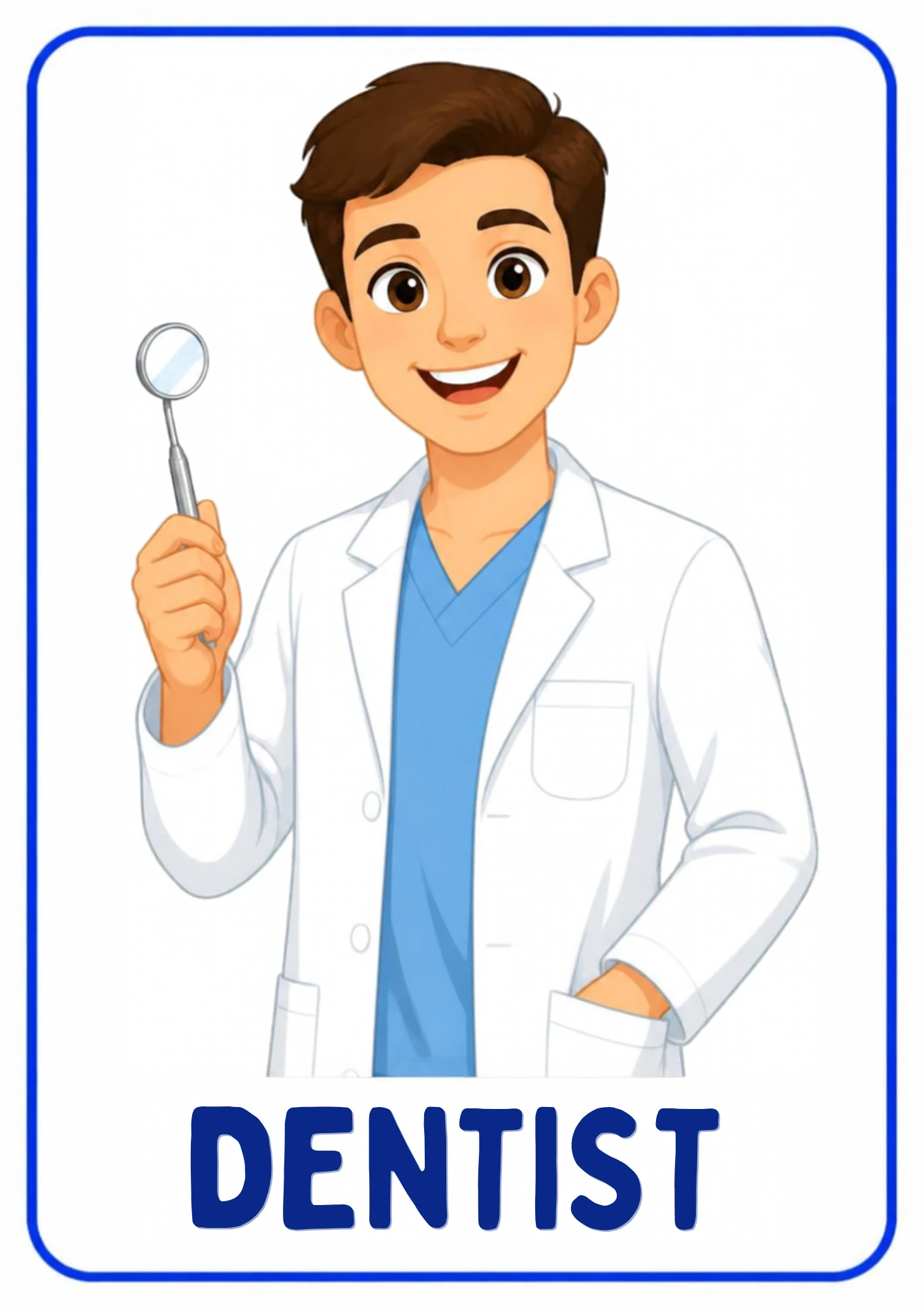
What is this?
A dentist is a tooth helper who checks teeth, cleans them, fixes small holes and teaches everyone the best brushing moves.
What does it mean?
Dental clinics have a big reclining chair, a bright lamp, a mirror on a stick and tiny scrapers. A dental nurse helps beside the dentist.
What does the child need to know?
Tooth know-how: dentists count and clean teeth; check-ups are mostly looking; brushing happens morning and night with a pea-sized dab of paste.
Why this matters
Dental fear is learned from adults. An honest, specific story — chair, lamp, mirror, count — plus a solid brushing habit keeps first visits boring, which is exactly right.
What it teaches
Health-routine ownership (the brushing habit), counting practice on a real mouthful, honest-body-talk vocabulary, and calm waiting skills.
Words to learn
dentistcheck-upcleanbrushtoothpastecavity
Say this to your child
“"The dentist counts your teeth and keeps them strong. We brush morning and night so the dentist finds happy, clean teeth. If anything feels strange in the chair, you tell the dentist — they will stop and explain."”
Step by step
- Show the card: "This is a dentist. Dentists keep our teeth healthy and strong."
- Find the chair, the lamp, the tools. "The chair lies down like a rocket seat, and the lamp is a little sun."
- Tell the check-up in order, honestly: lie back → open wide → the dentist counts and looks with a tiny mirror → maybe a clean and polish → done, with a sticker.
- Be honest about the odd bits: the mirror is cold, the polish buzzes, holding your mouth open is strange work — and you can always raise a hand to say so.
- Brush twice a day together: outside circles, inside, chewing tops — two minutes, song optional but recommended.
Look closer at the picture
Ask: what is the dentist looking at? Can you find the little mirror? What is the lamp for? Does the patient look calm or worried?
Ask your child
"Who keeps our teeth strong? What does the dentist do first at a check-up? How many teeth can you count in the mirror? When do we brush?"
What your child can say or do
The open-wide line: "Ahh!" with five seconds of stillness. And the honest line: "That feels cold/funny" — practised on a teddy first.
Out in the real world
Count teeth in the mirror after brushing — most fours have twenty. Spot other people brushing in books and films; dentist talk stays light and daily, not pre-visit only.
Try it together
Teddy dental clinic: your child the dentist, toothbrush for a teddy with big paper teeth. Count aloud ("one, two… twenty!"), brush the sugar bugs away, then swap — you brush your child’s real teeth while they do the dentist-voice. Two minutes, twice a day.
Understanding check
Ask: "What does the dentist do at a check-up? When do we brush? What do we say if something feels strange in the chair?" Count + twice-a-day + tell-the-dentist = pass.
Parent tips
Brush FOR them until about six — their technique cannot yet do the job alone; let them "finish" for pride. Book check-ups for mornings when possible; tired teeth-jaws clamp.
Staying safe
Pea-sized toothpaste only, and teach spitting — toothpaste is for brushing, not swallowing. Only grown-ups floss little teeth.
This lesson pairs with the Dentist flashcard in the library — print it, show it, keep it on the fridge. Back to Community Helpers & Our Neighborhood (Class 33).