
Pilot — a step-by-step lesson for grown-up and child
This lesson walks a flight from checklist to landing and turns airport overwhelm into a known story with your child as co-pilot.
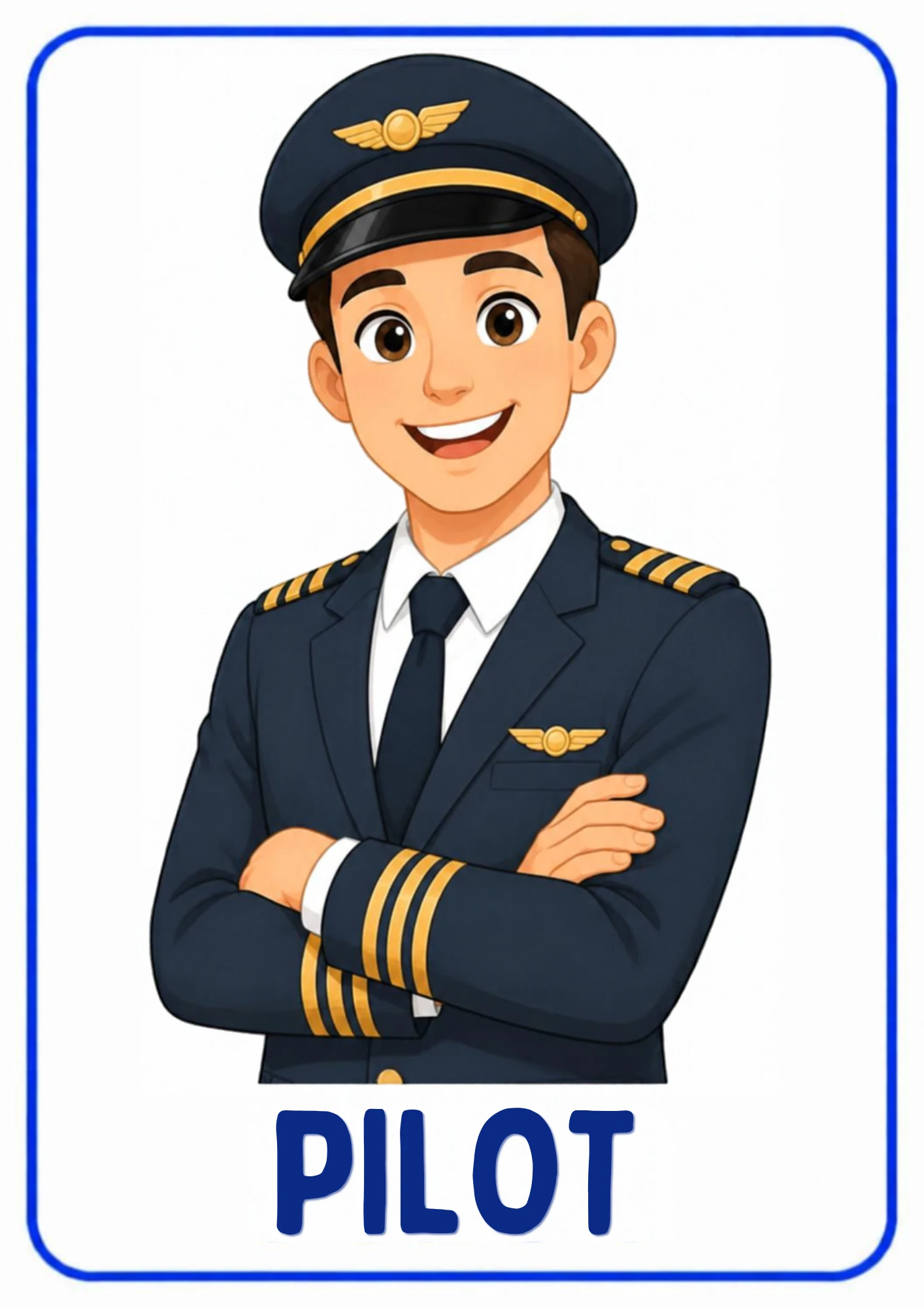
What is this?
A pilot is a flying helper who flies aeroplanes, taking people and things safely across the sky.
What does it mean?
Pilots sit in the cockpit with screens, buttons and a steering wheel called a yoke. Before every flight they check the plane, plan the route and talk with the airport tower by radio.
What does the child need to know?
Flight know-how: pilots check everything BEFORE flying, the tower helps guide them, and at the airport children hold a grown-up’s hand and stay behind the lines.
Why this matters
Airports are sensory chaos for fours — belts, queues, loudspeakers. A pilot story gives the trip a hero and a script, and contrails turn every future sky-gaze into spotting helpers.
What it teaches
Sequencing (check→taxi→take-off→fly→land), big-map thinking (world is huge, planes cross it), radio-play dialogue, weather curiosity, and waiting skills at real airports.
Words to learn
pilotcockpittowertake offlandco-pilot
Say this to your child
“"The pilot checks everything, then flies the plane up above the clouds. The tower talks to the pilot on the radio the whole way. Before we take off, everyone buckles up — even teddies."”
Step by step
- Show the card: "This is a pilot. Pilots fly aeroplanes and keep everyone on board safe."
- Find the cockpit, the windows, the wings. "The pilot sits at the very front — the best office window in the world!"
- Tell the flight in five beats: check the plane → taxi down the runway → take off → fly above the clouds → land. Act each with your arm.
- Explain the tower: "The people in the tower watch every plane and talk to pilots by radio — helper talking to helper."
- Play the whole flight before any real trip, so belts and take-off sounds are old friends.
Look closer at the picture
Ask: what is the pilot wearing? What can you see through the cockpit windows? Where do the wings go? What might the pilot’s hands be doing?
Ask your child
"Who flies the plane? Who talks to the pilot on the radio? What happens right before take-off? What is above the clouds?"
What your child can say or do
The countdown: "Three, two, one — take off!" And the pre-flight line: "We check everything first." Plus the airport rule: "Hold a grown-up’s hand."
Out in the real world
Watch real contrails and wave. Airport trips: belts go in the tray, planes go up. Picture books about first flights read the night before work wonders.
Try it together
Chair plane: two chairs, seatbelts of dressing-gown belts, teddies stowed. Pilot announces: "Cabin ready? Check the wings!" Tower (you, holding a toy phone) clears take-off; everyone counts down; arms out; fly over the ocean rug; land softly at the sofa airport. Swap tower and pilot roles.
Understanding check
Ask: "Who flies the plane? Who talks to pilots on the radio? What do we do before take-off?" Pilot + tower + buckle-up = pass.
Parent tips
Loud take-off noises are less scary when named in advance: "The engines roar when we go fast — that is the plane getting strong." Let your child pack a plane bag: agency calms nerves.
Staying safe
At airports: hold hands, stay behind lines, belts and trays are for grown-ups to manage. Aeroplanes are flown by trained pilots — never by children, even very enthusiastic ones.
This lesson pairs with the Pilot flashcard in the library — print it, show it, keep it on the fridge. Back to Community Helpers & Our Neighborhood (Class 33).