
Veterinarian — a step-by-step lesson for grown-up and child
This lesson opens the animal clinic: how vets examine patients who cannot talk, what animals’ bodies tell us, and how to be gentle with real creatures.
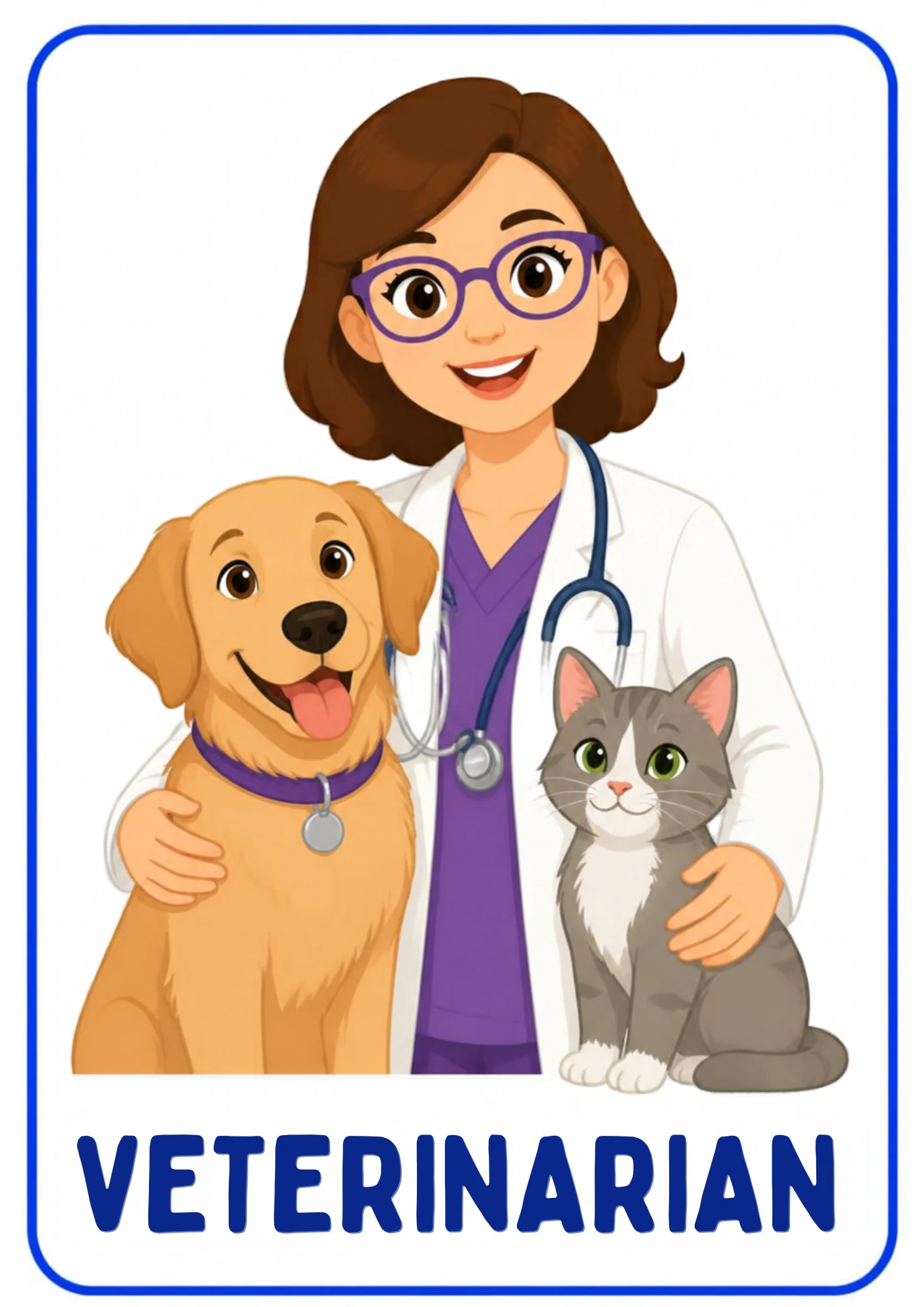
What is this?
A veterinarian is an animal doctor who helps pets and farm animals stay healthy and heal when they are hurt.
What does it mean?
Vets work in animal clinics. They examine, vaccinate, treat wounds and teach owners how to care for their animals — from kittens to cows.
What does the child need to know?
Animal-care basics for fours: animals cannot say where it hurts, so we watch them carefully; we ask the owner before touching any animal; pets need quiet, food, water and gentle hands.
Why this matters
Fours run on animal love. Channelling it through the vet’s watching skills builds real empathy — and the ask-before-petting rule prevents the bites that end friendships with dogs.
What it teaches
Observation skills (body-language reading), gentleness control, asking permission, care routines for living things, and job-vocabulary (clinic, patient, check-up).
Words to learn
veterinarianvetpatientgentlecheck-uppaws
Say this to your child
“"The veterinarian is an animal doctor. Animals cannot tell us where it hurts, so the vet watches carefully and checks gently. And we always ask before we pet any animal."”
Step by step
- Show the card: "This is a veterinarian — an animal doctor. When a pet is sick, the vet helps."
- Find the animals, the tools, the clinic. "The vet listens to hearts, looks in ears and checks paws — just like your doctor."
- Explain the vet’s superpower: "Animals cannot say ‘my tummy hurts’. So vets watch very carefully: how does the animal move? Eat? Sleep?"
- Teach the two animal rules: always ask the owner before touching, and be gentle — soft voice, soft hands.
- Open the teddy clinic and practise the whole visit.
Look closer at the picture
Ask: which animals can you find? What is the vet doing — listening, looking, wrapping? What is on the table? Can you find an animal that looks calm?
Ask your child
"Who is an animal doctor? Why do vets watch instead of ask? What do we say before touching a dog? What does a pet need every day?"
What your child can say or do
The permission line: "May I pet your dog, please?" And the clinic line: "Let me check you gently — tell me if it hurts."
Out in the real world
Vet-visit stories from your own pets or friends’ pets. On walks, watch dogs from afar and read tails: wagging loose = happy, stiff and tucked = give space.
Try it together
Teddy pet clinic: booking desk (paper appointments), waiting room (cushions), exam table (couch arm). Your child the vet checks ears, paws and heart (gentle tummy taps), wraps a tissue bandage and gives a "kind words" prescription. You bring in the "worried owner" voice.
Understanding check
Ask: "Who is an animal doctor? What do we ask before petting? How do gentle vet hands touch?" Vet + ask-first + soft hands = pass.
Parent tips
Read animal body language together at the park: stiff body, tucked tail, whale-eye — all "space please" signs. Praise asking behaviour more than petting itself.
Staying safe
Always ask the owner before touching any animal, even friendly-looking ones. Never disturb animals while they eat or sleep, and never touch strange cats, dogs or wildlife.
This lesson pairs with the Veterinarian flashcard in the library — print it, show it, keep it on the fridge. Back to Community Helpers & Our Neighborhood (Class 33).