
Use the Toilet — a step-by-step lesson for grown-up and child
This lesson walks the complete toilet routine in order and hands your child the words — and the pride — of running it alone, including what happens when the body’s timing misses.
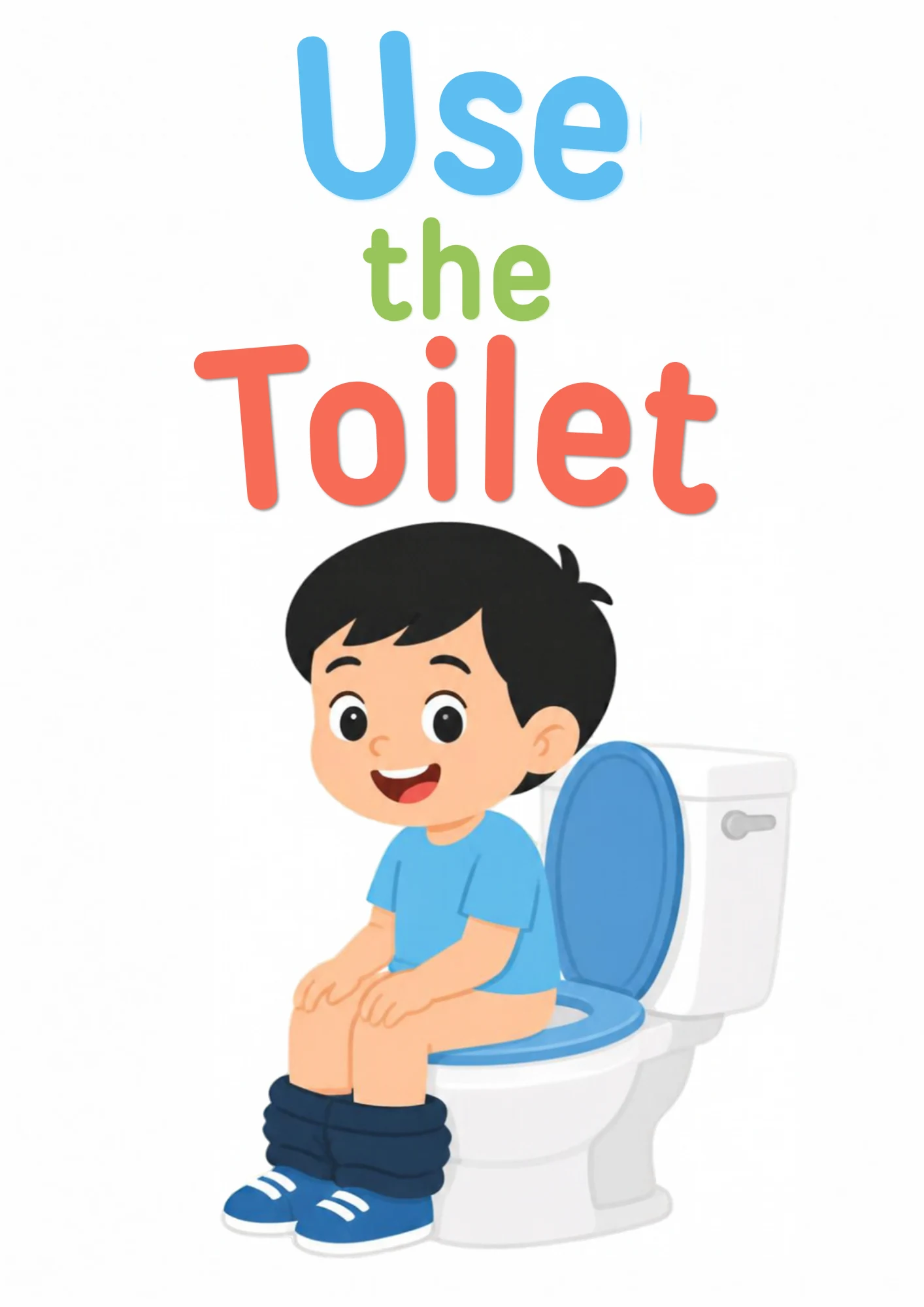
What is this?
Using the toilet alone means hearing the body’s signal in time, going, wiping properly, flushing and washing hands — the whole chain, every time.
What does it mean?
The body whispers before it shouts; noticing the whisper early is the real skill. Wiping front to back keeps germs away from the body. Flushing and washing close the loop so the routine is truly finished.
What does the child need to know?
The full sequence: signal, trousers down, sit, do it, wipe front to back, trousers up, flush, wash. The signal can arrive mid-game — pausing play to go is the hard and important part at four.
Why this matters
Toilet independence is a doorway skill: it is what preschool expects, what sleepovers need and what your child’s own dignity wants. A child who runs the whole routine never has to interrupt play to find help.
What it teaches
Interoception (reading body signals), sequencing a six-step routine, hygiene habits, the gross-motor work of clothes on and off, and the self-respect of a job done fully alone.
Words to learn
toiletflushwipewashroutineaccident
Say this to your child
“"Your body whispers before it shouts. When you feel the whisper, you go — trousers down, sit, do it, wipe front to back, up, flush, and the last step you already know: soap. If your body ever surprises you, that is okay. Accidents are just practice that arrived early."”
Step by step
- Show the card and name the proud face — this is a picture of someone who did the whole job himself.
- Walk the sequence aloud on a calm day: trousers, sit, wipe front to back, up, flush, wash.
- Agree on the signal words your child will use to say they need to go — then honour them instantly, every single time.
- Practise the clothing part on its own: underwear and trousers up and down is a real skill at four.
- Make the plan for misses before they happen: "accidents happen, we change calmly, nobody is in trouble."
Look closer at the picture
Ask your child: where is the boy sitting? What color is the toilet seat? Where are his trousers — up or down? Is his face worried or happy? What will he do when he is finished?
Ask your child
"What does your body tell you when it is time?" "Which way do we wipe?" "What comes after the flush?" "What do we do if there is an accident?"
What your child can say or do
"I need to go — the whisper!" "I did it all by myself." Your child may retell the whole sequence in order like a story, or proudly report that a friend had an accident at preschool and "it was okay".
Out in the real world
Every toilet becomes familiar with the same routine: home, preschool, restaurants, aeroplanes, friends’ houses. The steps never change — that predictability is what makes new places easy instead of scary.
Try it together
Routine cards: draw or print the six steps, shuffle them, and let your child lay them in order on the bathroom door. Then a plush toy "needs to go" and your child coaches it through every step, wipes and all.
Understanding check
Ask: "What are all the steps? Which way do we wipe? What happens after an accident?" Full sequence, front to back, calm answer = landed.
Parent tips
Never rush or hover at the door — pressure creates the accidents it fears. Keep spare clothes at preschool and in the car so a miss is a two-minute fix. Praise the pause — "you stopped playing to go, that is the hard part" — more than the result.
Staying safe
Wiping front to back is a health rule, not a preference. Bathroom floors get wet — no running in socks. Cleaning products and toilet brushes stay out of reach; washing hands is your child’s job, scrubbing the toilet is not.
This lesson pairs with the Use the Toilet flashcard in the library — print it, show it, keep it on the fridge. Back to Life Skills & Good Habits (Class 32).