
Brush Your Teeth — a step-by-step lesson for grown-up and child
This lesson makes tooth-brushing a routine your child owns — with the honest division of labour that keeps four-year-old teeth healthy: they brush first, you finish the job.
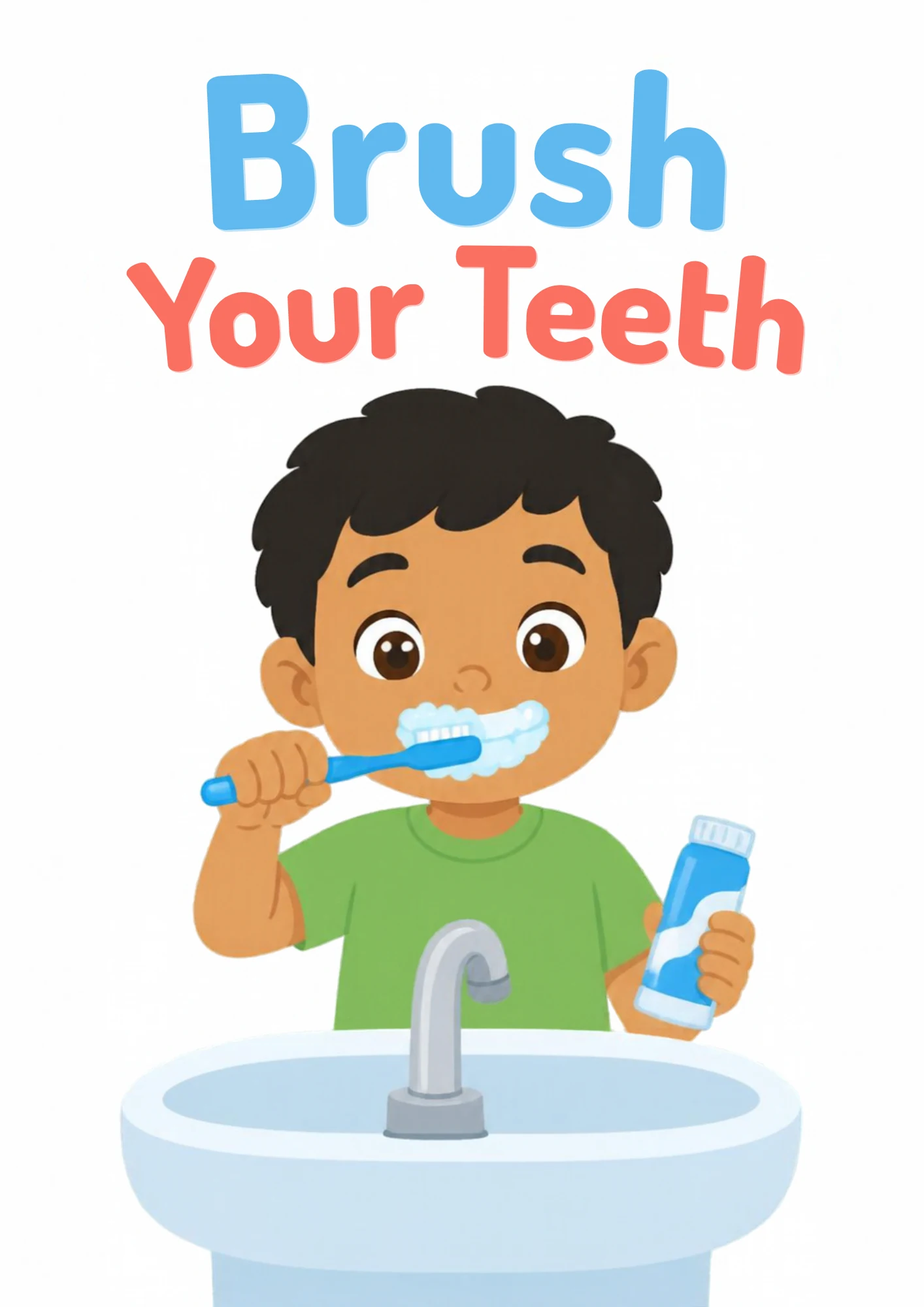
What is this?
Brushing means cleaning every tooth — the fronts, the backs and the chewing tops — with a soft brush and a tiny smear of fluoride toothpaste, for about two minutes, twice a day.
What does it mean?
Food leaves a sticky film on teeth; the brush sweeps it off before it can make holes. Fluoride in the paste strengthens the enamel so the holes never start. The back teeth do the most chewing and get missed the most.
What does the child need to know?
Morning and night are the two brush moments, and the night one matters most — during sleep, saliva dries up and stops guarding the teeth. Spit, do not rinse: the fluoride keeps working after the brush is away.
Why this matters
Baby teeth hold the spaces for adult teeth and make chewing and clear speech possible. Cavities at four are painful and mostly preventable — two honest minutes a day is the whole trick.
What it teaches
Fine-motor control (small circles, reaching the back teeth), sequencing (brush, spit, rinse the brush), body awareness, and the responsibility pride of owning a real daily job.
Words to learn
toothbrushtoothpastefluoridespitenamelcavity
Say this to your child
“"Little circles on every tooth — the fronts, the backs, and the big chewers at the back that we almost never see. When you finish, I do the final polish. Then you spit the foam out — no rinsing, so the toothpaste keeps guarding your teeth all night."”
Step by step
- Show the card and name what the boy holds — the brush in one hand, the toothpaste in the other.
- Count teeth together in a mirror: the top row, the bottom row, the big ones hiding at the back.
- Demonstrate little circles on your own teeth, then hand over the brush and let your child copy.
- Make two minutes concrete: a sand timer, a brushing song or the brush’s own tune beats "keep going" every time.
- Finish with the parent pass — you take the brush and polish the back teeth while your child tips their head back and looks at the ceiling.
Look closer at the picture
Ask your child: what is the boy holding in each hand? What color is his toothbrush? Where has the foam climbed — his teeth, his lip? What is he standing behind? Do we brush right there too?
Ask your child
"Why do we brush at night?" "Which teeth are the hiding ones?" "What do we do with the foam — rinse it or spit it?" "Who does the final polish in our family?"
What your child can say or do
"I brushed the back teeth!" "Spit, no rinse!" Your child may count every tooth out loud as they brush, or sing the brushing song to a doll before brushing their own.
Out in the real world
The routine travels: home bathroom, grandma’s house, holidays, hotel sinks. A travel brush in the overnight bag makes the rule portable — same two minutes, new sink, and your child sees the habit does not bend.
Try it together
Eggshell experiment: soak one eggshell piece in cola overnight and one in water — the cola shell stains and roughens. "That is sugar water on tooth shells." Then brush a hard-boiled egg with toothpaste and watch the cleaning happen.
Understanding check
Ask: "How long do we brush? What do we do with the foam? Who polishes the back teeth?" Two minutes, spit, grown-up pass = landed.
Parent tips
Let your child choose the brush color and the paste flavor — ownership halves the battle. Swap brushes every three months and after any illness. If brushing meets resistance tonight, let them brush YOUR teeth first; the giggle opens the door.
Staying safe
Toothpaste is for brushing, not eating — a smear the size of a grain of rice is plenty at four, and brushing happens with a grown-up nearby. Falling asleep with a bottle of milk or juice is the fastest road to cavities there is.
This lesson pairs with the Brush Your Teeth flashcard in the library — print it, show it, keep it on the fridge. Back to Life Skills & Good Habits (Class 32).