
Wash Your Hands — a step-by-step lesson for grown-up and child
This lesson turns hand-washing from a reminder into a routine your child runs alone: when to wash, the four steps in order, and the song that makes the scrub last long enough to matter.
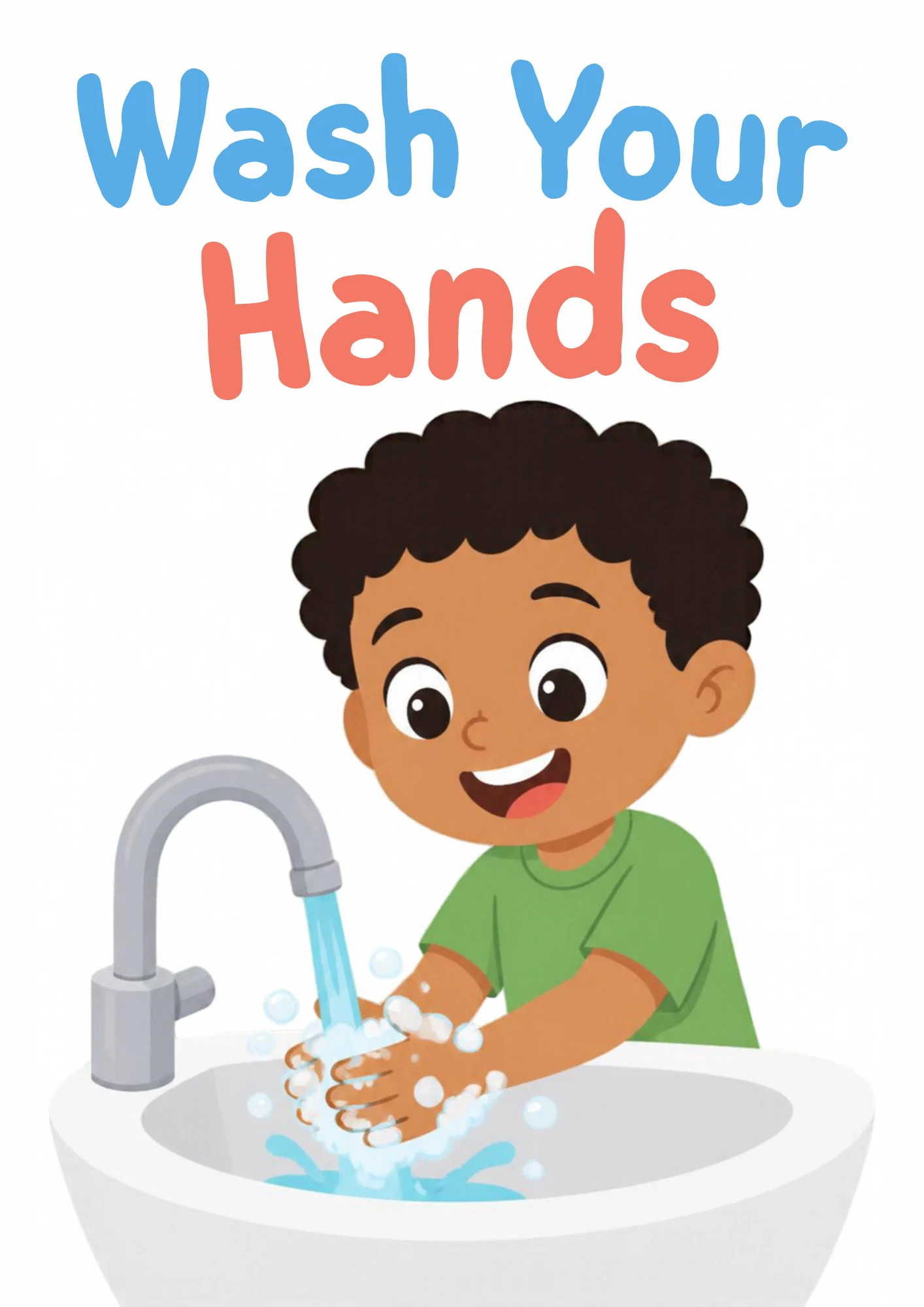
What is this?
Hand-washing means scrubbing every part of both hands with soap and water — fronts, backs, between the fingers, the thumbs and up the wrists — then rinsing and drying.
What does it mean?
Soap does not just rinse dirt away; it loosens the invisible stuff so the water can carry it off. The scrubbing time matters far more than the water temperature or the color of the soap.
What does the child need to know?
The moments that need washing: before eating, after the toilet, after playing outside, after petting animals and after a nose-blow or a cough. The four steps in order — water on, soap, scrub, rinse — then a towel.
Why this matters
Hands are the main road germs take into bodies. A child who washes without being asked misses fewer days of preschool and carries fewer colds home to the whole family — the habit protects everyone at once.
What it teaches
Sequencing (four steps in order), self-care independence, cause-and-effect thinking — "I wash, we stay well" — plus the fine-motor work of rubbing every single finger.
Words to learn
soapscrubrinsegermsbubblesdry
Say this to your child
“"Soap makes bubbles, and bubbles do the work. We scrub the fronts, the backs, between the fingers and up the wrists while we sing our song — then rinse it all away and dry. That is how hands get properly clean."”
Step by step
- Show the card and name the skill: washing hands, one of the big-kid habits.
- Point out what the picture really shows — the boy at the basin, soap bubbles climbing up to his wrists, water still running from the tap.
- Move to the real sink and walk the four steps with your child leading and you narrating.
- Sing while scrubbing — about as long as singing happy birthday twice — so the scrub covers between the fingers, the thumbs and the wrists.
- Agree together on the washing moments in your family day, then let your child be the one who remembers them.
Look closer at the picture
Look at the picture together: where do the bubbles reach — only the palms, or higher up the wrists? What is the tap doing? What do you think the boy in the green shirt is singing? Is anyone watching him wash?
Ask your child
"When do we wash our hands?" "Which parts of your hands are the sneakiest — where does soap forget to go?" "What does the tap give us first, water or soap?" "What do we do after the rinse?"
What your child can say or do
Your child might chant the four steps — "water, soap, scrub, rinse!" — sing a made-up washing song at the sink, or proudly report "I scrubbed my thumbs, the sneaky ones!"
Out in the real world
Washing happens in many sinks: at home, at preschool, in restaurant bathrooms, at the petrol-station sink before a road-trip snack. Every sink is the same four steps — that is exactly the point to name out loud.
Try it together
Pepper experiment: sprinkle pepper on water in a bowl. Dip one finger in plain water — pepper clings to it. Dip a soapy finger — the pepper dashes away. That dash is what soap does to germs: visible, safe and unforgettable.
Understanding check
Ask: "What are the four steps? When do we wash? Show me how you scrub between your fingers." Four steps in order plus wiggling fingers = lesson landed.
Parent tips
Keep a step stool living at the bathroom sink so "I can do it myself" is always true. Praise the remembering, not just the result — "you washed all by yourself" beats "look how clean" at this age.
Staying safe
Hot water can scald little hands — warm is plenty. After touching raw egg or meat at cooking time, everyone washes, and the grown-up does the final re-wash.
This lesson pairs with the Wash Your Hands flashcard in the library — print it, show it, keep it on the fridge. Back to Life Skills & Good Habits (Class 32).