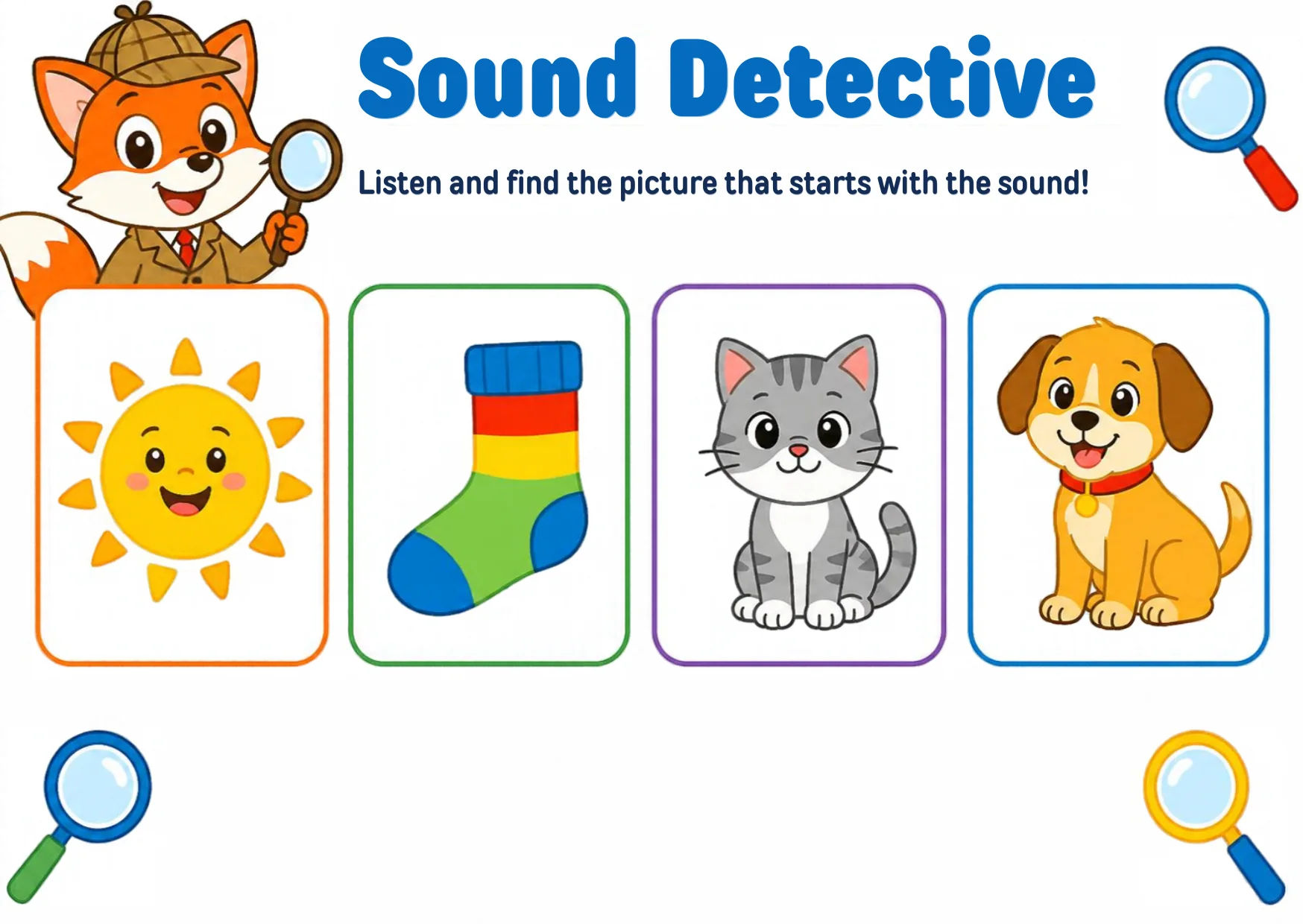
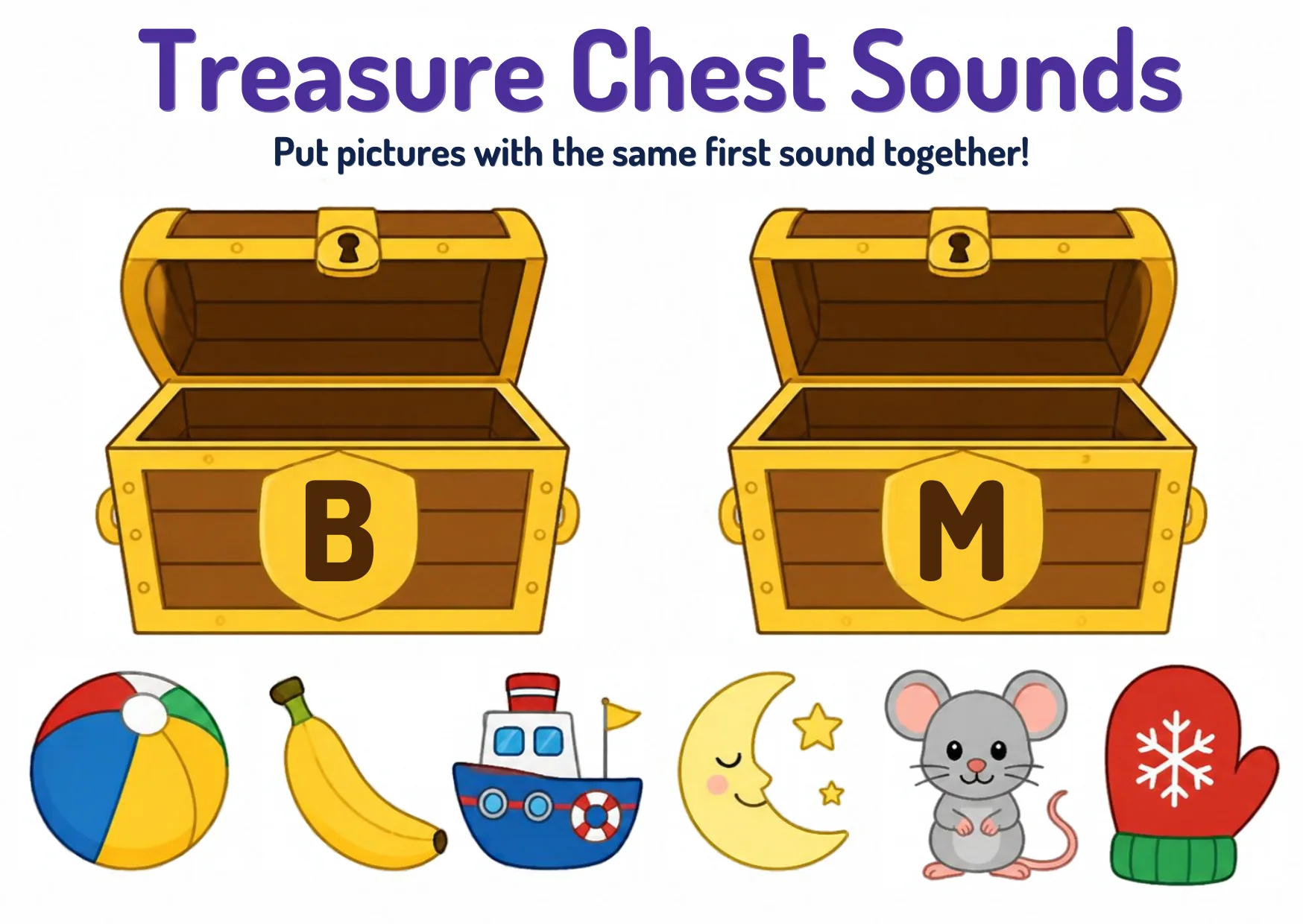
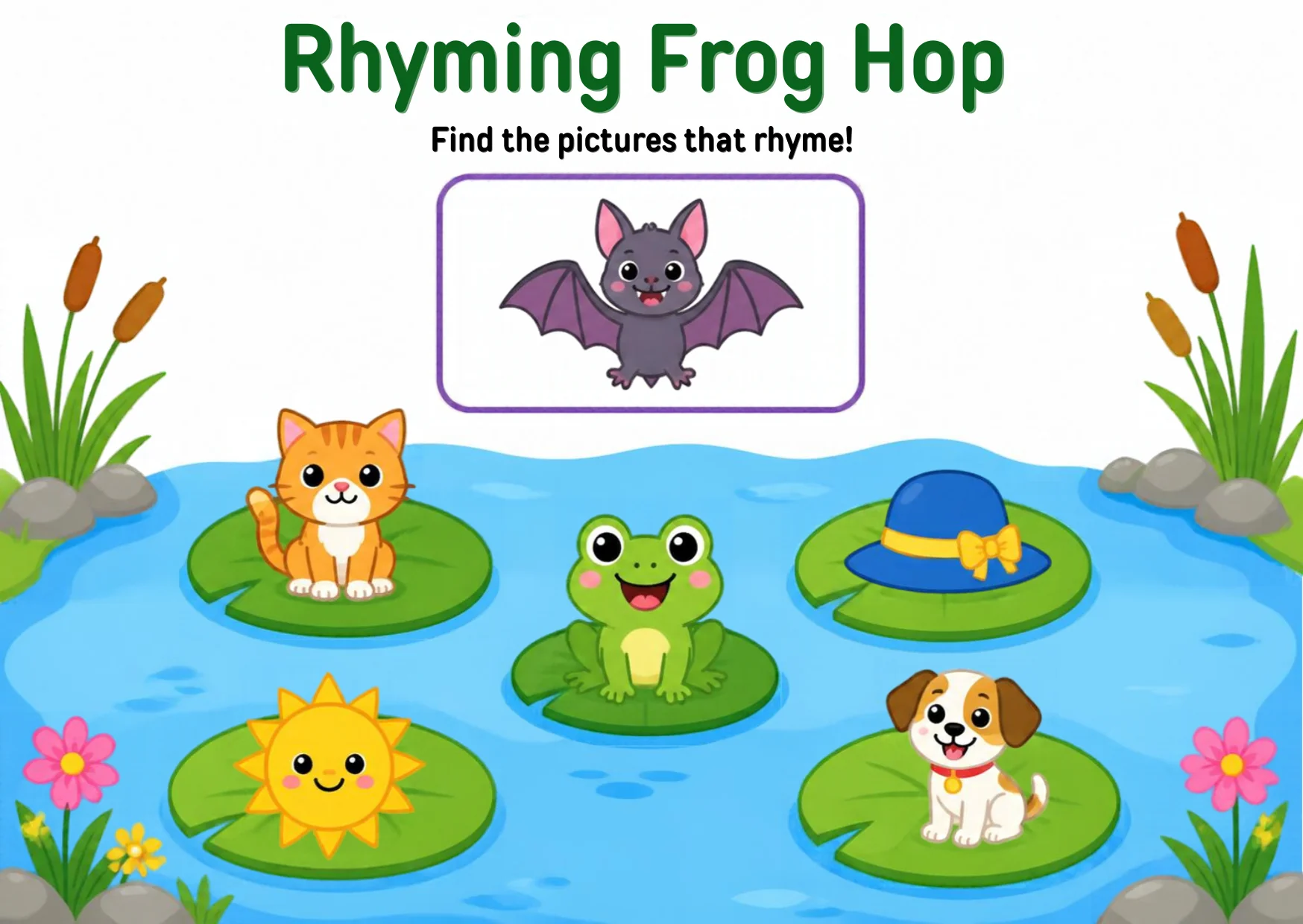
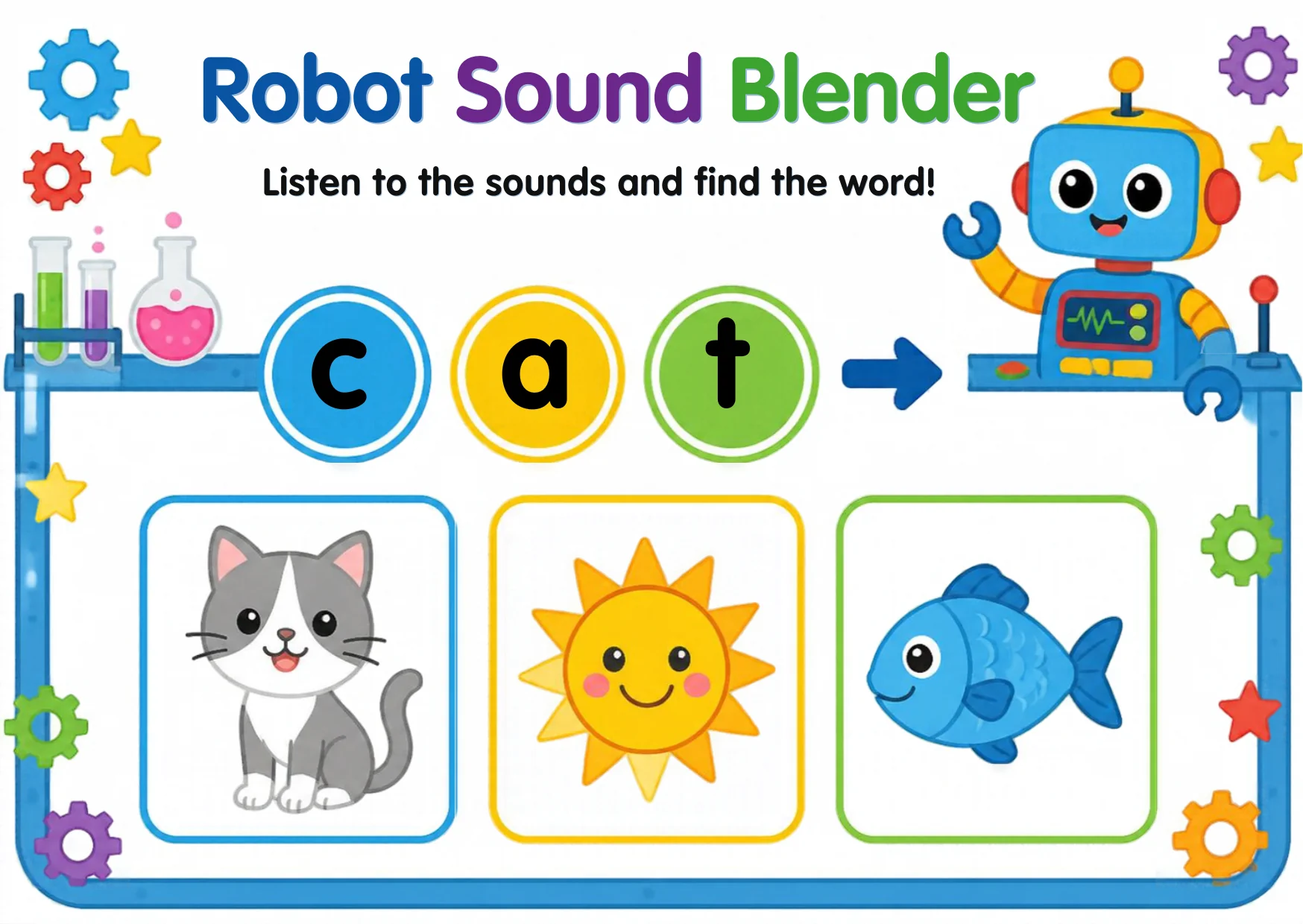
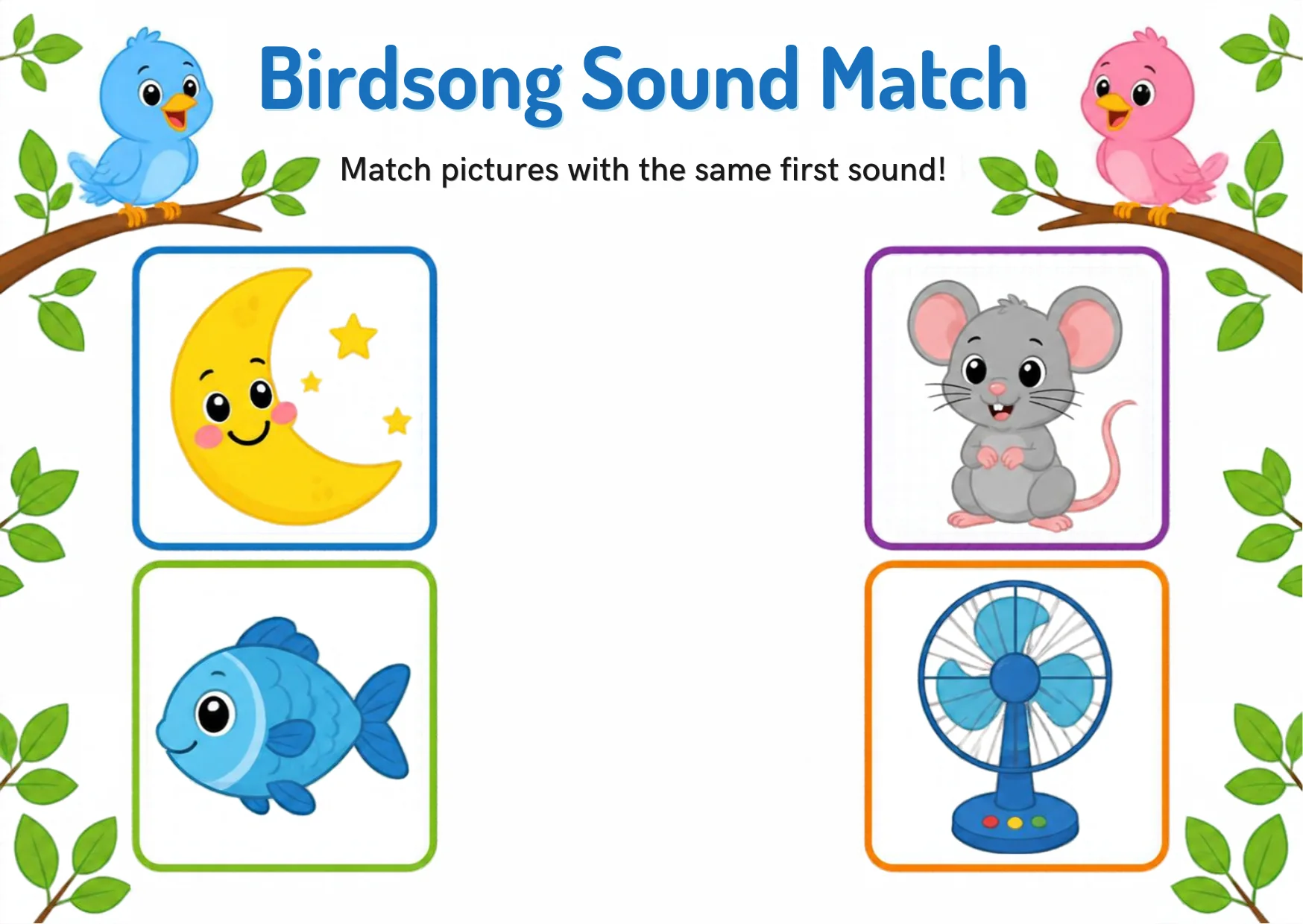
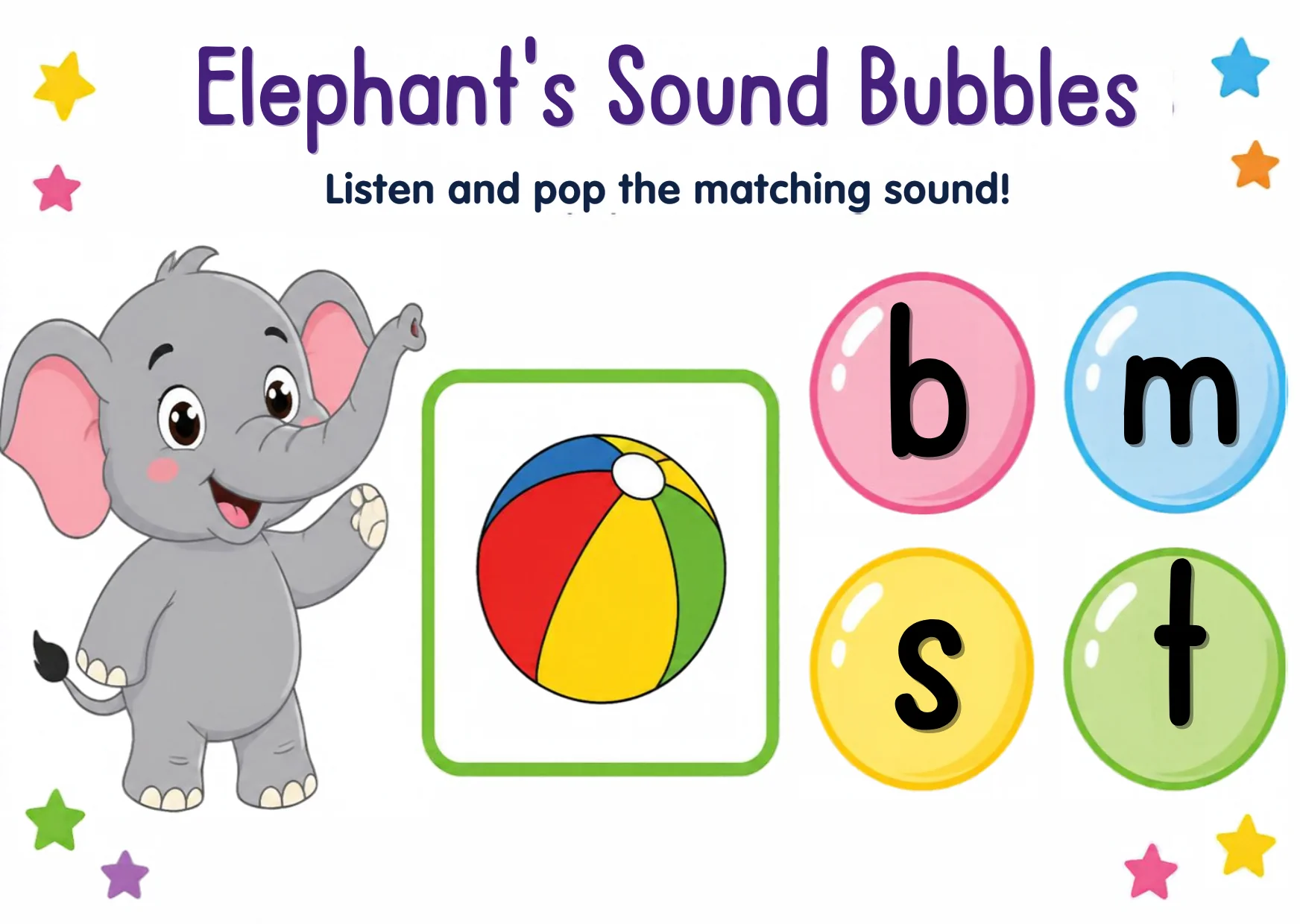
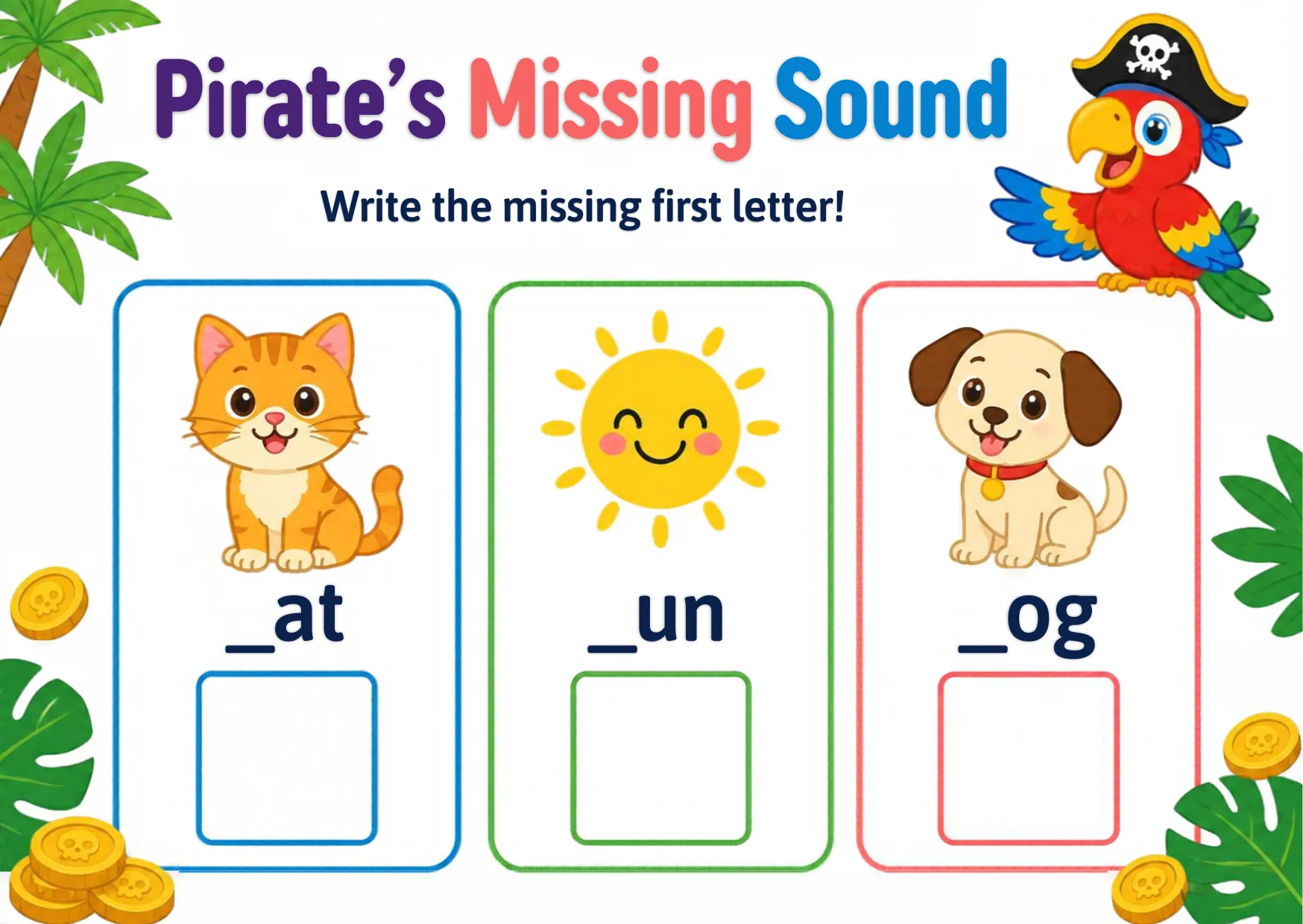
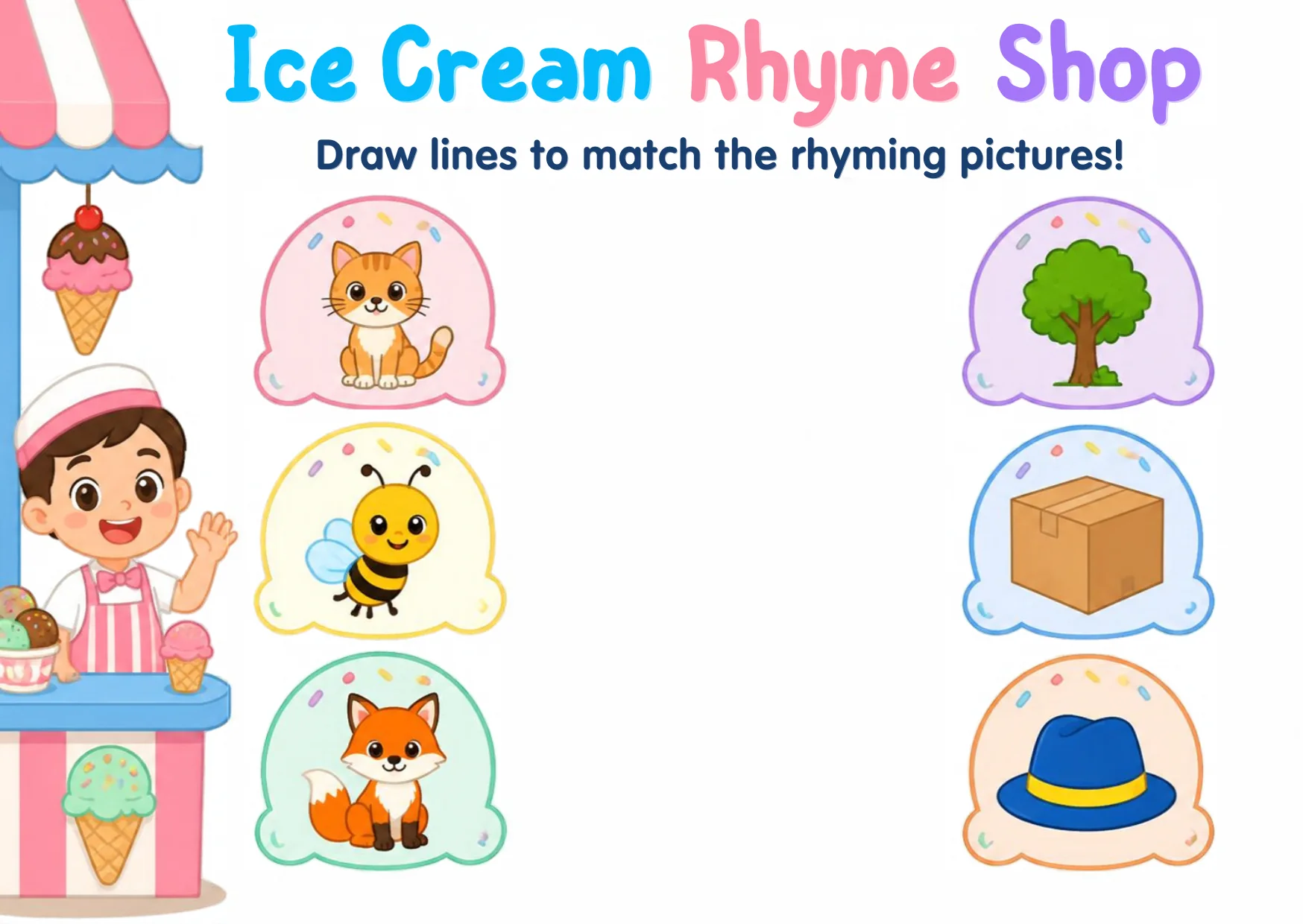
Age 4–5 YearsClass 28 of 28Adventures 24 sound gamesSubjects Sounds · rhymes · words
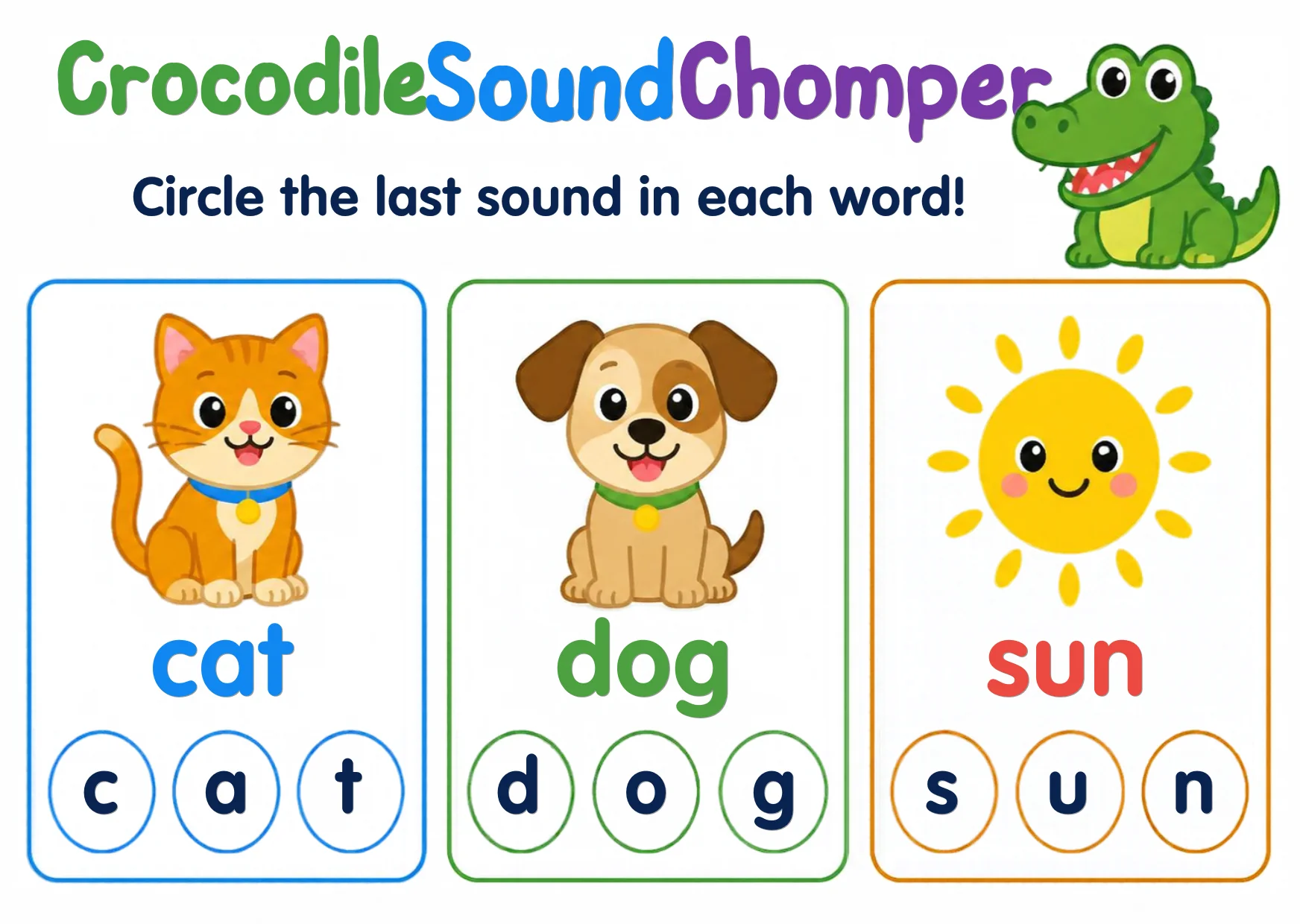
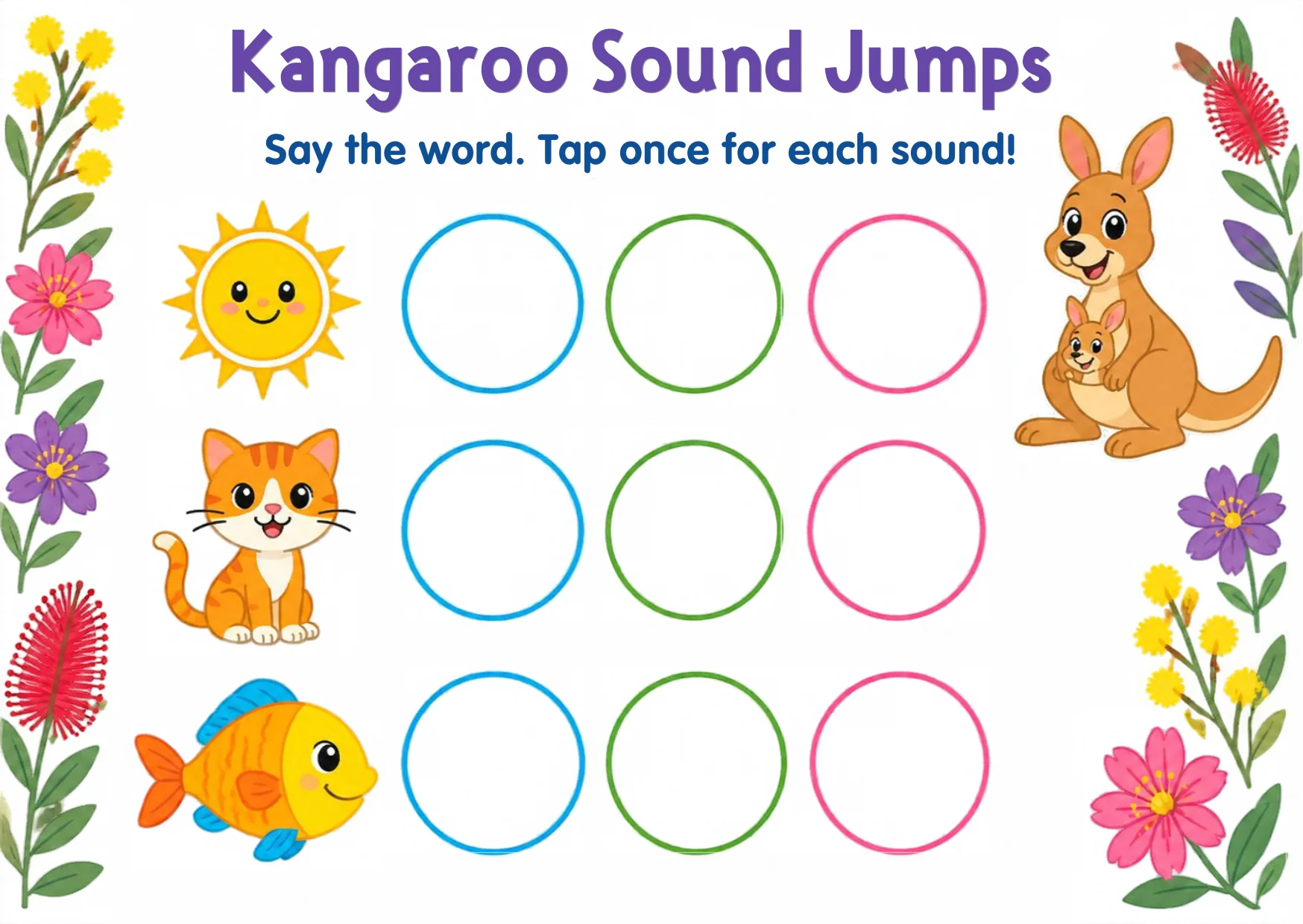
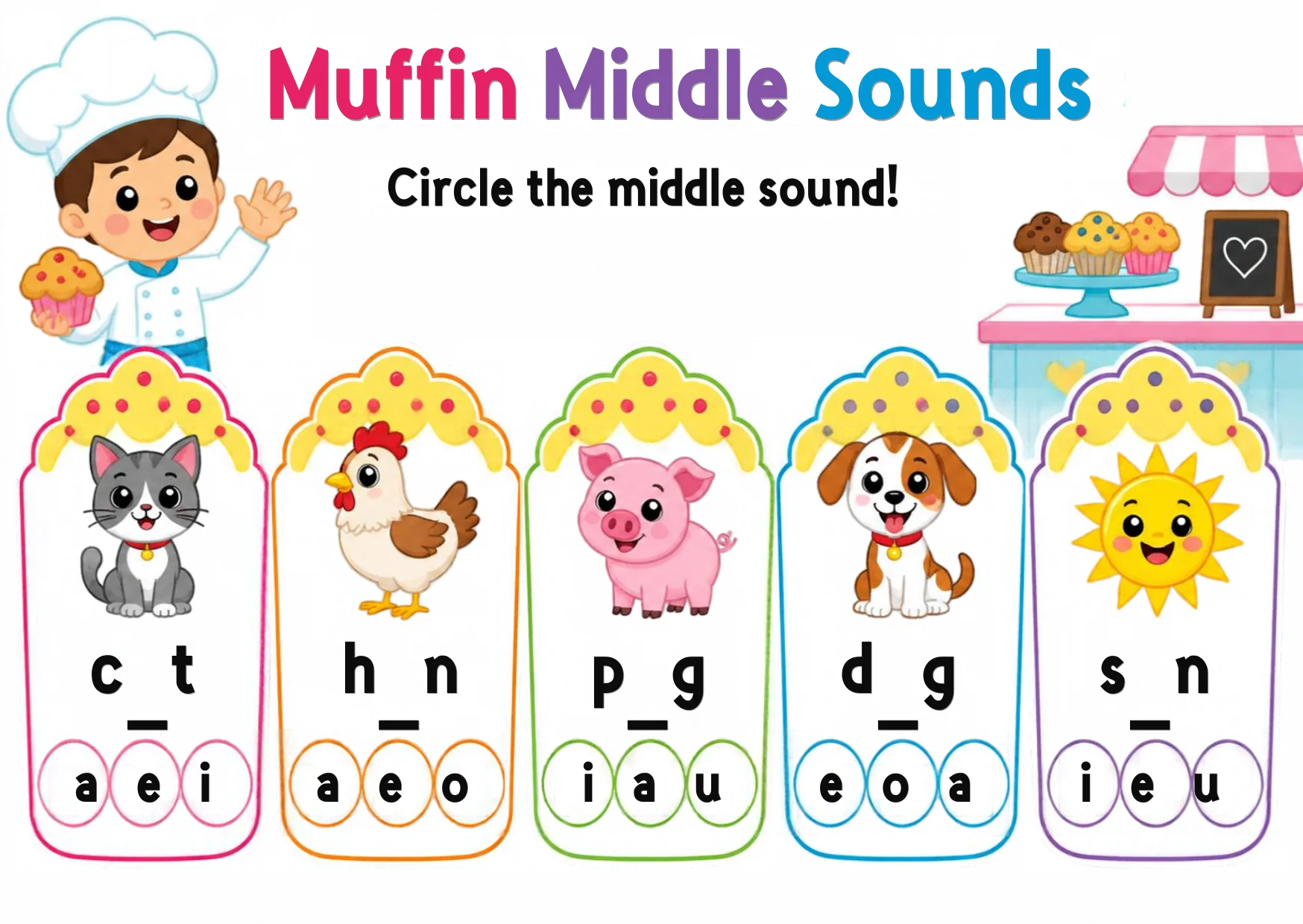
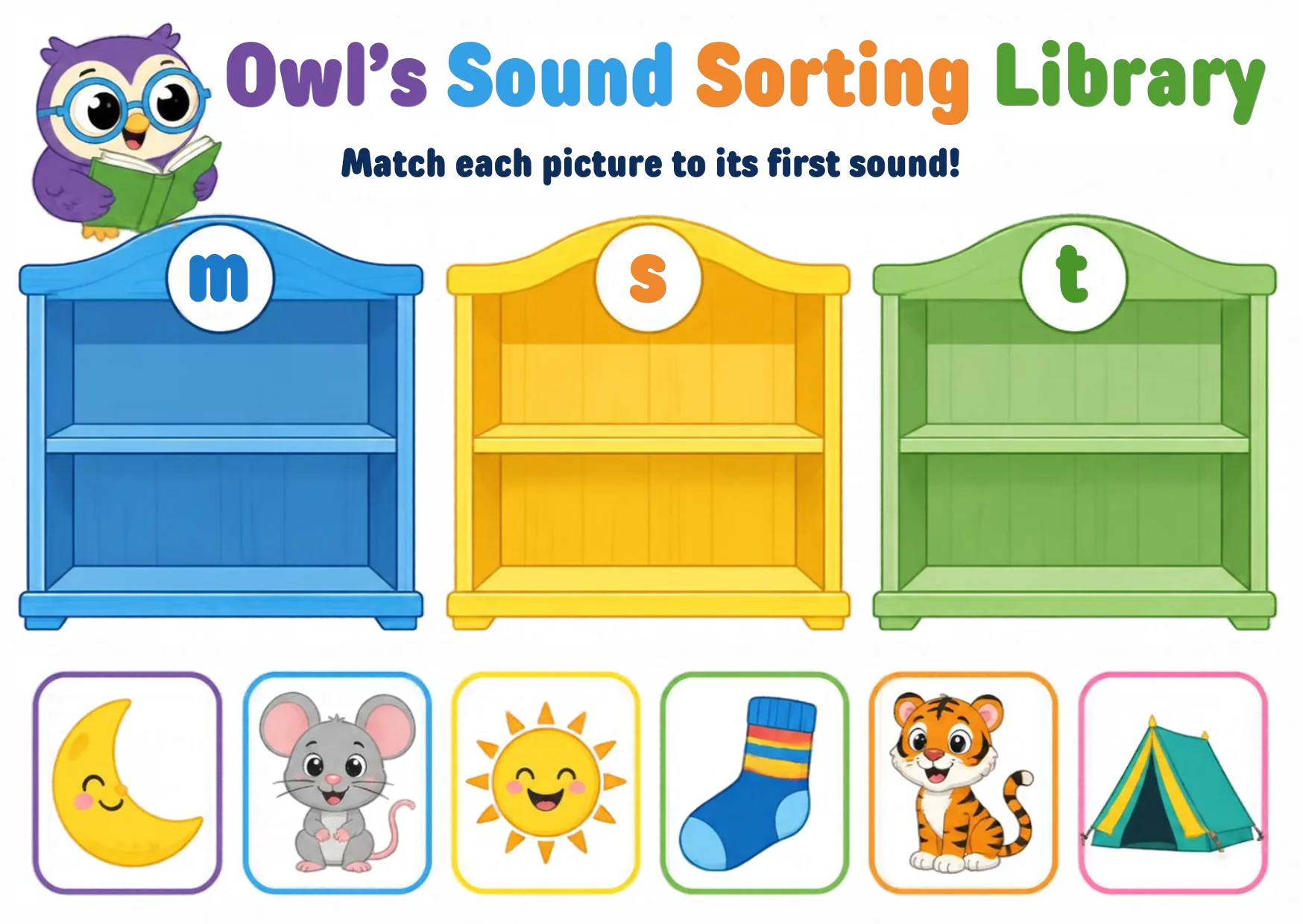
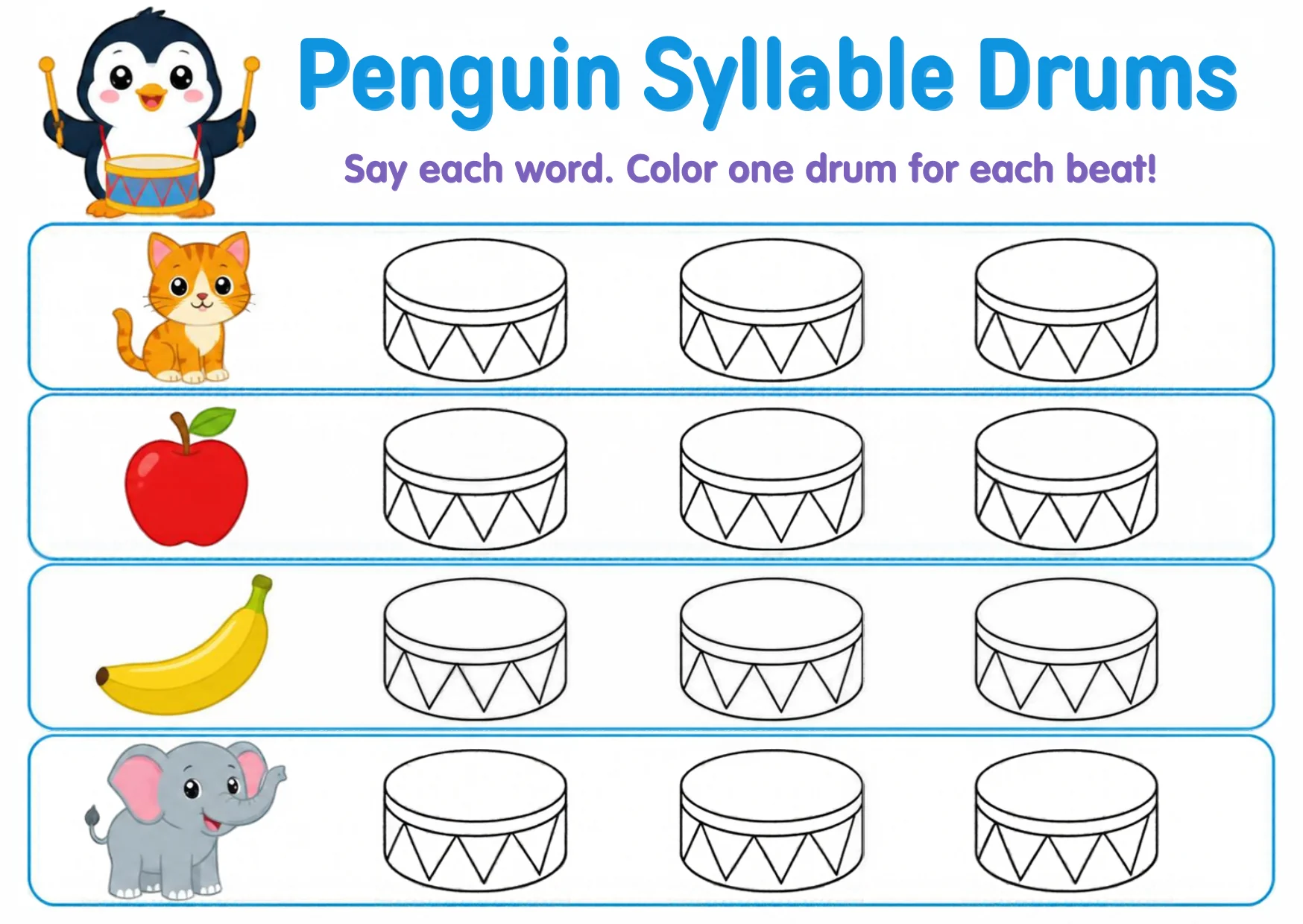
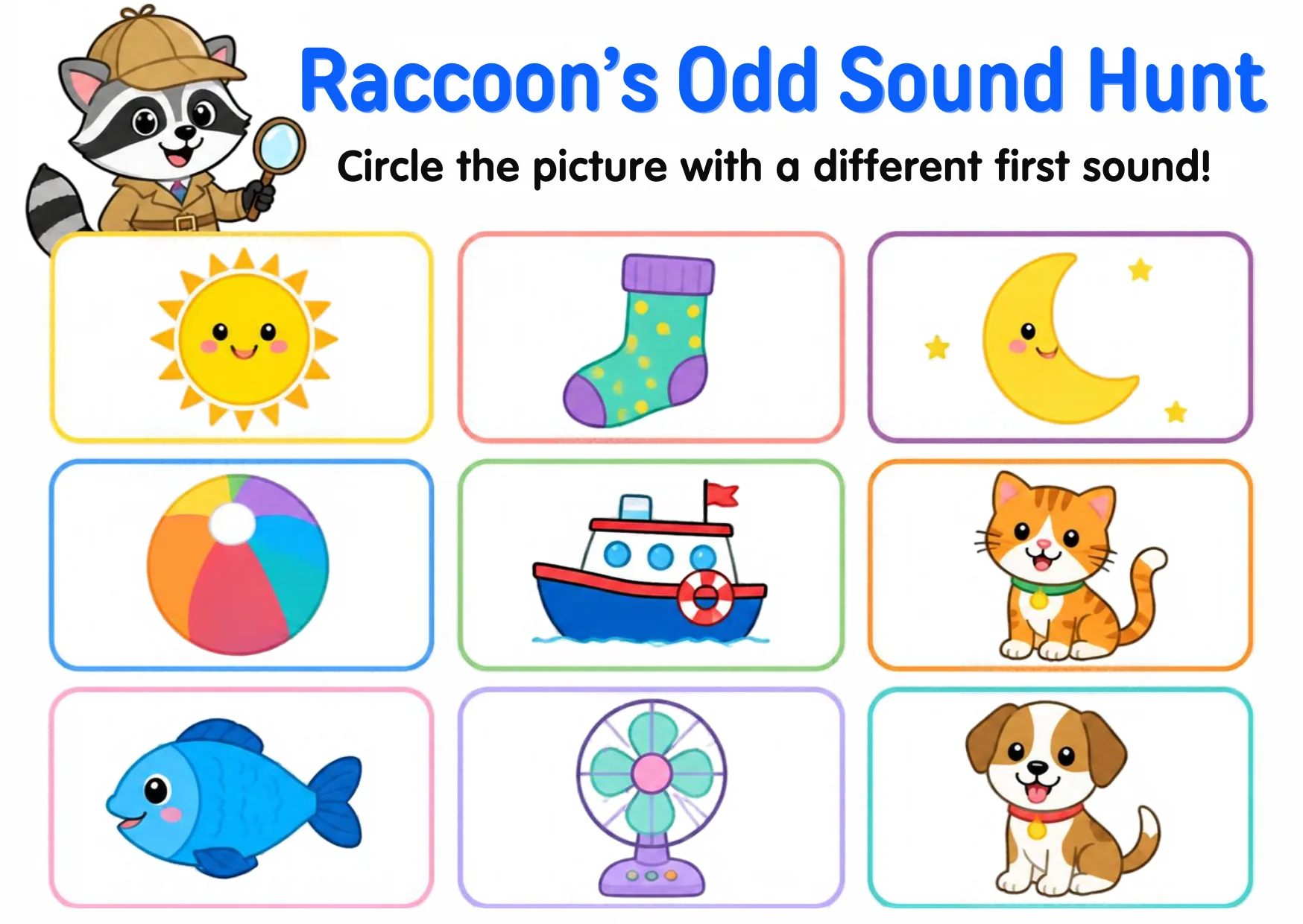
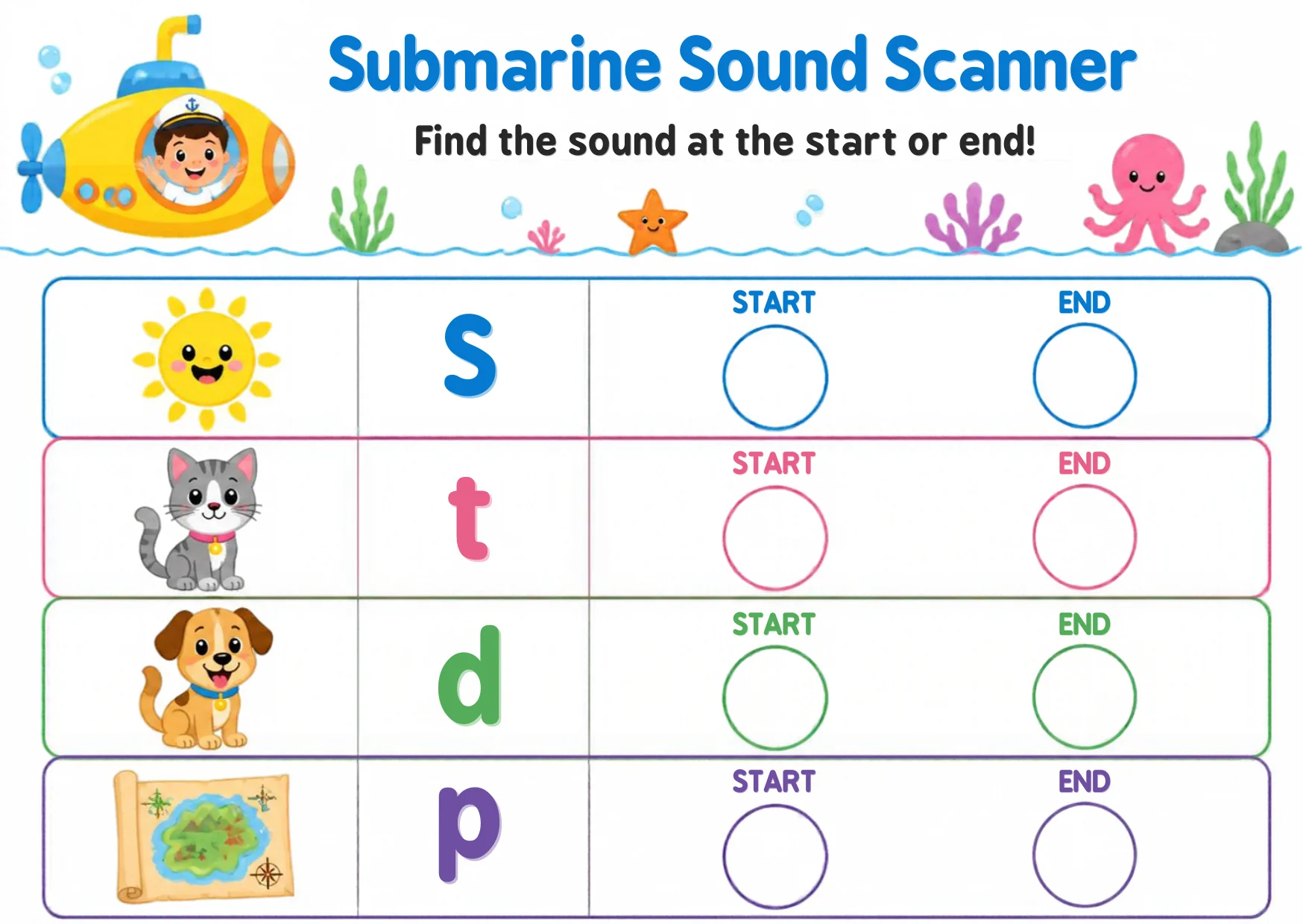
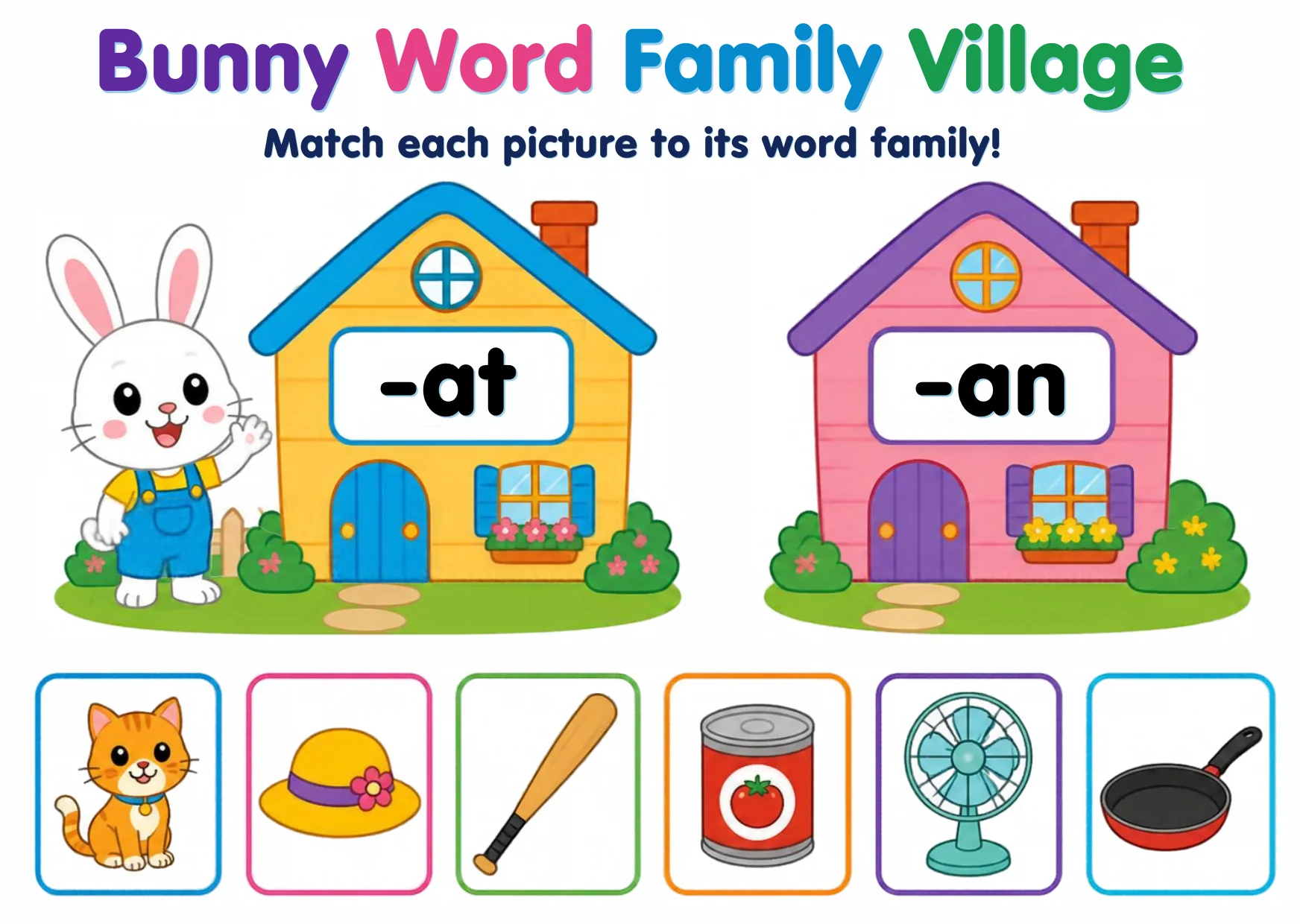
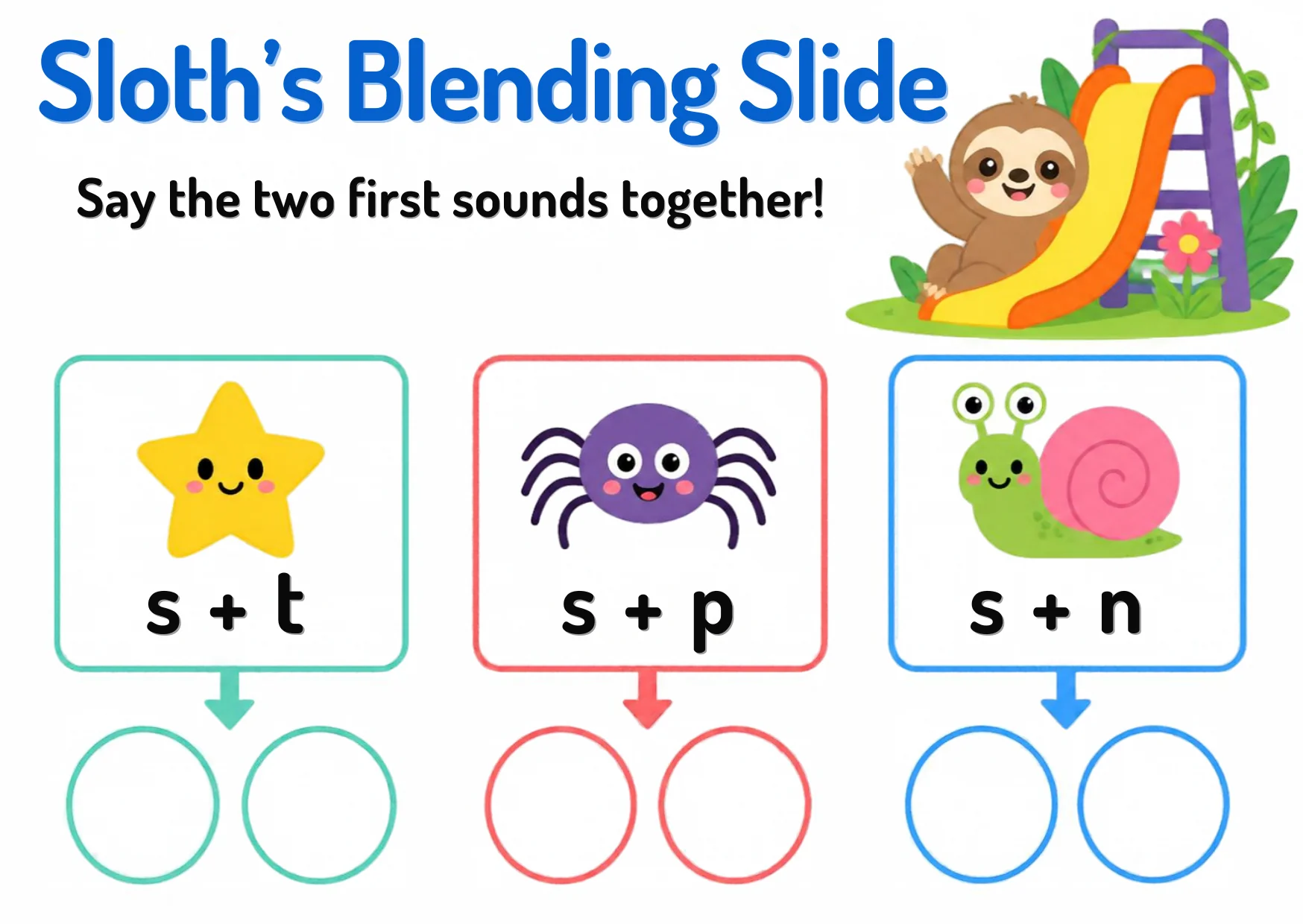
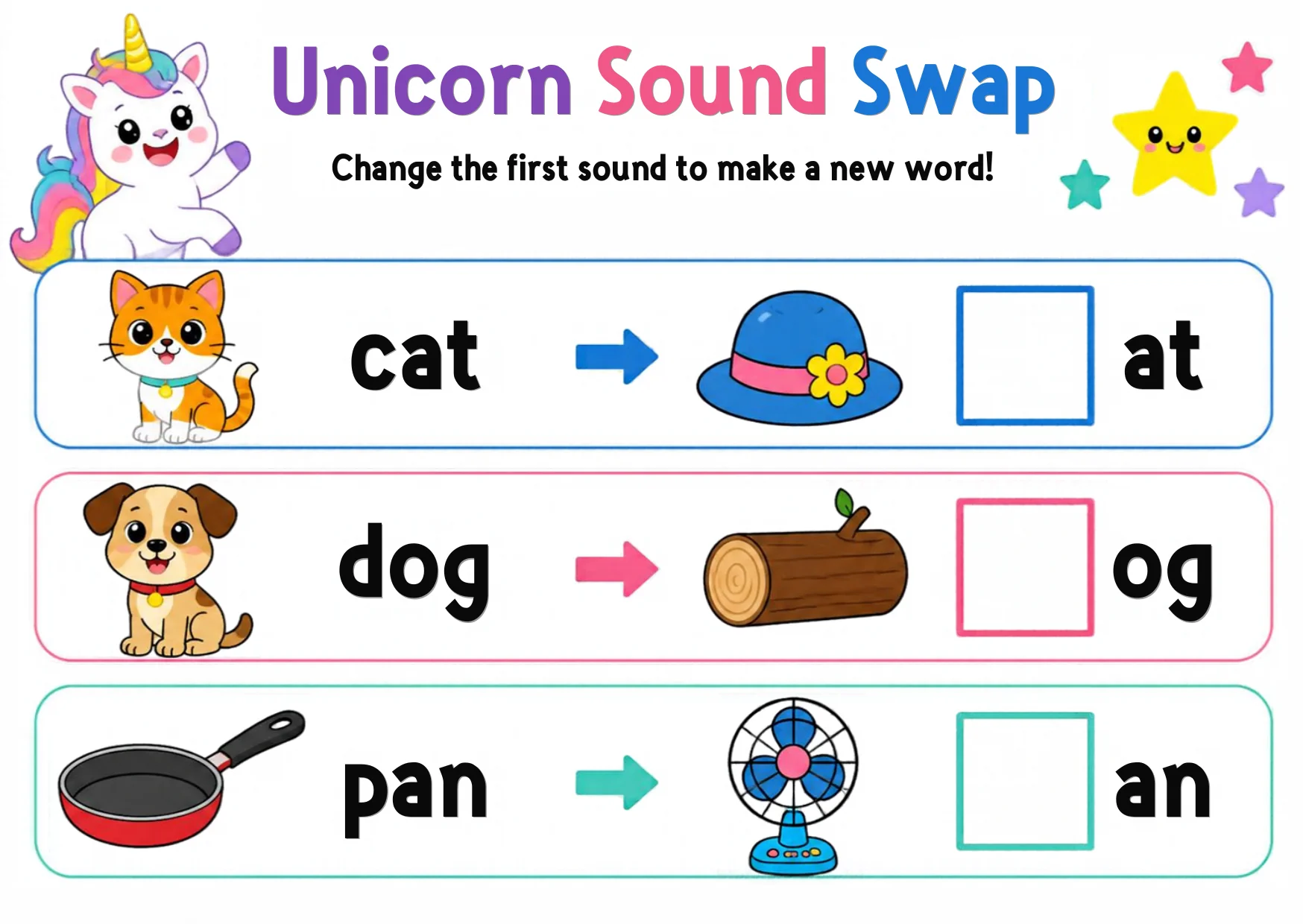
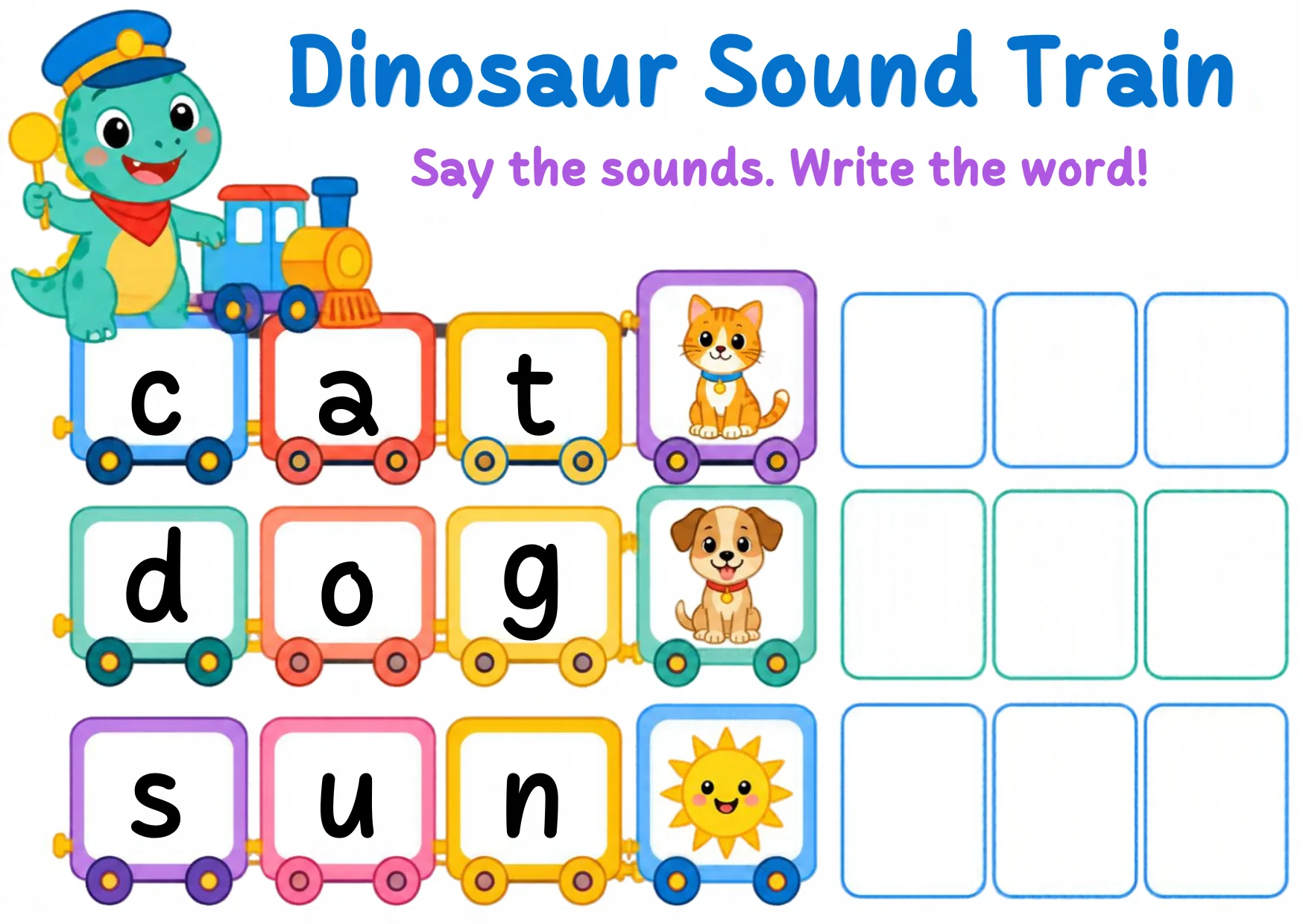
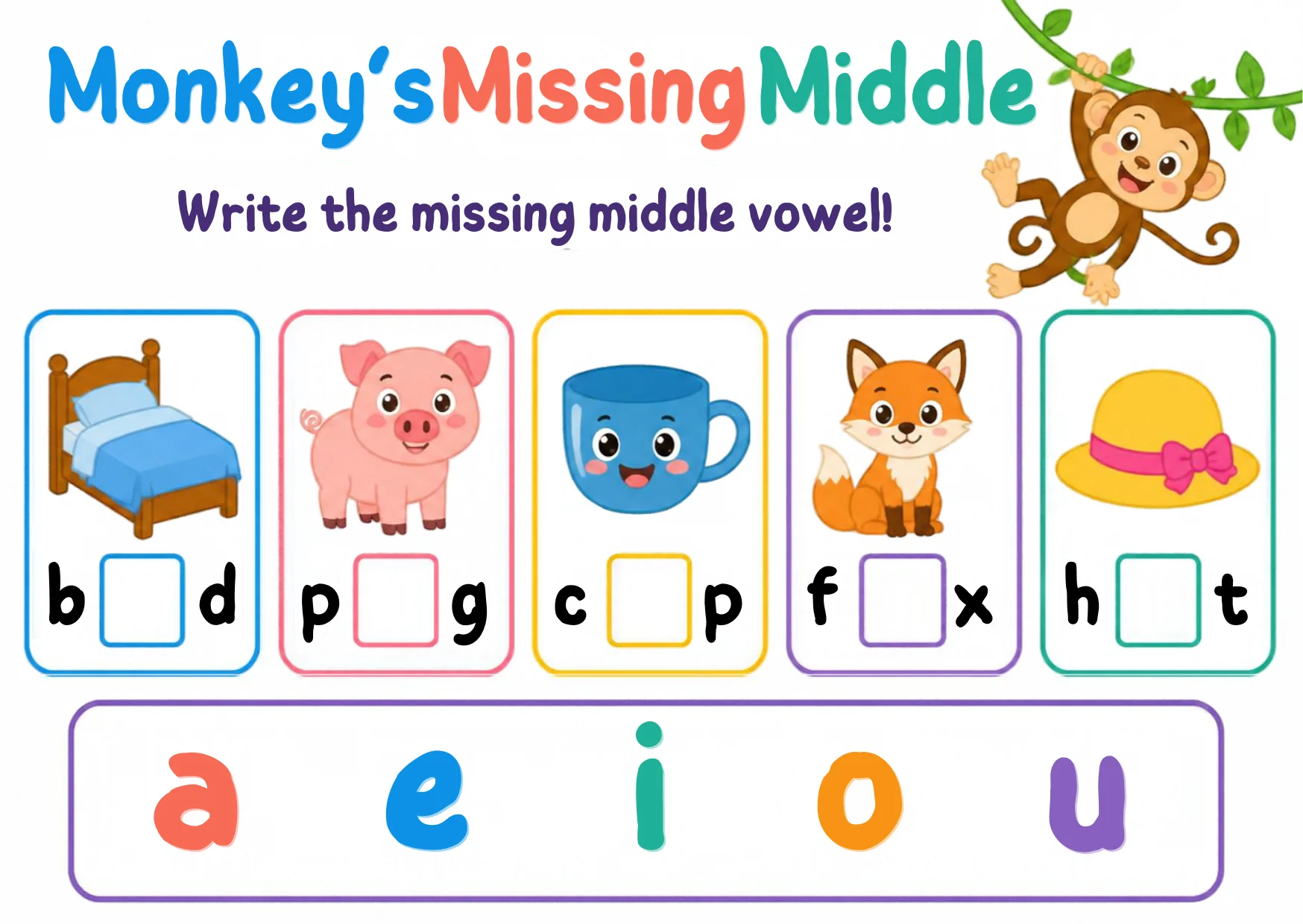
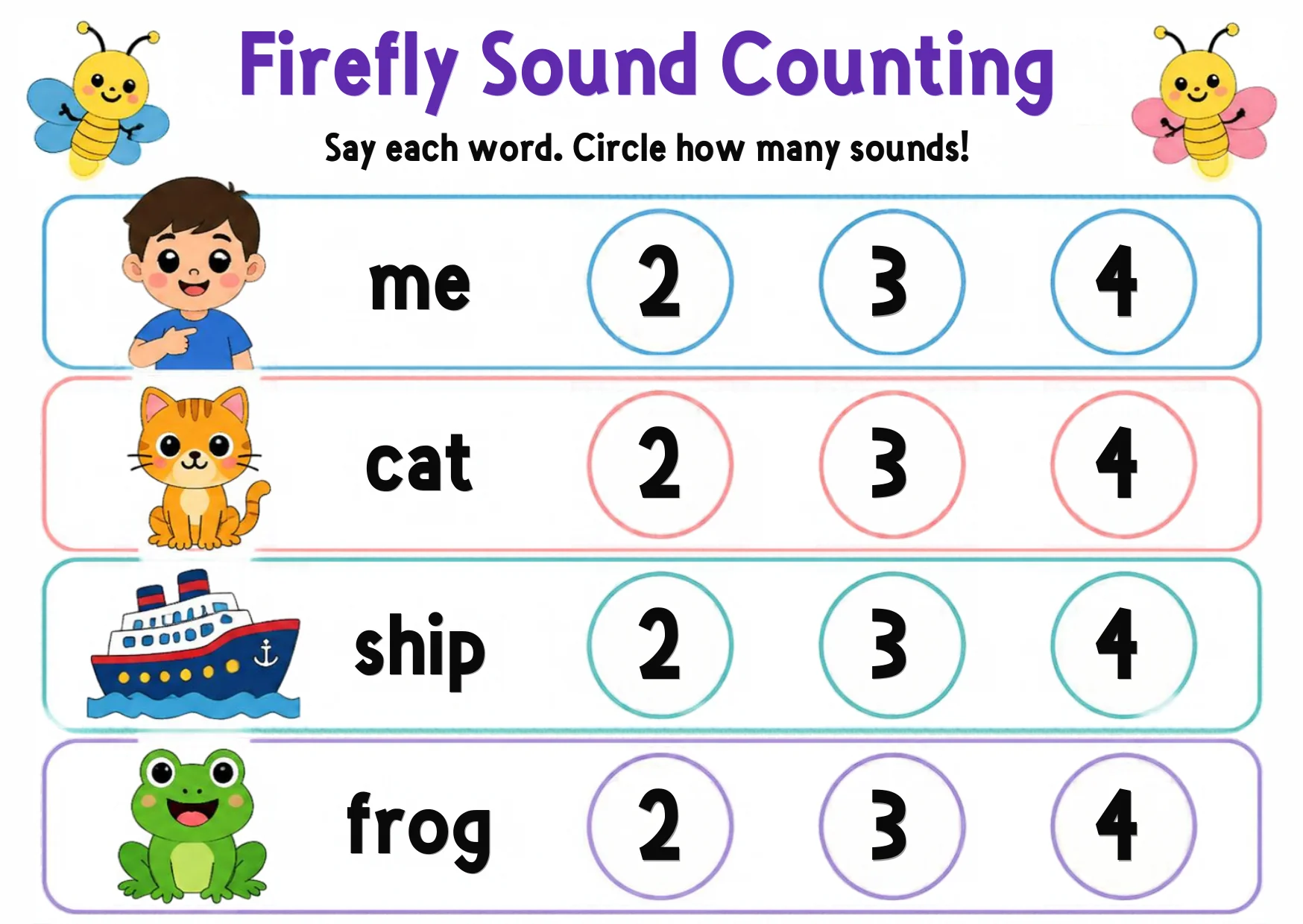
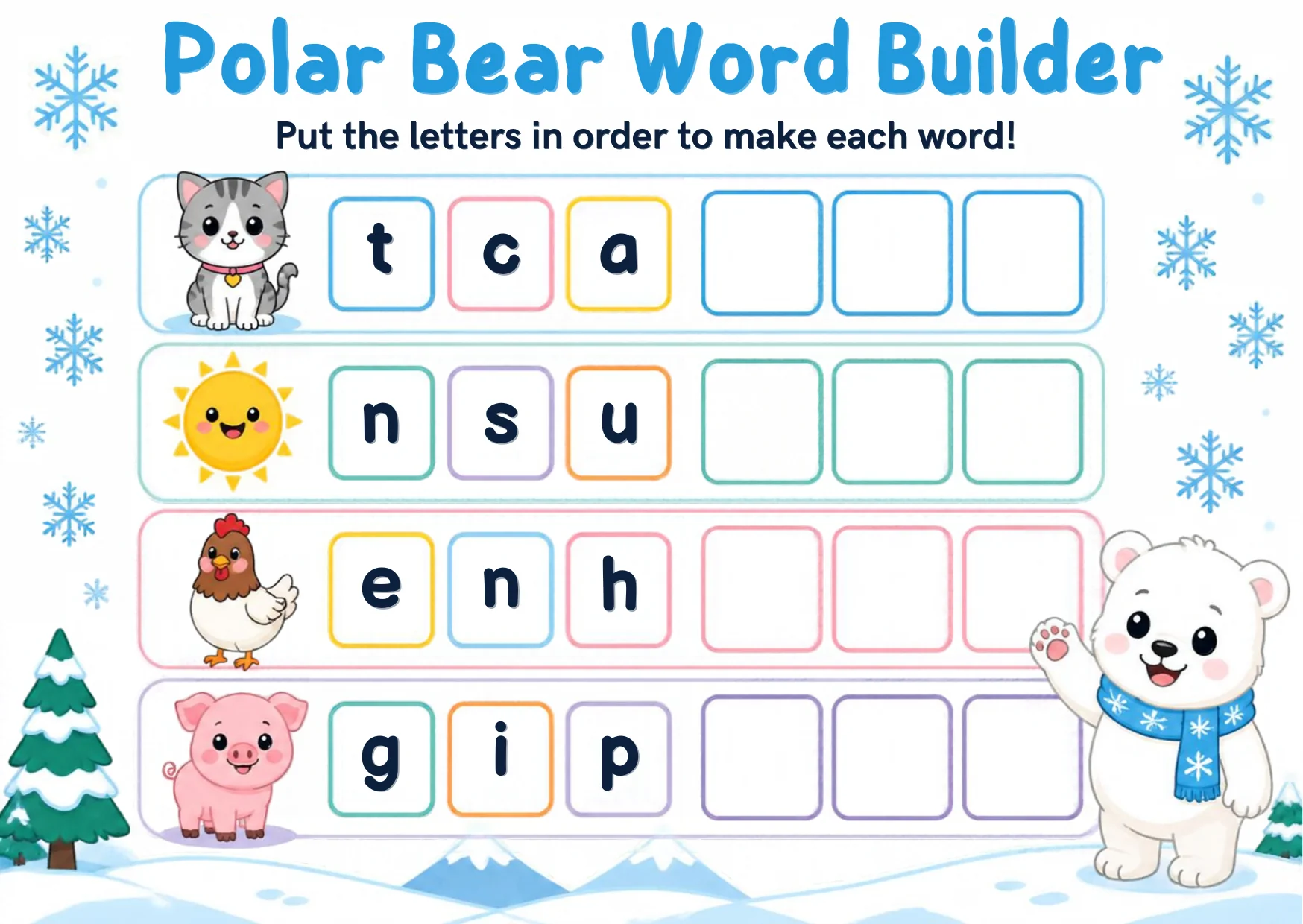
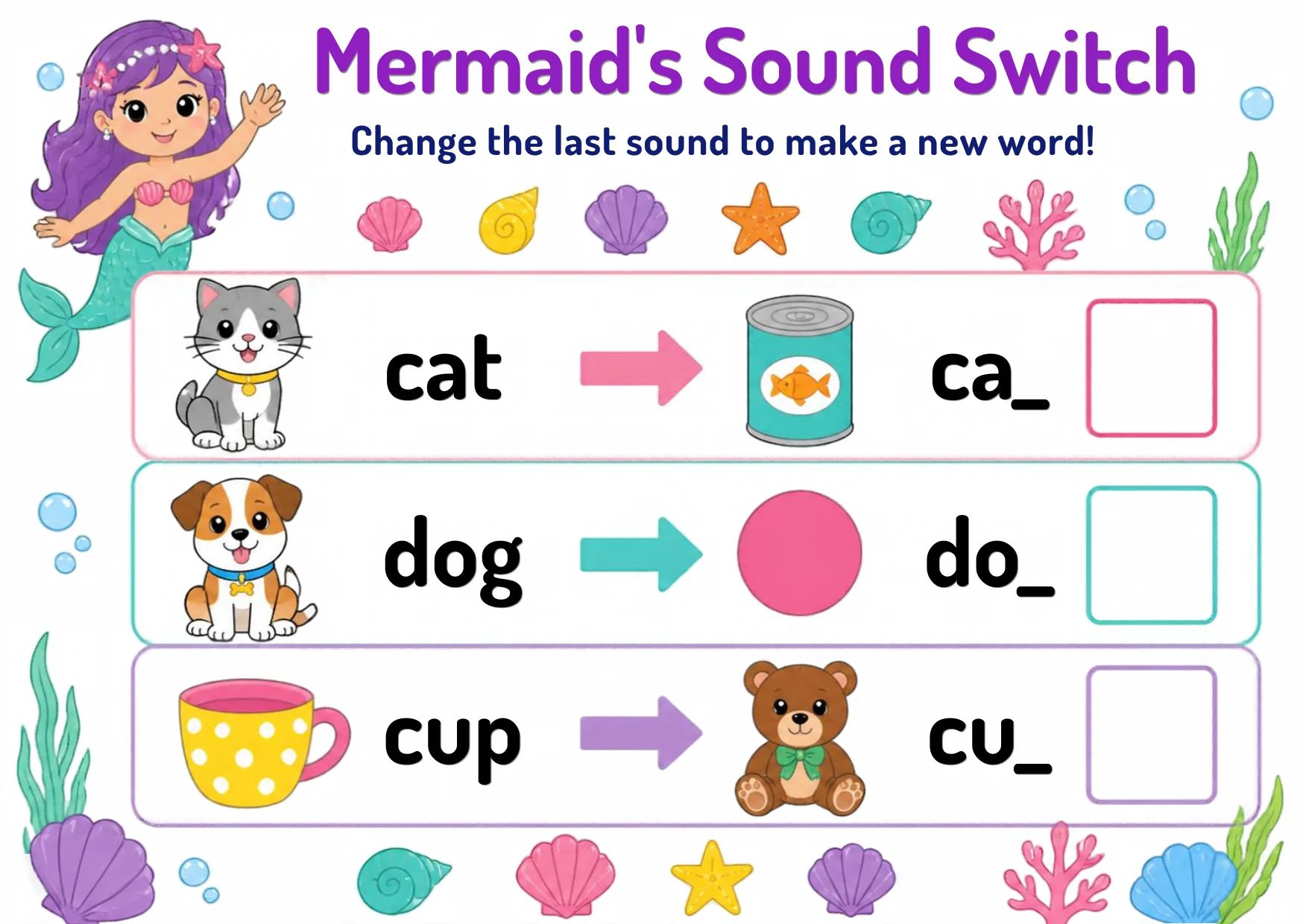
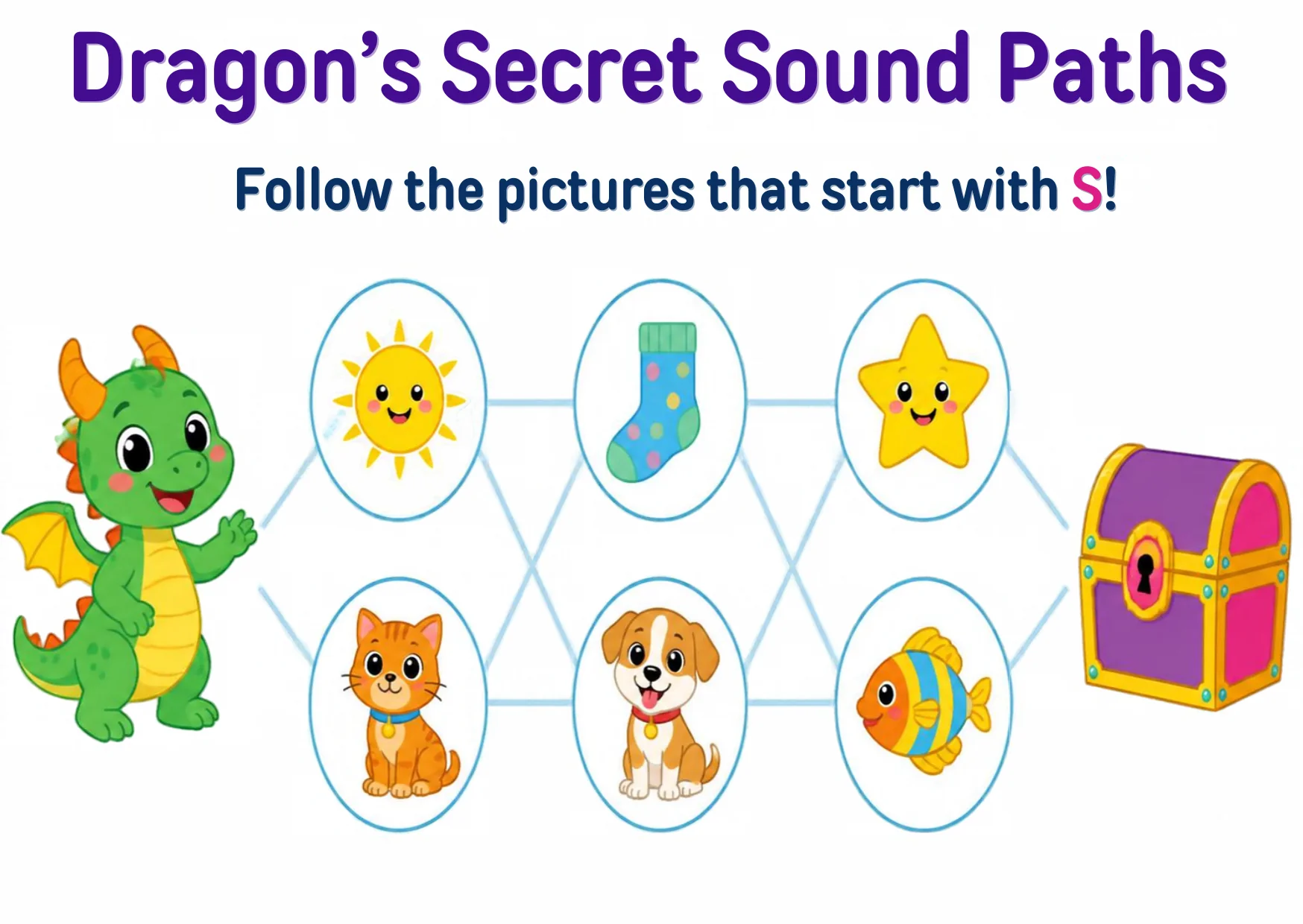
Phonics is listening made visible: this class plays with the sounds inside words — first sounds, ending sounds, rhymes, syllables and the tiny vowels that hide in the middle. Twenty-four draw-on-the-picture adventures, each with a printable worksheet in the Phonics worksheet library.
Every game speaks: words and pure letter sounds play out loud, with replay and a mute switch. No reading required — ears lead, letters follow.
Phonics asks a new kind of listening: not what a word means, but what it is MADE of. The class walks up a gentle slope — hear a sound, find it in pictures, hear it at the start or end of words, blend sounds into words, swap sounds to make new words, and finally count the invisible sounds inside what you hear.
1 Warm-up: the first-sound games
2 Rhymes and blending
3 Two or three adventures from the shelves
4 The matching worksheet, printed
5 Class complete
PLAY · THE 24 PHONICS ADVENTURES
Twenty-four listening adventures.
Start anywhere your child’s ears are curious. The shelves below run in a gentle skill order — first sounds before blends, blends before swaps — but every game stands on its own. Each adventure has a printable worksheet twin at /worksheets/phonics/.
“I spy something that starts with sss…” — soap, sock, spoon. Ears only, no letters needed.
Swap roles and let your child be the spy.
Stretched-word soup
Say a word stretched out — “mmmuuunnnch” — and let your child squash it back together.
Silly voices welcome; the stretching is the point.
Rhyme sandwiches
Any rhyme pair becomes a sandwich: “cat-hat sandwich, please!”
Make the order, serve it, giggle, repeat.
Phonics rewards tiny sessions. Five minutes of sound play, done warmly, beats thirty done tired.
A NOTE FROM THE PRINCIPAL
For the grown-ups.
Phonics has one famous rule: sounds first, letter names second. The letter is “em” but the sound is “mmm” — and children who learn the sound first learn to read with less un-learning. Every game here plays real recordings of both words and pure sounds; press replay as often as needed, and say the sounds with your child so the ears have company.
The printable worksheets are built to work without any audio: every sheet tells you exactly what to say and includes a grown-up answer line. Browse the phonics worksheets and print the twin of whichever game your child loved.