
Dinosaur Fossil — a step-by-step lesson for grown-up and child
This lesson solves a mystery your child may not have noticed yet: nobody alive has ever seen a dinosaur — so how do we know them? Buried bones, pressed to stone, dug out slowly. The cookie excavation lets your child dig like a real palaeontologist, and slow hands win.
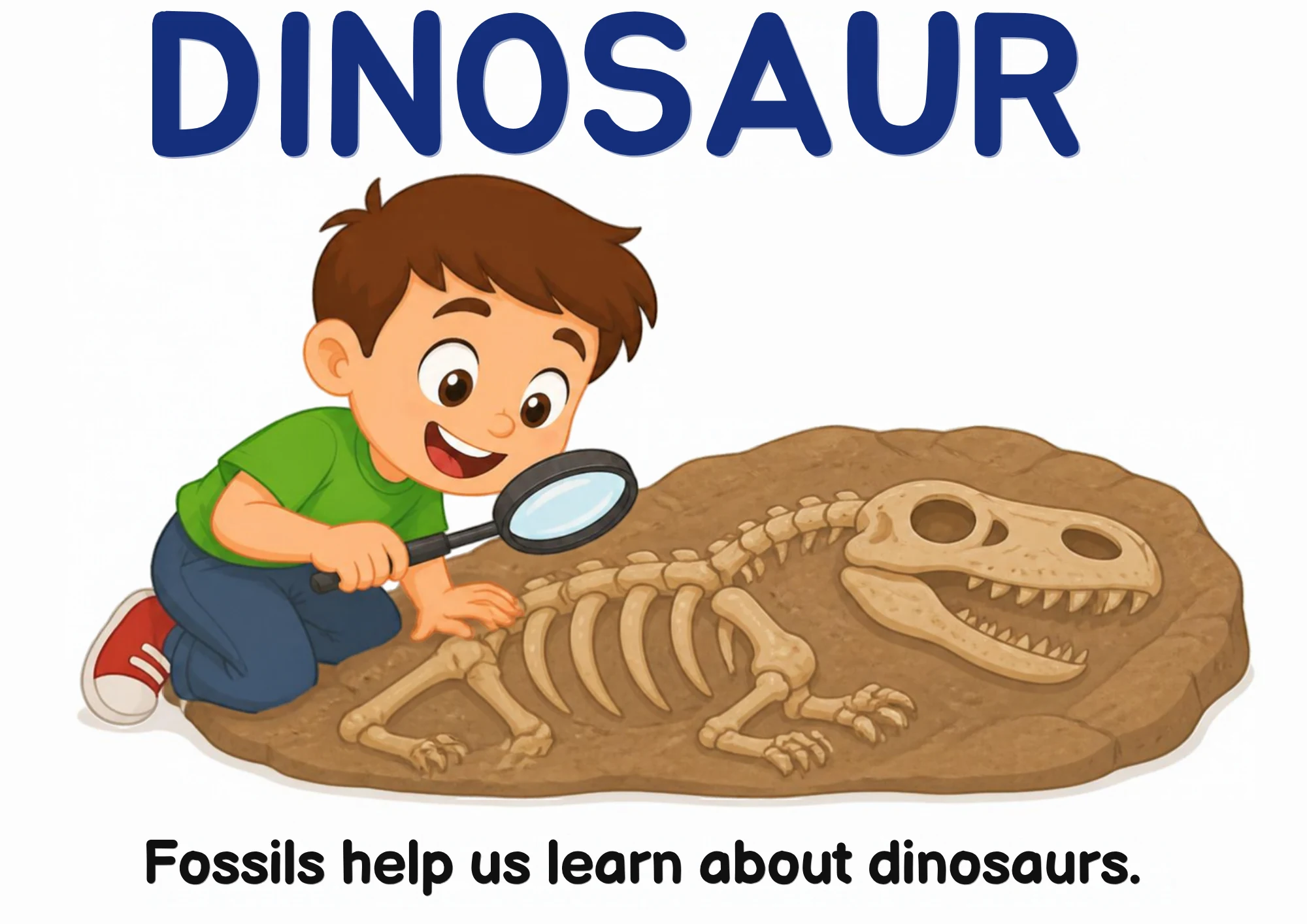
What is this?
A fossil is the stone-hard remains of a living thing from long ago. An animal buried quickly by mud or sand skips the rotting; over millions of years, pressure turns the buried bones to rock. Dig them up, and the skeleton tells you everything.
What does it mean?
Fossils are evidence, the only witnesses left: no photos, no videos, just buried clues. Scientists who read them — palaeontologists — are detectives, working out what dinosaurs ate, how big they grew and how they moved, one brush-stroke at a time.
What does the child need to know?
A fossil needs fast burial: mud or flood sand must cover the bones before they can rot, and then age plus deep pressure slowly turn them to stone. The digging is famously slow — one real bone can take weeks, brushed free grain by grain. Museums are full of the results.
Why this matters
Fossils introduce deep time — millions of years — in the gentlest way, and they frame scientists as clue-readers, which is exactly the habit your child is building. The cookie dig trains the patience: real discoveries come from careful hands, not fast ones.
What it teaches
Evidence-based thinking (how we know what nobody saw), fine motor control in the excavation, patience with a slow process, and vocabulary — fossil, palaeontologist, excavation — that makes museum visits into homecomings.
Words to learn
fossilbonesdigburiedstoneclues
Say this to your child
“"Nobody has ever seen a living dinosaur — but we know them anyway, because of fossils. When a dinosaur died and got buried quickly by mud, its bones stayed put for millions of years while the pressing turned them to stone. Scientists dig them out with tiny brushes, so slowly that one bone can take weeks. The bones are the story."”
Step by step
- Show the card: what is the child brushing dirt off? Can you find the dinosaur’s ribs, its leg, its skull? Name the buried skeleton.
- Ask the mystery question: nobody alive ever saw a dinosaur — so how do we know what they looked like? The buried bones tell us.
- Explain the making: a dinosaur must be buried fast — under mud or flood sand — before it has time to rot; then years beyond counting press the bones slowly into stone.
- Set the cookie dig: treat the chocolate chips as buried fossils and the cookie as the rock around them. Dig out every chip whole with a toothpick — slow hands win, exactly like a real dig.
- Read the findings: lay your excavated "fossils" in a row. What kind of creature left them? That is palaeontology — reading stories told in stone.
Look closer at the picture
Ask your child: what is the child brushing? What is hiding under the dirt? Can you find the bones — where is the skull, where is a leg? Is the child brushing fast or slowly?
Ask your child
"What is a fossil?" "How do we know about dinosaurs if nobody saw them?" "Why must bones be buried quickly?" "What does a palaeontologist do all day?"
What your child can say or do
"Fossils are bones turned to STONE!" "Slow hands win — like a real palaeontologist!" Your child may brush every flowerbed carefully on the lookout for buried clues, lay toys in mud "for the future to find", or explain that museums are full of "stone bones".
Out in the real world
Fossils sit in plain reach: ammonite shapes in beach stones, fossil-hunting beaches with chalk cliffs, museum halls where a real T. rex skull leans over the rail. Even a garden pebble with a shell print is a fossil clue — the past, pressing into the present.
Try it together
Cookie excavation dig site: one chocolate-chip cookie, one toothpick, one small brush per palaeontologist. Rule of the site: every chip out whole, no crumbling the "rock". Then record the find — draw the chips in a grid, like a real dig map. Repeat until the site is exhausted and the palaeontologist is snack-full.
Understanding check
Ask: "What is a fossil? How did the bones turn to stone? Who digs them up slowly?" Stone-hard old bones, pressing for ages, palaeontologists = landed.
Parent tips
The toothpick-and-brush combo matters — the brush does the final cleaning, just like real digs, and the two tools slow the digging to science speed. If a natural history museum is within reach, go within a fortnight: your child will walk in naming the palaeontologist’s job out loud.
This lesson pairs with the Dinosaur Fossil flashcard in the library — print it, show it, keep it on the fridge. Back to Science, Nature & Discovery (Class 31).