
Frog — a step-by-step lesson for grown-up and child
This lesson follows the second great change-your-body story in the garden: the frog. Your child learns that pond animals start as swimmers, watches what legs are for, and practises the pondside habit of looking without scooping.
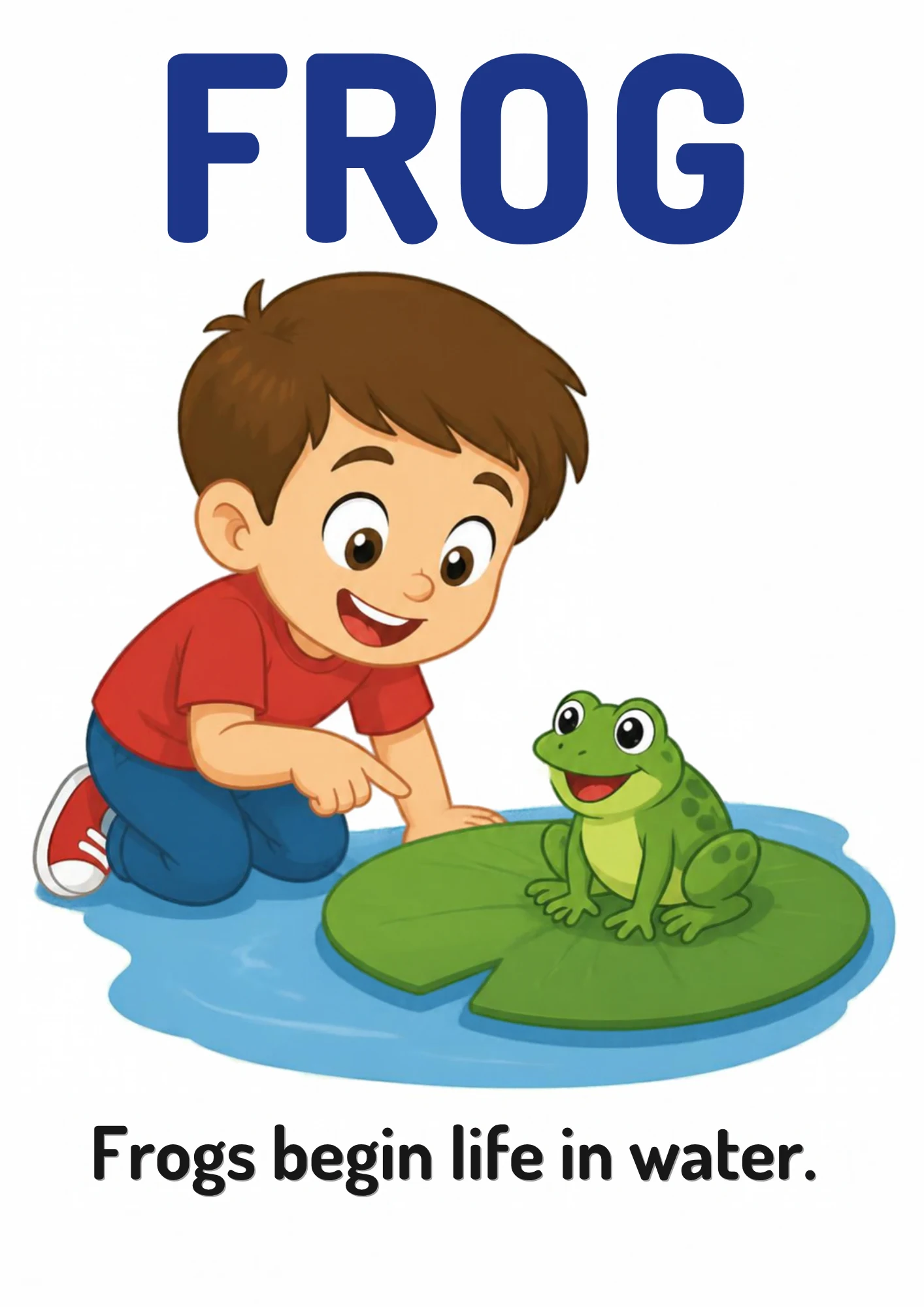
What is this?
A frog starts life as an egg in a blob of jelly, hatches as a tadpole that swims and breathes underwater, then slowly grows four legs, loses its tail and hops out onto land as a breathing, jumping frog.
What does it mean?
The tadpole is not a different animal from the frog — it is the same frog at a different age, built for a different home. First a water body with a tail and gills, then a land body with legs and lungs: one life, two designs.
What does the child need to know?
Tadpoles hatch in spring from frogspawn — soft jelly dots laid on pond plants. As a tadpole grows, its tail gets shorter until it disappears, and lungs take over from gills. Frogs breathe a little through their skin too, and they hop instead of walk.
Why this matters
Frogs give your child a second life-cycle after the butterfly, and this one happens in a place they can visit: a pond. Matching bodies to homes — tail for swimming, legs for hopping — is the first step toward understanding habitats.
What it teaches
Sequencing a life story in order, comparing bodies across stages, the habitat idea (water animal, land animal), and gentle pondside discipline: watching without dipping hands or nets into the water.
Words to learn
frogtadpoletaillegspondjump
Say this to your child
“"A baby frog cannot hop at first — it swims! It hatches from a jelly egg as a tadpole, with a long tail for paddling. Little by little it grows legs, the tail disappears, and one day it climbs out of the water and jumps. Same frog, brand-new body."”
Step by step
- Show the card: who is watching whom, and where is the frog sitting? Name the animal and its home.
- Tell the beginning: a frog starts as a jelly dot in the pond, then wiggles out as a tadpole — a tiny swimmer with a tail and no legs.
- Walk the change: back legs sprout first, then front legs, then the tail shrinks away while lungs grow for breathing air.
- Ask what legs can do that a tail cannot — then hop like frogs across the room, crouch and jump, crouch and jump.
- Close with the pond rule: frogspawn and tadpoles stay in their pond — we look, we count, and we leave them to grow.
Look closer at the picture
Ask your child: who is the child watching? Where is the frog sitting — can you find the lily pad? What is the frog doing? Is the child close to the water or keeping a little distance?
Ask your child
"What does a baby frog look like before it has legs?" "What happens to the tadpole’s tail?" "Why does a frog need legs?" "What do we do at a pond — scoop or watch?"
What your child can say or do
"The tadpole sucked its tail back in!" "Frogs drink through their skin — that is so weird!" (true, and your child said it first). Your child may frog-hop everywhere for a week, or report every spring that the pond frogs will be laying jelly eggs again.
Out in the real world
Frogs turn up wherever water sits still long enough: garden ponds, ditches, rain barrels. Once your child knows the tadpole story, a spring pond visit becomes a scavenger hunt — jelly eggs one week, wiggling tadpoles the next, tiny froglets by summer.
Try it together
Tadpole-to-frog transformation race: start curled small like an egg, wiggle-swim across the rug, grow "legs" (arms out), then hop the last stretch to a lily pad cushion. Call out the stages and let your child transform on command.
Understanding check
Ask: "What does a tadpole use to swim? What grows for hopping? What do we do at the pond?" Tail, legs, watch-only = landed.
Parent tips
Pond dipping needs grown-up hands in charge; bring a white tub to scoop-and-release only where the site allows it, and return every creature straight away. A good pond book or zoomed-in photos stretch the lesson on rainy days.
Staying safe
Ponds earn real respect: little scientists stay a grown-up arm’s length from the water, sit down to watch, and frogspawn or tadpoles never come home — they are living animals, not souvenirs. Nets and buckets only when a grown-up runs the dipping.
This lesson pairs with the Frog flashcard in the library — print it, show it, keep it on the fridge. Back to Science, Nature & Discovery (Class 31).