
Pond Habitat — a step-by-step lesson for grown-up and child
This lesson shrinks the whole idea of a habitat down to something a four-year-old can see edge to edge: a pond is one small home where frogs, snails, insects and water plants all fit together — and sitting still reveals more than any stomping.
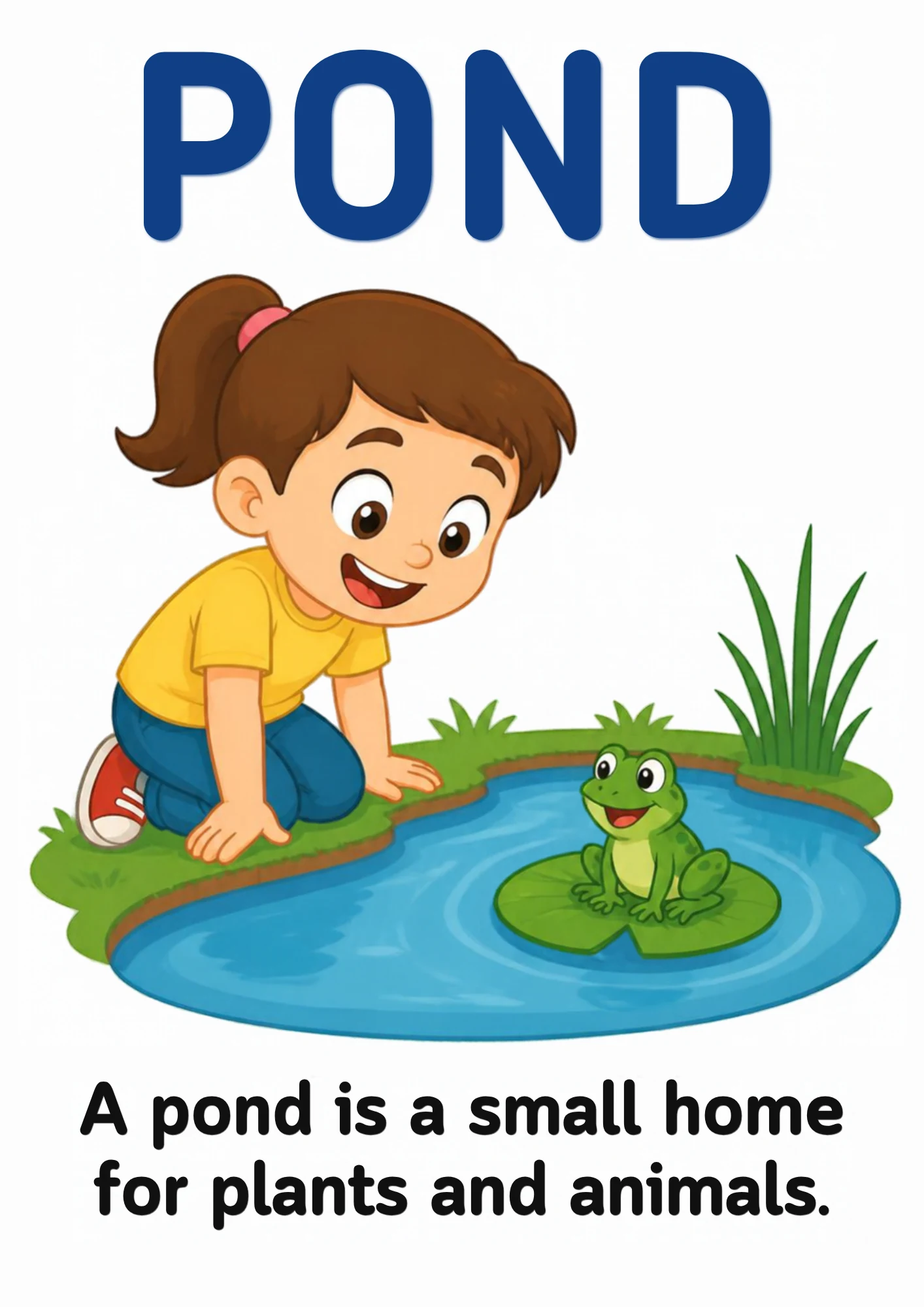
What is this?
A pond is a small home shared by many living things: frogs hunt insects, snails graze the green slime on stones, water plants give shade and fresh air, and everyone finds food and shelter in the same little pool.
What does it mean?
Habitat means the place where an animal finds everything it needs — food, water, shelter — all in one spot. The pond works because the neighbours fit together: plants feed and shade, grazers clean, hunters hunt, and nobody has to leave home to survive.
What does the child need to know?
Pond residents come in layers: swimmers below, floaters on the surface, jumpers at the edge, divers at the bottom. Even the water itself is crowded with tiny life. The stillness rule is real biology — loud stomping sends frogs diving; sitting quietly brings the pond back out.
Why this matters
A pond is a whole ecosystem at child scale — small enough to see across, busy enough to show sharing. It gathers the set’s animals into one home and teaches the biggest ecology idea gently: animals belong where their needs are met.
What it teaches
Sustained quiet watching (four still minutes is a real achievement), counting and tallying, the habitat idea of needs-met-in-one-place, and respect for shared homes: visitors do not fish, grab or empty the pond.
Words to learn
pondhabitathomefrogsnailplants
Say this to your child
“"A pond is one small home with a lot of tenants. The plants make shade and fresh air, the snails scrub the stones, the insects feed the frogs, and everyone finds dinner without ever leaving home. We sit still like visitors — and the pond forgets we are here and starts its show."”
Step by step
- Show the card: what is the child leaning over, and who is sitting on the lily pad? Name the pond as a home, not just water.
- List the tenants: frogs, snails, insects, fish, water plants — everyone shares this one small pool.
- Explain the fit: the plants make shade and fresh air, the snails graze the stones clean, the frogs hunt the insects. Neighbours with jobs.
- Run the pond-sit: four still minutes, arm’s length from the edge, tallying every living thing you spot — swimmers, floaters, jumpers, gliders.
- Compare tallies: stillness finds more than stomping ever will. Ask which neighbours your child would want in their own home — and why the frog never leaves.
Look closer at the picture
Ask your child: what is the child leaning over? Can you find the frog? What is the frog sitting on? Who else do you think lives in this water?
Ask your child
"Who shares the pond as their home?" "What do the water plants give the pond?" "Why do we sit still at a pond?" "What does a habitat give the animals that live there?"
What your child can say or do
"The pond is everyone’s house!" "I counted five things alive — a frog, a snail, and three tiny swimmers!" Your child may play ponds in the paddling pool, assign every toy a pond job, or shush the family at the water’s edge: "quiet — the frogs are coming out."
Out in the real world
Habitat logic applies everywhere once your child sees it in miniature: a log is a beetle’s pond, a hedge is a wren’s, your garden is one big shared home. The pond version is just the clearest — small, visible edges, tenants on display all summer.
Try it together
Pond in a bowl pretend: blue cloth for water, corks for floating snails, a toy frog on a paper lily pad, cut-out plants for shade. Your child stocks the habitat, then plays the pond-sit: who comes out when the room goes quiet? Add visitors one by one — who eats whom?
Understanding check
Ask: "What is a habitat? Who shares a pond? What does stillness find?" A home with everything needed, frogs snails insects plants, more = landed.
Parent tips
Pick a pond with a bench or a flat bank and go at mid-morning, when frogs bask and pond skaters skate. If no pond is near, a wildlife documentary pond scene or a garden water-butt with wrigglers works — the stillness habit is the portable part.
Staying safe
Pond edges are the one hard rule: water deeper than a puddle means a grown-up holds a small hand the whole time — slippery banks and deep mud tip little feet faster than anyone expects. The pond-sit happens sitting down, at a distance from the edge, and nothing goes into the water — not hands, not nets, not toes.
This lesson pairs with the Pond Habitat flashcard in the library — print it, show it, keep it on the fridge. Back to Science, Nature & Discovery (Class 31).