
Snail — a step-by-step lesson for grown-up and child
This lesson makes the slowest animal in the garden the best first subject: a snail moves at exactly the speed a four-year-old studies, and everything about it — shell, slime, feelers — is visible without any chasing.
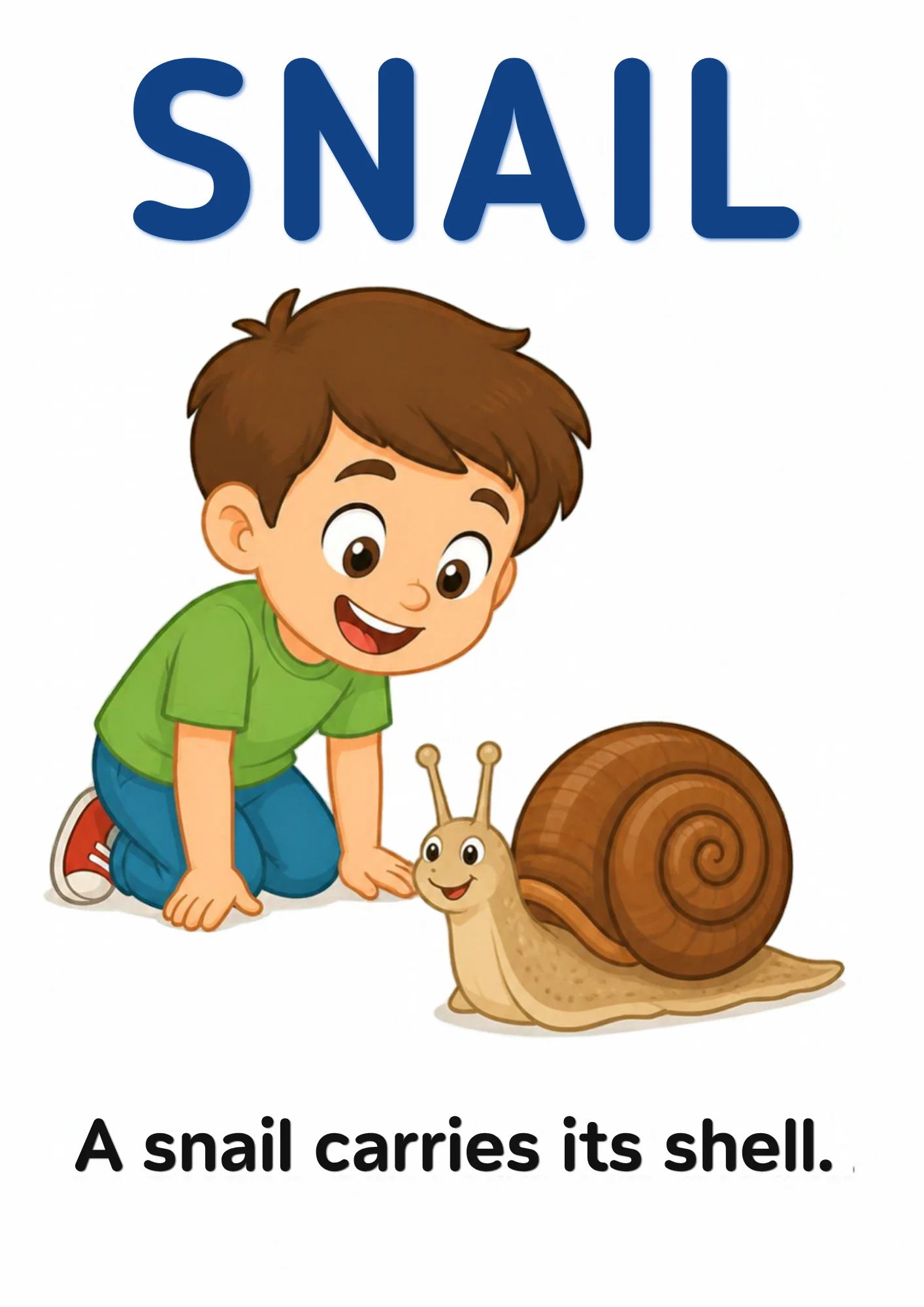
What is this?
A snail is a soft-bodied animal with a spiral shell it never leaves: the shell is its home, its shield and its bones in one. Underneath, a single muscular foot ripples forward, laying down slippery slime as it goes.
What does it mean?
The shell answers a big question — where does a soft animal keep safe? — by carrying the answer along. The slime is not mess; it is a road, a glue and a drying-guard all at once, which is why a snail can climb a wall or slide under a leaf and stick there.
What does the child need to know?
Snails come out when it is damp — after rain, at dawn, in shady corners — because drying out is their biggest danger. The shell grows with the snail, coil by coil, and the two feelers on top carry tiny eyes at their tips.
Why this matters
Snails reward patience like nothing else in the garden: the child who sits still for two minutes gets a whole show — stretching, gliding, tasting the air. Slow animals teach the watching skills fast animals cannot.
What it teaches
Sustained attention (snails reward stillness), close observation, gentle handling of ideas like protection and shelter, and the patience-muscle that underpins every later science lesson.
Words to learn
snailshellslimeslowfeelersdamp
Say this to your child
“"A snail carries its house everywhere — no other animal does that. When it is scared, it pulls everything inside and shuts the door. Underneath is one strong foot that ripples like a wave, and the slime is its slippery road so the soft parts never get hurt on the ground."”
Step by step
- Show the card: who is watching whom, and what is the snail wearing on its back? Name the home-carrying trick.
- Ask the big question: where does a snail sleep? Answer — inside itself, door closed. The shell is bedroom and shield together.
- Hunt after rain: shady grass, damp walls, under pots. Move slowly; slow animals trust slow people.
- Follow the shiny trail backwards and ask where the snail came from — slime is a road you can read.
- Finish by watching one snail stretch out and glide: two quiet minutes is a long time at four, and a snail makes every second count.
Look closer at the picture
Ask your child: what shape is the snail’s shell — can you trace the spiral with a finger in the air? What is the child in the picture doing? Where do you think the snail is heading? Can you find anything else in the picture that looks damp?
Ask your child
"Where does a snail keep its house?" "Why do we find snails after rain?" "What is the shiny line on the ground?" "What does a snail do when it is scared?"
What your child can say or do
"The snail took its house inside!" "Look — its slime road goes all the way to the wall!" Your child may crawl slowly around the garden calling themselves a snail, or check the same wall every morning for "their" snail.
Out in the real world
Snail shells show up in stories, spirals and staircases once your child starts looking — the swirl is one of nature’s favourite shapes. Gardeners have a different view of snails: your child now understands both sides, the admirer and the lettuce-farmer.
Try it together
Spiral hunt: draw one big spiral, then find snail-swirl shapes around you — shells, cinnamon rolls, curled fern tips, the coil of a hose. Then slow-race: everyone moves like a snail from sofa to door; last one wins, of course.
Understanding check
Ask: "What does a snail carry on its back? What is the shiny trail for? When do snails come out?" Shell-home, slime-road, after-rain = landed.
Parent tips
If your child wants to hold a snail, wet hands first and keep it low over soft grass — a dropped shell cracks. Always put the snail back exactly where it was found; its whole world is that one damp corner.
This lesson pairs with the Snail flashcard in the library — print it, show it, keep it on the fridge. Back to Science, Nature & Discovery (Class 31).