
Egg — a step-by-step lesson for grown-up and child
The egg card is the set’s shape lesson hiding in a food: small, oval and at the table most mornings. This lesson names it at breakfast and lets the shape do its quiet work.
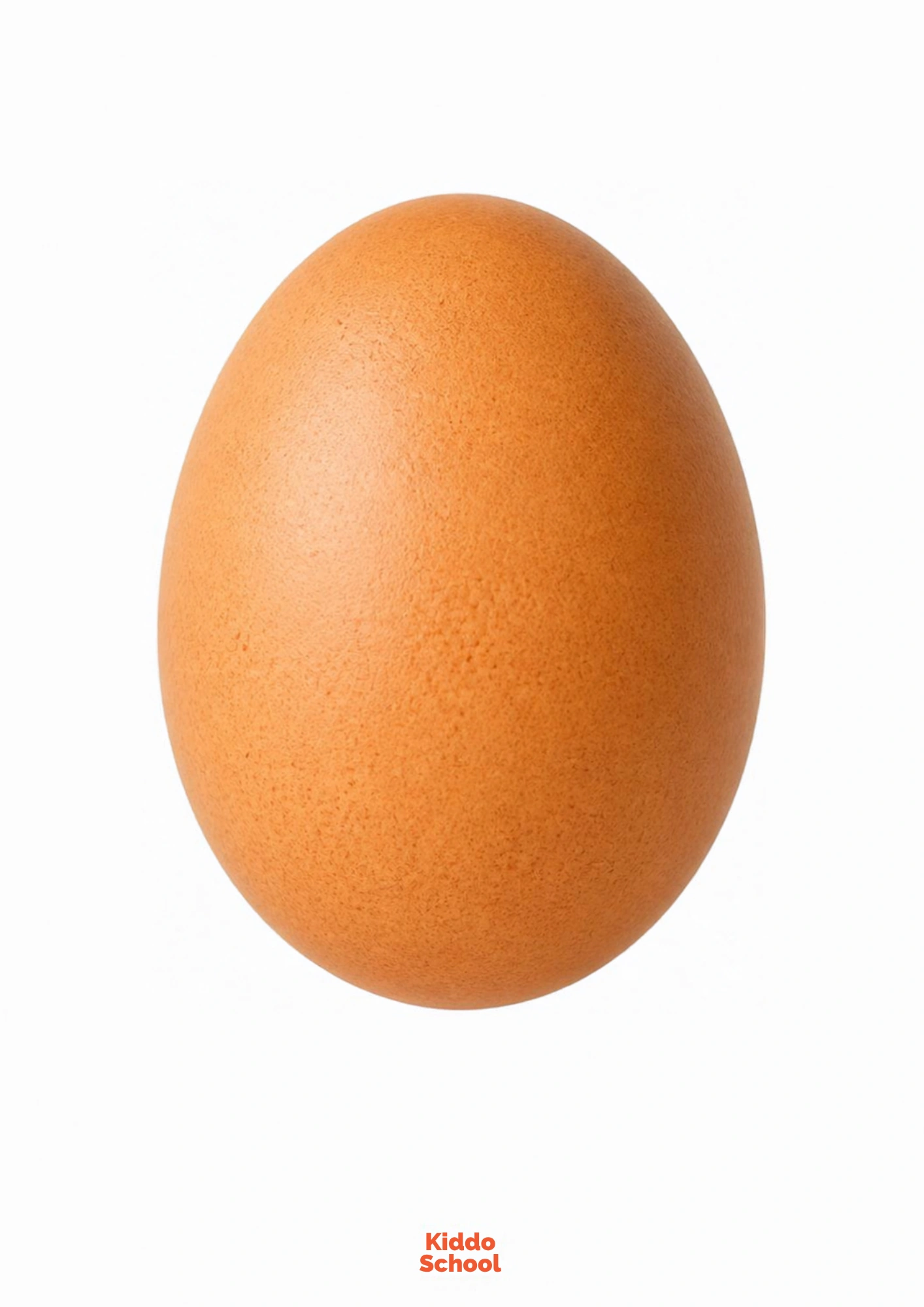
What is this?
An egg is a small oval food with a shell, famous at breakfast and endlessly useful in a kitchen. The card shows a simple egg; the real one — boiled, scrambled or still in its shell — gives the word its weight and its shape.
What does it mean?
Shape rides along with object words for free: every "egg" is also a quiet lesson in oval. Toddlers sort the world by shape and routine before colour or category, and the egg is one of the cleanest shapes on the menu.
What does the child need to know?
Show the card beside a real egg — in the shell is best — and let the two be compared: same word, same shape. One word, one clear form, one daily rehearsal: that is the entire method, and it is enough.
Why this matters
Eggs are breakfast regulars, which gives the word a reliable daily stage. The clear oval also seeds early sorting — round things, oval things, eggy things — the quiet beginnings of the maths your toddler will meet in a few years.
What it teaches
Object vocabulary with shape attached, matching picture to object, breakfast routine words, and early visual sorting — round, oval, rolls nicely.
Words to learn
eggovalshellbreakfastcrackround
Say this to your child
“"Egg! A little egg, smooth and oval. Feel it — cool and smooth in your hand. Crack — the shell opens, the egg comes out. Cook, cook, and now we eat the egg. Yum, yum, little oval egg."”
Step by step
- Show the card at breakfast with a real egg in its shell beside it: "Egg. This is an egg — same as that."
- Let your toddler hold the real egg with your hand cupped under theirs: one word at the handover — "egg" — and the shape in the palm.
- Tap-tap-crack it into the pan if you are cooking, and name the moment: "Crack! The egg opens." The word for the sound is free vocabulary.
- Point at the card’s egg, then the shell pieces: same word, before and after. Toddlers love a before-and-after.
- Serve it and finish the scene: "Eat the egg. Yum." The oval’s journey ends at the fork, and the story has a shape too.
Look closer at the picture
The artwork is a simple egg, small and oval on the card — the plainest picture in the set. Say that, then hand over the real thing: the card shows the shape, and the shell supplies the coolness, the weight and the crack.
Ask your child
Watch the hold: do the fingers explore the curve, does the egg get rolled along the tray, does the word arrive at breakfast unprompted? Wonder aloud: "I wonder if you are storing the oval for later."
What your child can say or do
An egg carried to the card for a matching tap, "egg" or "eh-guh" attempted at the pan, both hands rolling the shell pieces, or the word offered at the fridge door a day early — naming across days is the word taking root.
Out in the real world
Eggs appear all over: the box in the fridge, the boiling pan, egg on toast, the scrambled spoonful. Each visit is a rehearsal — one word, one shape, and the oval gets around.
Try it together
Oval hunt: after the card, find oval things together — the egg, a stone, a lemon. A two-item hunt is plenty at this age; the shape is the treasure.
Understanding check
Parent self-check: did the card meet a real egg this week, and did the shape get said out loud once? Word plus shape is the double payload; either alone is half a lesson.
Parent tips
One word per egg — "egg", not egg-shell-oval-chicken; the extras leak in over years, not days. If the crack startles your toddler, show the cracking again slowly; surprise repeated on purpose becomes interest.
Staying safe
Raw egg stays a grown-up object — hand over boiled eggs in the shell only, wash hands after shell play, and keep the card clear of the pan’s splash radius. Breakfast stays seated: ovals roll, and so do toddlers who chase them.
This lesson pairs with the Egg flashcard in the library — print it, show it, keep it on the fridge. Back to First Words: Food & Home (Toddler 1).