
Bee — a step-by-step lesson for grown-up and child
This lesson teaches the buzz and the boundary together: bzzz with your lips, a gentle finger-flight that lands softly, and the one rule said the same calm way every time.
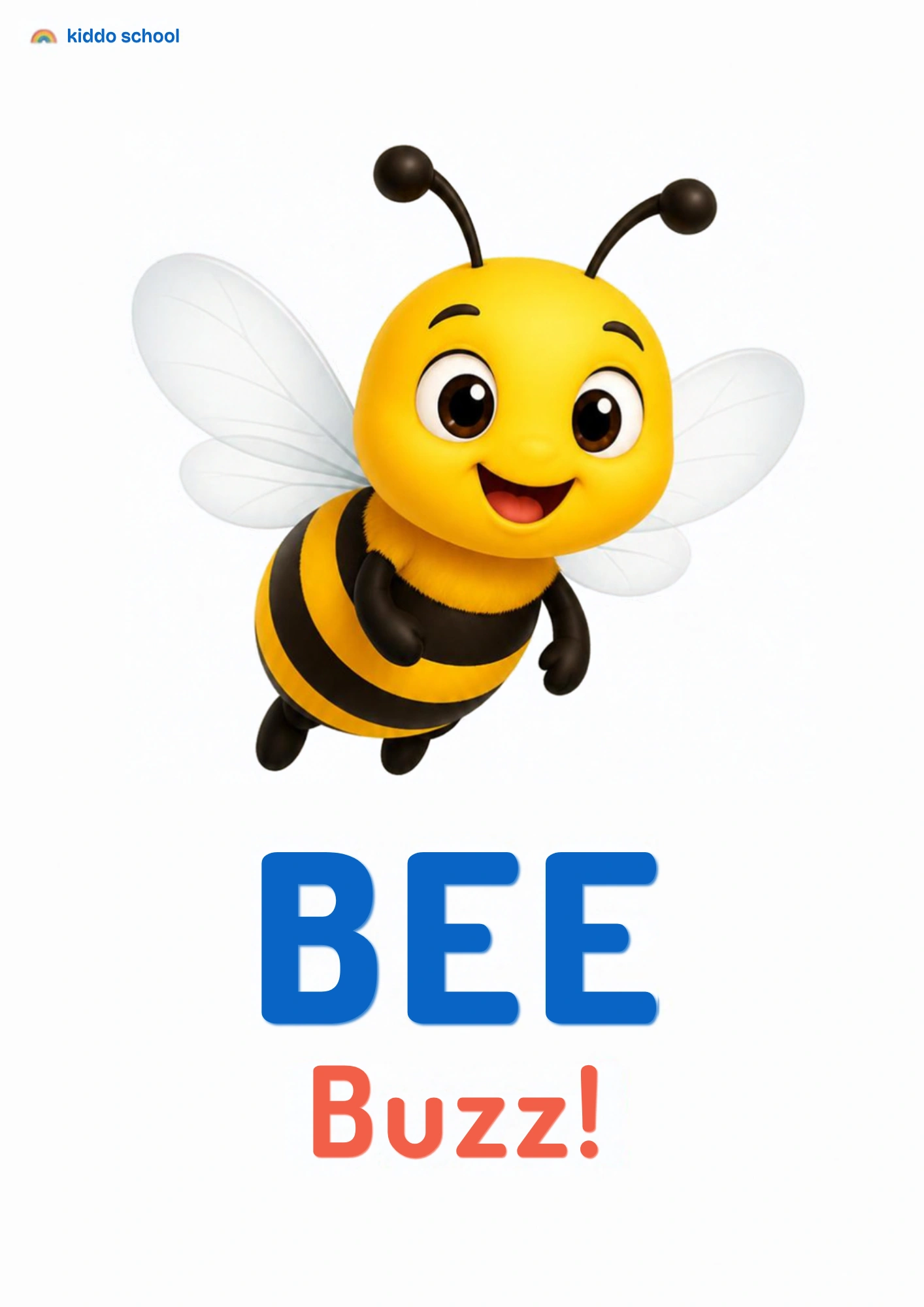
What is this?
A bee is a small striped garden visitor that says bzzz — a sound you make with your lips buzzing, which toddlers can do long before they can say bee clearly.
What does it mean?
Bzzz is lip-and-breath work: a closed-mouth hum with a wobble. It also carries the set’s first safety idea — exciting things sometimes need watching hands, not grabbing hands.
What does the child need to know?
Bees visit flowers and mind their own busy work. The rule this card teaches is short and worth repeating: eyes on the bee, hands by your side. Calm words, the same way each time.
Why this matters
The bee card pays twice — a sound every toddler can make instantly, and the first line of the gentle-hands habit that the whole garden year will reuse.
What it teaches
Lip-buzzing breath control, gentle-touch practice, and rule learning through repetition — the same words, the same calm voice, until the toddler says them back.
Words to learn
beebuzzflowergentlestripeslook
Say this to your child
“"A bee! Bzzz! Can you buzz? Lips together — bzzz. Fly your little bee… and settle it softly. Eyes on the bee, hands by our side — bees are busy on the flowers."”
Step by step
- Show the card and say bee, then bzzz with your lips buzzing like a tiny engine.
- Fly a finger-bee around the room and settle it softly — onto a flower, a chair arm, your toddler’s knee. The soft landing is the skill being taught.
- Hand the flight over: their finger-bee buzzes and lands on your shoulder, the book, the window.
- When the finger pokes instead of landing, model the soft landing again without scolding — gentle is practised, not demanded.
- Use the same short line at every real bee this week — eyes on, hands still — until your toddler starts saying it for you.
Look closer at the picture
The card shows a bee saying buzz. Find the bee, find the bzzz, then ask where the bee is going — the flowers are the destination this card points to.
Ask your child
"Where is the bee?" "What does the bee say?" "Can your finger bee land softly?" "What do we do when we see a bee?"
What your child can say or do
A lip-buzz that startles them the first time they hear it — bzzz is a sound their own mouth made! Expect the finger-bee to visit your nose often; being landed on is part of the job.
Out in the real world
Garden flowers, park borders and window boxes are bee airports. Watch one flower for a minute from a step back — a bee may come, and the rule gets its real rehearsal.
Try it together
Flower landing pads: scatter paper flowers on the rug, buzz around, and land on one flower at a time — gently. Buzzing optional, gentle landing mandatory, giggling inevitable.
Understanding check
Ask what the bee says and what we do when we see one. A bzzz plus "look, no touch" — in toddler grammar, pointing and pulling their hand back — is the full pass.
Parent tips
Consistency is the entire safety method here: identical words, calm voice, every sighting. When your toddler says the rule to you someday, the lesson will have outgrown the card.
Staying safe
Bees sting only when squashed or scared, so the rule protects both sides: look, do not touch, and never swat. If a bee lands nearby, freeze together and count to five — it will fly off on its own.
This lesson pairs with the Bee flashcard in the library — print it, show it, keep it on the fridge. Back to Animals & Sounds (Toddler 5).