
Owl — a step-by-step lesson for grown-up and child
This lesson teaches the one card that comes with its own volume: the owl hoots quietly, at night, from a tree — and suddenly bedtime has a soundtrack.
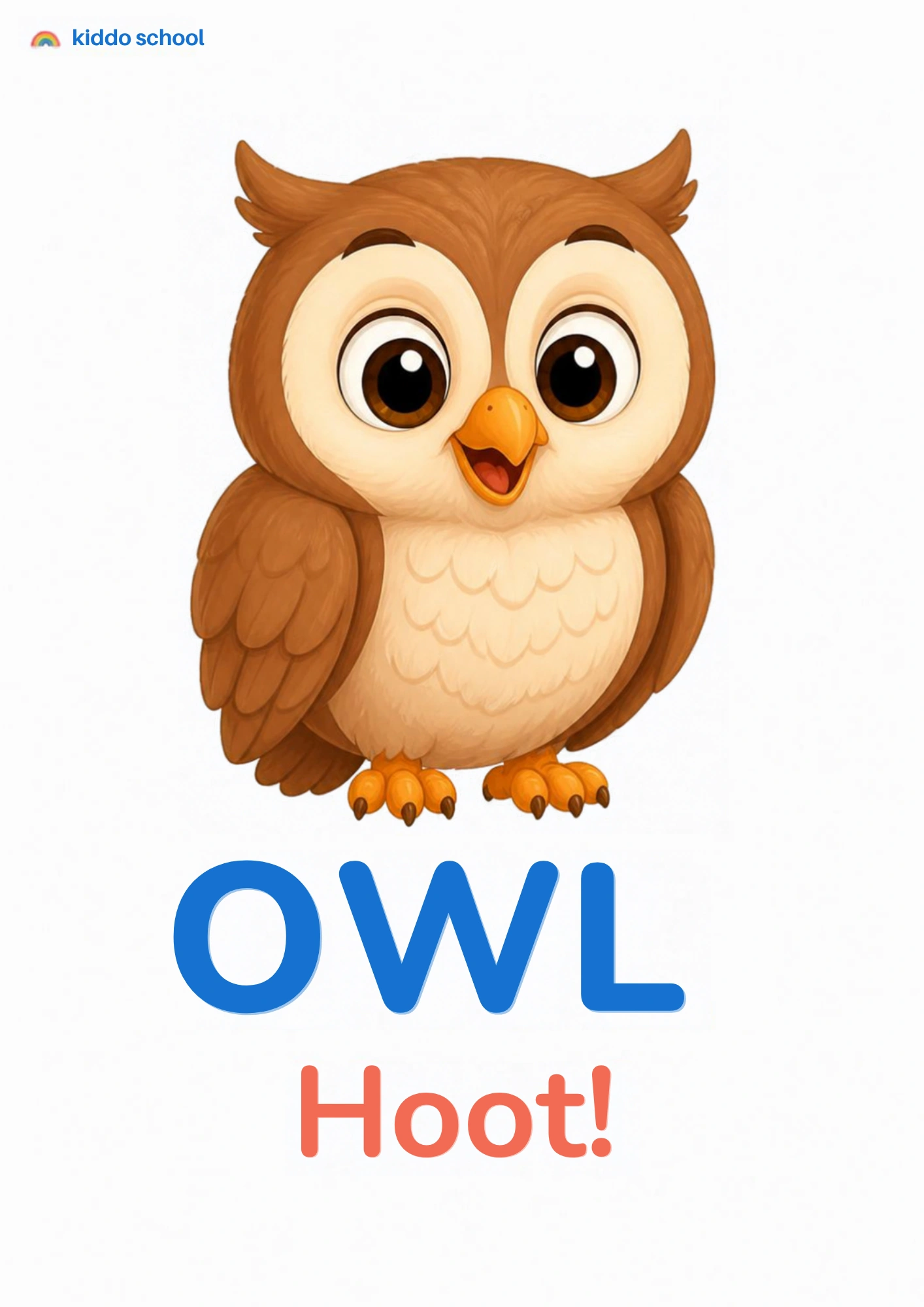
What is this?
An owl is a night bird with big eyes that says hoot — a soft, round sound made with rounded lips and a gentle breath.
What does it mean?
Owls flip the day: they wake when we sleep. That single fact is a toddler’s first window into different rhythms of life, and hoot gives it a sound to hold.
What does the child need to know?
A soft hoot is the wind-down tool of this deck. When evening noise climbs, reach for the owl — hooting is a whispering game, and whispering suits tired toddlers.
Why this matters
The hoot earns its keep at the hardest hour of the toddler day. A quiet game that ends in lying down is worth more than any noisy card at 7pm.
What it teaches
Gentle breath control, night-and-day concept seeds, and the big eyes as an entry into talking about watching and noticing.
Words to learn
owlhootnightquieteyesmoon
Say this to your child
“"An owl! The owl says hoot, hoot. Can you hoot? Softly now — owls wake up when we go to sleep. Big eyes watching in the dark. Hoot, hoot. Time to rest."”
Step by step
- Show the card and say owl, then hoot twice — soft and round, lips pushed out.
- Dim the lights if it is evening and hoot to each other in the half-dark; the quiet is the game.
- Hunt owls in books, on pyjamas, in the toy owl if one exists. Owls wake at night — say that part slowly.
- When your toddler’s hoot comes out as a whoop, hoot back softer and wait; owls are patient and so is this lesson.
- Make hoot the bedtime guest all week: one hoot as the light goes off, and the card can sit on the shelf till morning.
Look closer at the picture
The card shows an owl saying hoot. Find the owl, find the hoot, then ask where the owl’s big eyes are — eyes that watch the dark are the picture’s quiet point.
Ask your child
"Where is the owl?" "What does the owl say?" "Can you hoot softly?" "When do owls wake up?"
What your child can say or do
A whisper-hoot, a round-mouthed "whoo!" or just big eyes and a finger on the lips. Some toddlers will hoot at the ceiling light all week — the night idea has landed.
Out in the real world
Owls live in woods, parks and story books — and in the window at dusk, if you are lucky. A quiet doorstep listen for evening birds is the real-world version of this card.
Try it together
Owl hide-and-seek, lying down version: you hoot softly from behind the sofa, your toddler turns their head towards the sound with eyes closed. Ears-only seeking is a calm, new skill.
Understanding check
Ask what the owl says. A soft hoot passes best of all. Then watch tonight’s lights-out — one voluntary hoot into the dark means the owl has taken the night shift.
Parent tips
Keep this card out of the daytime loud rotation; its power is the quiet. Pair hoot with the last cuddle and the owl becomes a bedtime cue within the week.
Staying safe
This is the calm card, so the only safety note is a gentle one: if a real night noise frightens your toddler, name it — "that was a car, not an owl" — and hoot once together to bring the quiet back.
This lesson pairs with the Owl flashcard in the library — print it, show it, keep it on the fridge. Back to Animals & Sounds (Toddler 5).