
Duck — a step-by-step lesson for grown-up and child
This lesson makes the duck a full-body event: the quack, the waddle, and the pond visit, with bath time as the daily replay button.
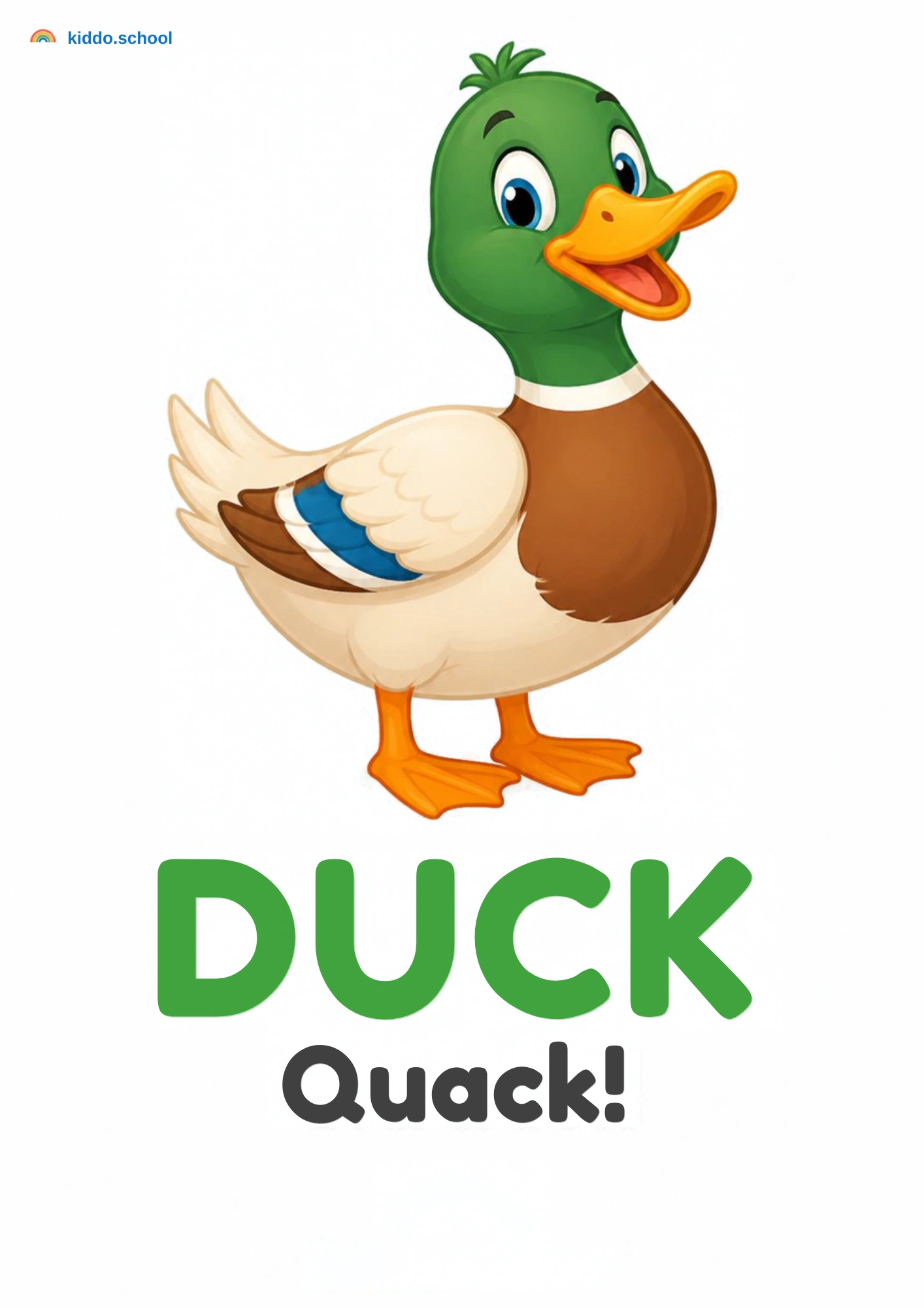
What is this?
A duck is a water bird with a flat bill that says quack — a short, punchy sound that lands better the sillier it is said.
What does it mean?
Quack packs two consonants into one syllable, a genuine mouth challenge at two. Getting a wacky, wack or even an ah! is progress along a real developmental line.
What does the child need to know?
Ducks live on ponds and rivers and paddle more than they fly. Watching real ducks beat any picture: movement, noise and water hold toddler attention like nothing printed can.
Why this matters
The duck card pays out all week — pond trips, bath games, the waddle — because it bundles a sound, a walk and a habitat into one small bird.
What it teaches
Sound play on a tricky consonant blend, body imitation through the waddle, and early nature knowledge — birds live on water.
Words to learn
duckquackwaterpondwaddlebath
Say this to your child
“"A duck! The duck says quack quack. Can you quack? Now tuck your wings and waddle — quack, quack, waddle, waddle. Ducks paddle on the water with their flat feet."”
Step by step
- Show the card, say duck, then quack quack with a smile — silliness is the method, not a bonus.
- Waddle side to side with hands tucked under your arms like wings while you both quack; movement welds the sound in place.
- Hunt ducks: the bath, the bookshelf, any yellow toy. Line three yellow things up and quack at each in turn.
- When your toddler offers an ack, a quack-ish bark or a waddle without a sound, take it — echo the effort and add one small piece: "quack! You waddled!"
- Make bath time duck time for the rest of the week: one quack per splash, and the card propped on the tub edge.
Look closer at the picture
The card shows a duck saying quack. Find the duck, find the quack word, then ask whether ducks live in trees or on the water — the card makes the answer findable.
Ask your child
"Where is the duck?" "What does the duck say?" "Can you waddle like a duck?" "Where do ducks swim?"
What your child can say or do
"Quack!" — or a heartfelt "gack!" — plus a waddle is the full duck experience at two. Some toddlers quack at the bath taps for days; each one is a rehearsal.
Out in the real world
A pond trip is the graduation: real ducks, real quacks, real splashing. Stand back a step, quack together, and skip the bread — watching is the whole outing and the ducks stay healthier for it.
Try it together
Duck pond in the bath: float a plastic tub-boat, sit the rubber duck aboard, and quack it across the water. Tip it over once for the comedy — ducks resurface, toddlers Howl with joy.
Understanding check
Ask what the duck says with the card face down. A quack in any spelling passes. Then watch your toddler’s next bath — if the duck gets a quack without prompting, the card has done its job.
Parent tips
The waddle is the retention device: a sound tied to a big silly movement survives the week. If quack stays hard, let waddle carry the game while the consonants ripen on their own.
Staying safe
At the pond, hold hands at the water’s edge and stay on the path — toddlers lean towards water the way ducks do. No chasing the birds; watching works better anyway.
This lesson pairs with the Duck flashcard in the library — print it, show it, keep it on the fridge. Back to Animals & Sounds (Toddler 5).