
Sheep — a step-by-step lesson for grown-up and child
This lesson pairs the simplest farm sound with the softest idea in the deck: baa, plus wool, plus everything in the house that feels like a sheep.
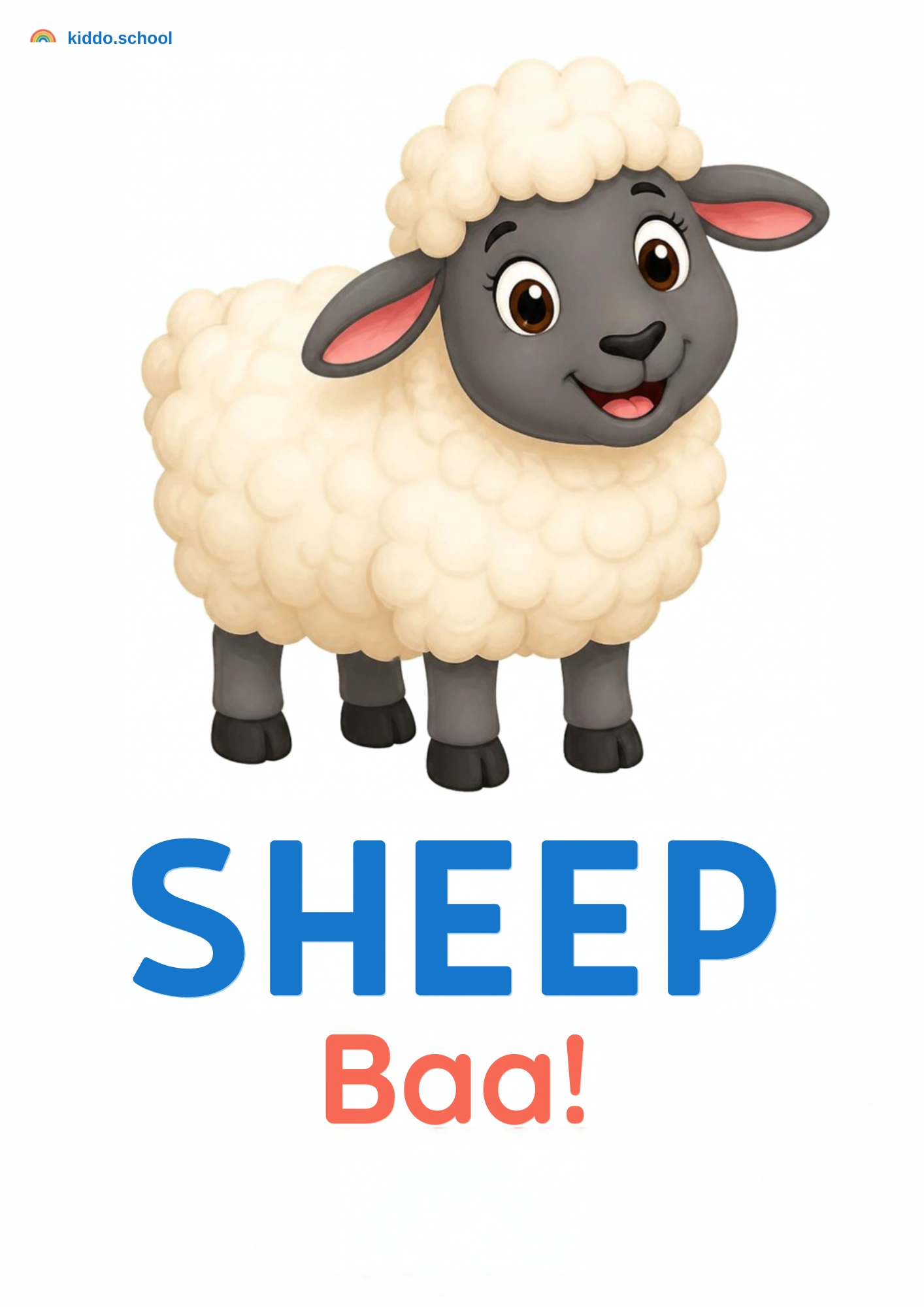
What is this?
A sheep is a woolly farm animal that says baa — a short open sound with an easy b start that most toddlers land on the first try.
What does it mean?
Baa and maa arrive together for many toddlers, and mixing them up is normal, not failure. Sorting two similar sounds is sound discrimination, and it sharpens with every hearing.
What does the child need to know?
Sheep wear wool, and wool becomes jumpers and blankets. The touch connection — woolly equals sheepy — gives this card a sensory anchor the other farm cards do not have.
Why this matters
Baa succeeds fast, and an early win keeps a toddler at the table. Bank the easy sound, then use the wool to stretch the lesson into touch and texture words.
What it teaches
Sound discrimination between close pairs (baa/maa), texture vocabulary, and first clothing-chain knowledge — coat to jumper.
Words to learn
sheepbaawoolsoftfluffyjumper
Say this to your child
“"A sheep! Soft, fluffy sheep. The sheep says baa. Can you say baa? Feel your jumper — woolly and soft, like the sheep’s coat. Baa!"”
Step by step
- Show the card and say sheep, then baa — twice, with a woolly voice.
- Stroke your own sleeve or a blanket while you baa: the sound travels with the soft feeling.
- Send the whole family on a wool hunt — jumpers, hats, teddy, the rug. Every soft find gets a baa.
- When your toddler says baa for the goat later this week, smile and model the difference once: "sheep says baa" — then leave it alone.
- Baa at the jumper drawer each morning this week; dressing time becomes rehearsal time with zero extra minutes.
Look closer at the picture
The card shows a sheep saying baa. Find the sheep, find the baa, and ask what the sheep is wearing — the woolly coat is the detail this card is built on.
Ask your child
"Where is the sheep?" "What does the sheep say?" "Can you find something soft and woolly?" "Who is wearing a jumper right now?"
What your child can say or do
"Baa!" arrives quickly and gets loaned out to every animal this week — a standard toddler sorting phase, not confusion. Some toddlers will rub their cheek on the card, which is sheep-appropriate.
Out in the real world
Woolly socks, teddy bears and granny’s blanket are sheep lessons in disguise. Name the link once per item — "woolly, like a sheep" — and the concept spreads through the whole house.
Try it together
Sheep dress-up: drape a soft scarf over your toddler’s shoulders, baa, and shuffle around the room as a flock. Count the sheep as you shuffle — one sheep, two sheep — and numbers sneak in too.
Understanding check
Ask what the sheep says. A baa passes instantly. Then hold up two fabrics — if your toddler pats the woolly one when you say sheep, the touch half of the lesson has landed as well.
Parent tips
Keep saying sheep correctly even when every animal is baa-ing; the labels sort themselves over weeks. Rotation is the friend here — baa today, baa at bedtime, baa on Thursday, and the sound is permanent.
Staying safe
At petting farms, stroke sheep only at the hand-wash station’s rules — animal touches happen by the gate, then everyone washes hands before snacks or thumbs go in mouths.
This lesson pairs with the Sheep flashcard in the library — print it, show it, keep it on the fridge. Back to Animals & Sounds (Toddler 5).