
Mouse — a step-by-step lesson for grown-up and child
This lesson shrinks everything down: tiny squeaks, tiptoe creeping, whisper voices — and the mouse-and-elephant pairing that quietly teaches opposites.
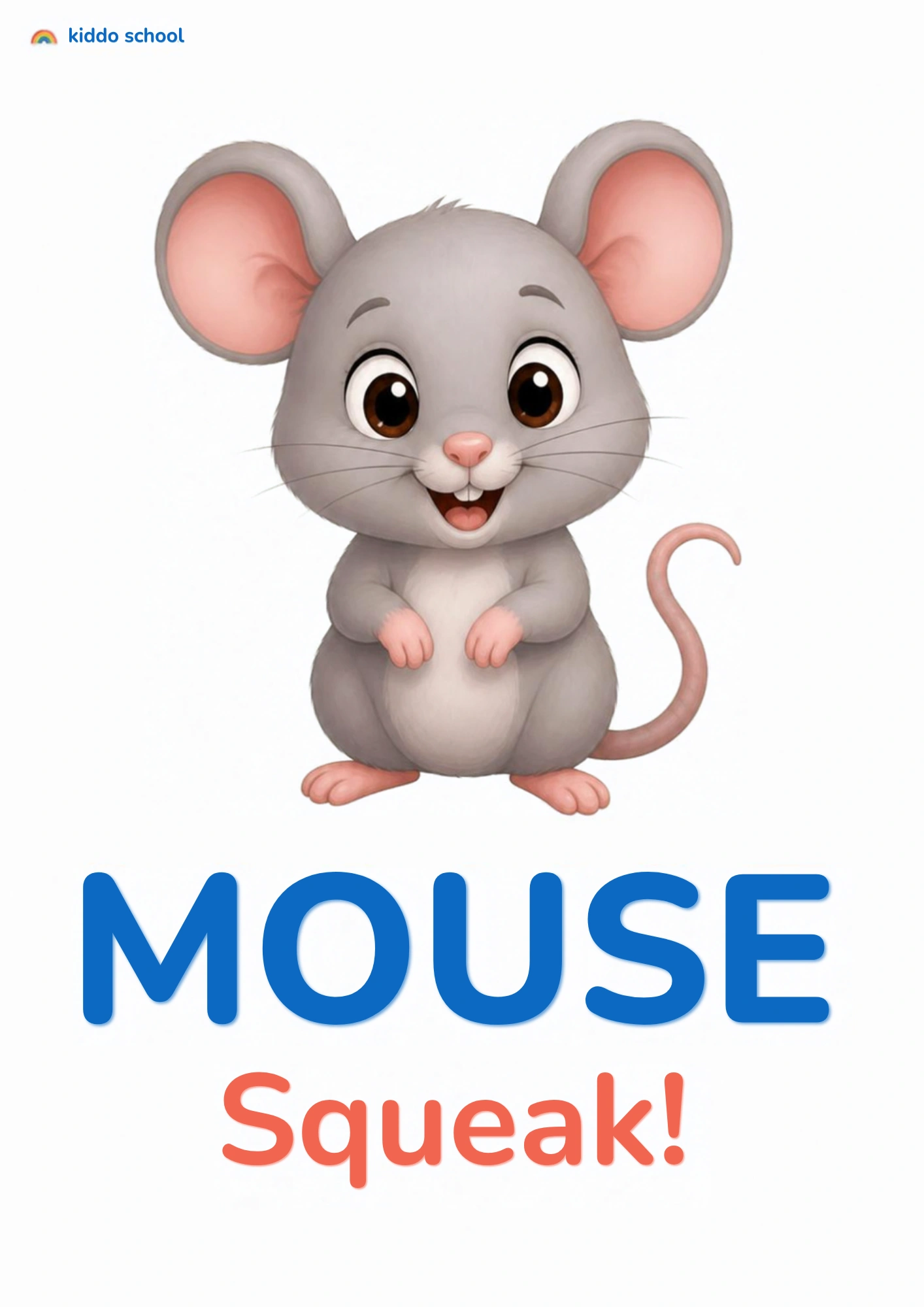
What is this?
A mouse is a very small animal with quick feet that says squeak — a tiny high noise that tiny voices are naturally brilliant at.
What does it mean?
Squeak is the deck’s smallness lesson: little sound, little animal, little feet. Contrast is how toddlers file concepts — mouse beside elephant teaches both twice as well.
What does the child need to know?
Quiet feet find more mice, real and pretend. The tiptoe game is the skill here: slow, controlled walking is a genuine two-year-old achievement dressed as sneaking.
Why this matters
The mouse card balances the loud half of the deck and hands you a calm-down game — tiptoe mice are quiet by design, which some afternoons is the entire point.
What it teaches
Volume and pitch contrast, controlled slow movement, and the beginning of compare-and-contrast thinking with the elephant as its partner.
Words to learn
mousesqueaksmalltiptoequietcheese
Say this to your child
“"A mouse! Tiny mouse. Squeak, squeak! Can you squeak? Now tiptoe like a quiet mouse — step, step, step. Look next to the elephant: big, big… and little, little!"”
Step by step
- Show the card and say mouse, then squeak — high and tiny, twice.
- Creep on tiptoe across the room like quiet mice, and squeak at the exact moment you meet. Small feet, small sound.
- Hunt mice in books and drawers; line the mouse card next to the elephant card and ask which one is small.
- When the squeak comes out as a shout, shrink it together: "tinier… tinier!" — the shrinking game is the lesson.
- Tiptoe once a day this week — to the door, to the bath, to bed — with squeaks saved for the arrival.
Look closer at the picture
The card shows a mouse saying squeak. Find the mouse, find the squeak, then put the elephant card alongside and ask which animal is little — the pair is the picture.
Ask your child
"Where is the mouse?" "What does the mouse say?" "Can you tiptoe like a mouse?" "Which is smaller, the mouse or the elephant?"
What your child can say or do
A pinched "squeak!" or a whispered eek, plus tiptoe steps with arms held out for balance. Expect mice to visit the kitchen regularly — small squeaks in big rooms are the joke.
Out in the real world
Mice mostly hide, so books and toys carry this card — but squeak works on anything small: a sparrow, a pebble, a raisin. Smallness is the transferable idea.
Try it together
Mouse house: drape a blanket over two chairs, tiptoe in with squeaks, and share one pretend crumb. Squeak, nibble, tiptoe out. Repeat until the house gets too popular.
Understanding check
Ask what the mouse says. A tiny squeak passes. Then line up two animal cards — if small gets picked when you say mouse, the contrast has been filed and the lesson is done.
Parent tips
Play the elephant-mouse duet at least once: the elephant gets the giant voice, the mouse gets the squeak. Opposites learned in the voice land deeper than opposites explained in words.
Staying safe
No real-mouse contact needed — wild mice carry mess and disease, and the pretend version is the whole fun. If a real mouse ever appears, it is a look-from-your-arms event, like all wildlife.
This lesson pairs with the Mouse flashcard in the library — print it, show it, keep it on the fridge. Back to Animals & Sounds (Toddler 5).