
Hurt — a step-by-step lesson for grown-up and child
This lesson handles the feeling every toddler meets at ground level: hurt. The card gives the ouch a face, and the routine gives it an order — cuddle first, word second.
What is this?
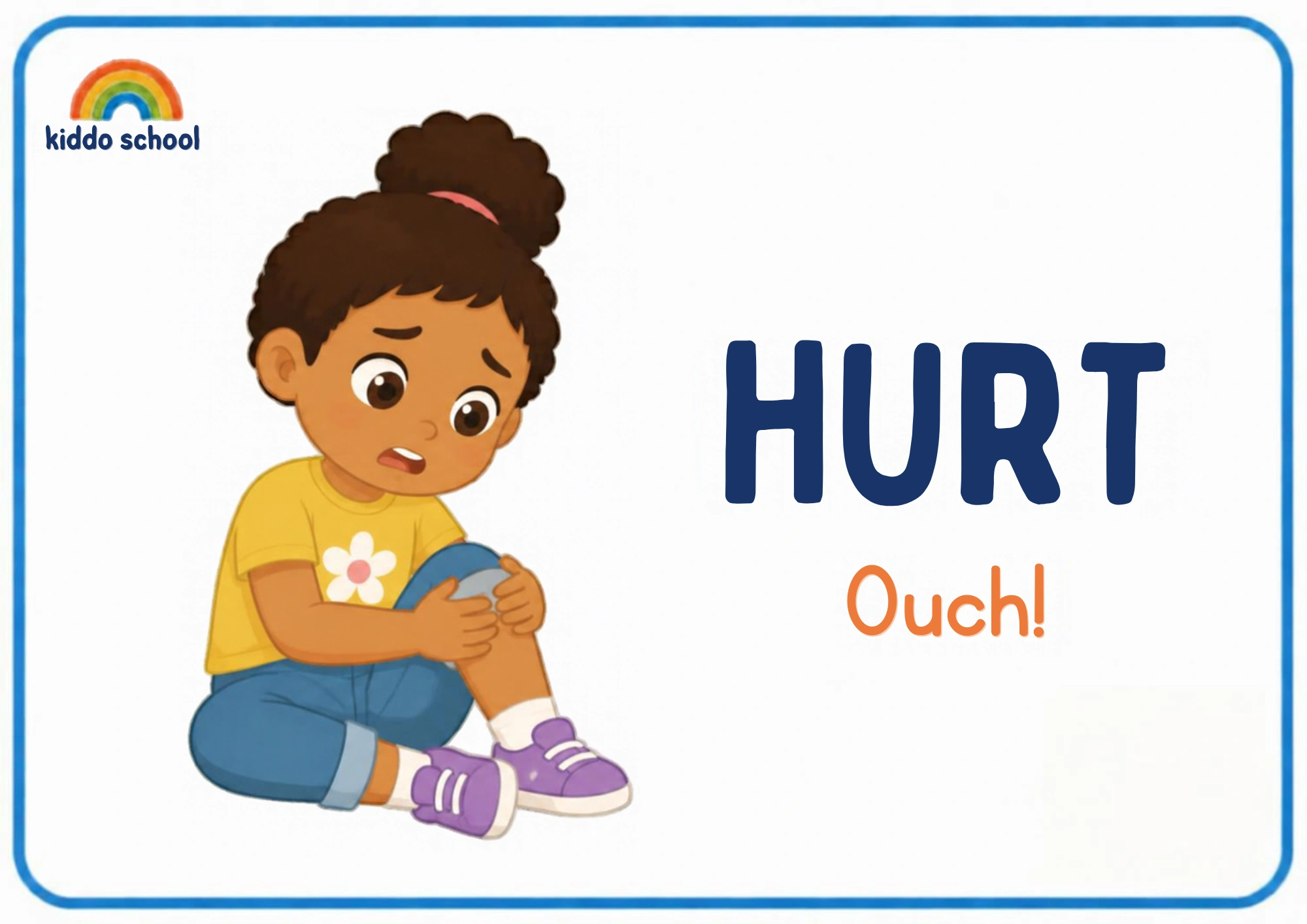
Hurt is the ouch feeling — a stumble, a bonk, a pinch, arriving with tears before anyone can explain. The card shows a mild hurt face, safely framed, for studying after the fact.
What does it mean?
Comfort comes first because bodies shout louder than minds: a hurt child needs arms before vocabulary. Once the tears settle, the word hurt gives the memory a shape — and retold stumbles stop running the whole afternoon.
What does the child need to know?
Expect ouch delivered at volume, tears, or a point at the sore bit. The lesson is the order: comfort, settle, then name — this card joins in afterwards, never in the first seconds.
Why this matters
Stumbles are daily and mostly small. A standing routine — cuddle, calm, name, retell — turns each bonk from a drama into an event with a beginning and an end.
What it teaches
Feeling vocabulary for body signals, comfort-seeking and comfort-giving, and memory-shaping — small stories that make sense of small injuries.
Words to learn
hurtouchbumpcuddlekissbetter
Say this to your child
“"Hurt. This face has an ouch — see the tears? When you feel hurt, I come first, with cuddles. Then we say hurt together. Kiss it better, cuddle it better — and the hurt gets smaller and smaller."”
Step by step
- Show the card at a calm moment: hurt — this face has an ouch. See the tears? They are already drying. Keep it light.
- Practise the routine backwards, in play: kiss a teddy’s sore paw, wrap it in a cuddle, and say the words — hurt, cuddle, better. Your toddler will run this script for real.
- Say the order out loud: when you feel hurt, cuddles come first, and the word comes after. Both are coming; the arms are just faster.
- At the next real bonk: scoop, settle, comfort — no lesson yet. Once the sobs slow, name it softly: that hurt, did it not? Then let the kissing-the-better ritual finish the job.
- Retell it at tea: you fell, it hurt, you had a cuddle, and now — better! The story with the ending is what makes stumbles survivable memory.
Look closer at the picture
The card shows an illustrated child having a mild hurt feeling — one teary face with a small ouch. Ask your toddler to find the hurt face, then to give the card a gentle pat or a pretend kiss better.
Ask your child
"Where is the hurt face?" "What does the hurt face need?" "What comes first — cuddles or words?" "All better now?"
What your child can say or do
Ouch arrives years before hurt does — the sound is the honest first word. Expect tears in real moments, a pointing finger at the sore bit, and, on the card, a gentle pat or a blown kiss.
Out in the real world
Real bonks run the routine for you: scoop, comfort, wait, name, retell. The card comes out after, when the knee is forgotten — that is the moment the feeling becomes a word with a story attached.
Try it together
Teddy hospital: a soft toy with a sore paw, a cuddle, a pretend kiss, a bandage made of a sock. Your toddler as the comforter learns the routine from the giving side — which is how it becomes automatic.
Understanding check
After the next small injury, listen once it settles: ouch, hurt, or a point at the card mid-cuddle all pass. The deeper mark: your toddler bringing you the sore finger calmly, already knowing the order of events.
Parent tips
In the moment, comfort outranks teaching, always — the card is for afterwards. Keep the retelling short and kind: one fall, one cuddle, one better. Toddlers re-read these little stories more often than you think.
Staying safe
Cuddle first, assess second: check the bump properly once the tears slow — a real injury is grown-up work, not a kissing game, and help gets called when it looks beyond a cuddle. The card never substitutes for checking.
This lesson pairs with the Hurt flashcard in the library — print it, show it, keep it on the fridge. Back to Emotions & Feelings (Toddler 7).