
Shy — a step-by-step lesson for grown-up and child
This lesson gives a word to the feeling every toddler knows from birthday parties: shy. The card makes it studyable, and the plan makes it normal — new people take a minute.
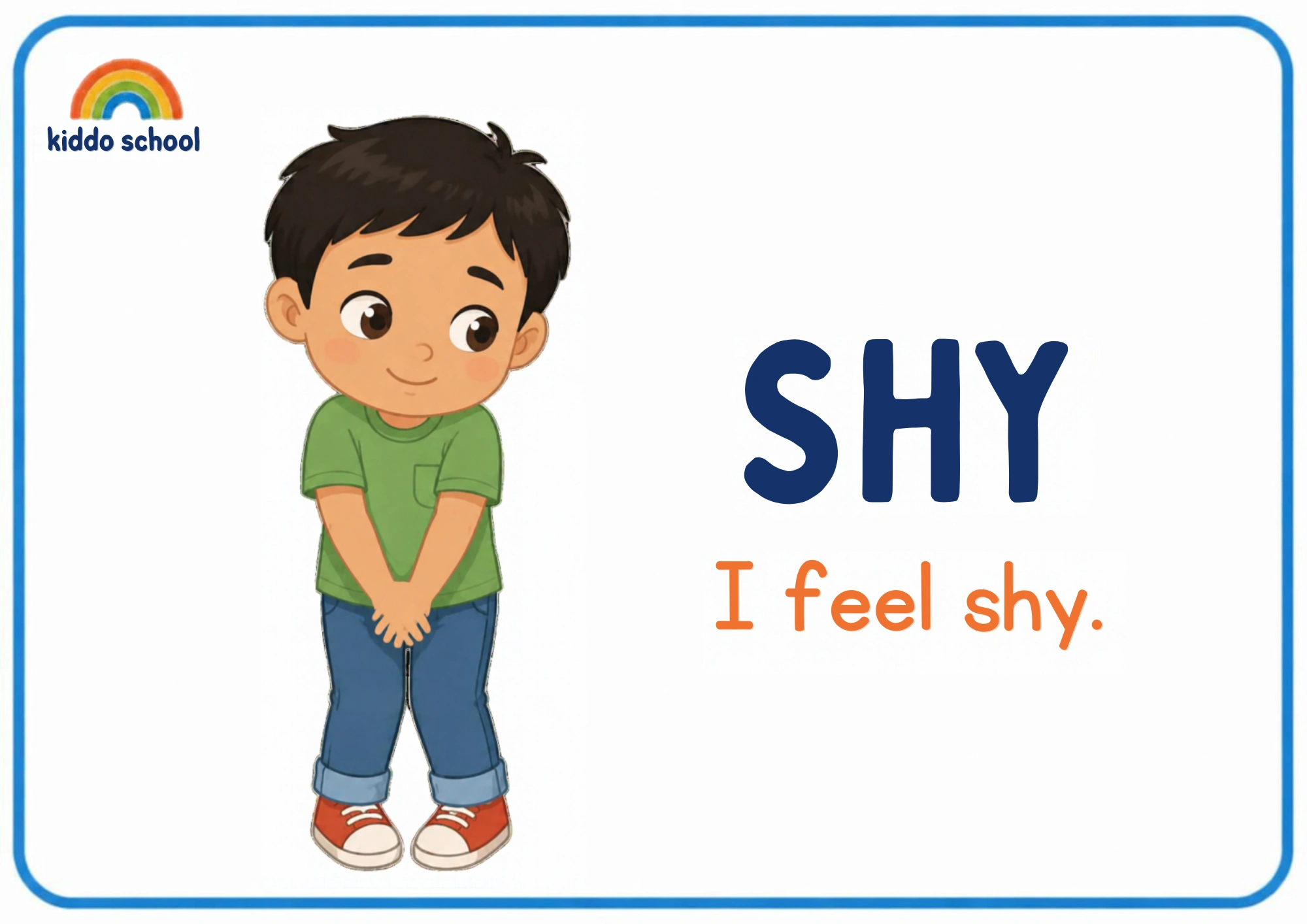
What is this?
Shy is the hold-back feeling — watching from a distance, quiet voice, wanting to join from behind a trusted knee. The card shows it gently, as a feeling that visits everyone sometimes.
What does it mean?
Shyness named loses its sting: your toddler learns that taking a minute is a way of joining, not a failure to join. Warm-up time is how confidence is actually built — slowly, on the child’s own clock.
What does the child need to know?
Expect a point, a whisper, or a practiced hiding face — all answers. The lesson is permission: hello can wait, watching counts as taking part, and the minute belongs to the child.
Why this matters
New people appear weekly — the plumber, the new cousin, the other toddler at the gate. A word and a plan for the pause turns each arrival from a test into a process.
What it teaches
Feeling vocabulary for the quiet feelings, social warm-up, and self-advocacy in seed form — the right to take your time, learned early.
Words to learn
shyquietwatchhellominutewarm
Say this to your child
“"Shy. This face is feeling shy — peeking out, being quiet. It is okay to feel shy. New people take a minute. You can watch, you can wave, or you can say hello — whenever you are ready. I am right here."”
Step by step
- Show the card quietly: shy — this face is feeling a bit shy. Keep your voice close and small, like the feeling itself.
- Make the face together: peek out from behind your hands. The hiding can be a game — peek-a-shy — with a smile waiting at the end.
- Say the plan out loud: when new people come, you can say hello, or wave, or watch from my knee. All of it counts.
- At the next real arrival, name it softly if needed: feeling a bit shy? That is okay. Then stand nearby and do nothing else — the minute is doing the work.
- Afterwards, close gently: you watched for a while, and then you waved. The story teaches that warm-ups have happy endings.
Look closer at the picture
The card shows an illustrated child having a shy feeling — one quiet, peeking face. Ask your toddler to find the shy face, then to peek out from behind their own hands just like it.
Ask your child
"Where is the shy face?" "Can you peek out like that?" "What can we do when we feel shy?" "Are you ready to wave yet?"
What your child can say or do
A face half-hidden behind your leg, a whispered shy, or a slow emerging smile — all are the feeling speaking. A first tiny wave after minutes of watching is the milestone; nobody claps louder than they want.
Out in the real world
Every new face is a rehearsal: name the feeling only if your toddler wants it named, stand close, and let the warm-up run. The world becomes a place where shy has a script and an ending.
Try it together
Peek-a-shy at home: hide behind a door, a curtain, a teddy — and peek out with a slow smile. The game teaches that hiding and joining are neighbours, and the door between them opens from the child’s side.
Understanding check
After the next warm-up, ask how you felt at first. A shy, a point at the card, or a hiding grin all pass. Then watch what came after — a wave, a hello, a joined game — and name that part too.
Parent tips
Take the performance pressure off entirely: hello is an offer, not a duty. Skip apologies to strangers for a shy toddler; a calm this is how they take a minute respects the child and ends the moment.
Staying safe
All feelings welcome — including the quiet ones, which need it most. A shy child is never pushed forward to perform: no forced hellos, no handed-over-to-strangers, no making shyness into a show for grown-ups.
This lesson pairs with the Shy flashcard in the library — print it, show it, keep it on the fridge. Back to Emotions & Feelings (Toddler 7).