
Different Animals — a step-by-step lesson for grown-up and child
This lesson borrows the two animals toddlers know best and asks the deck’s favourite question about them: same or different? Sounds, tails and sizes all count as answers.
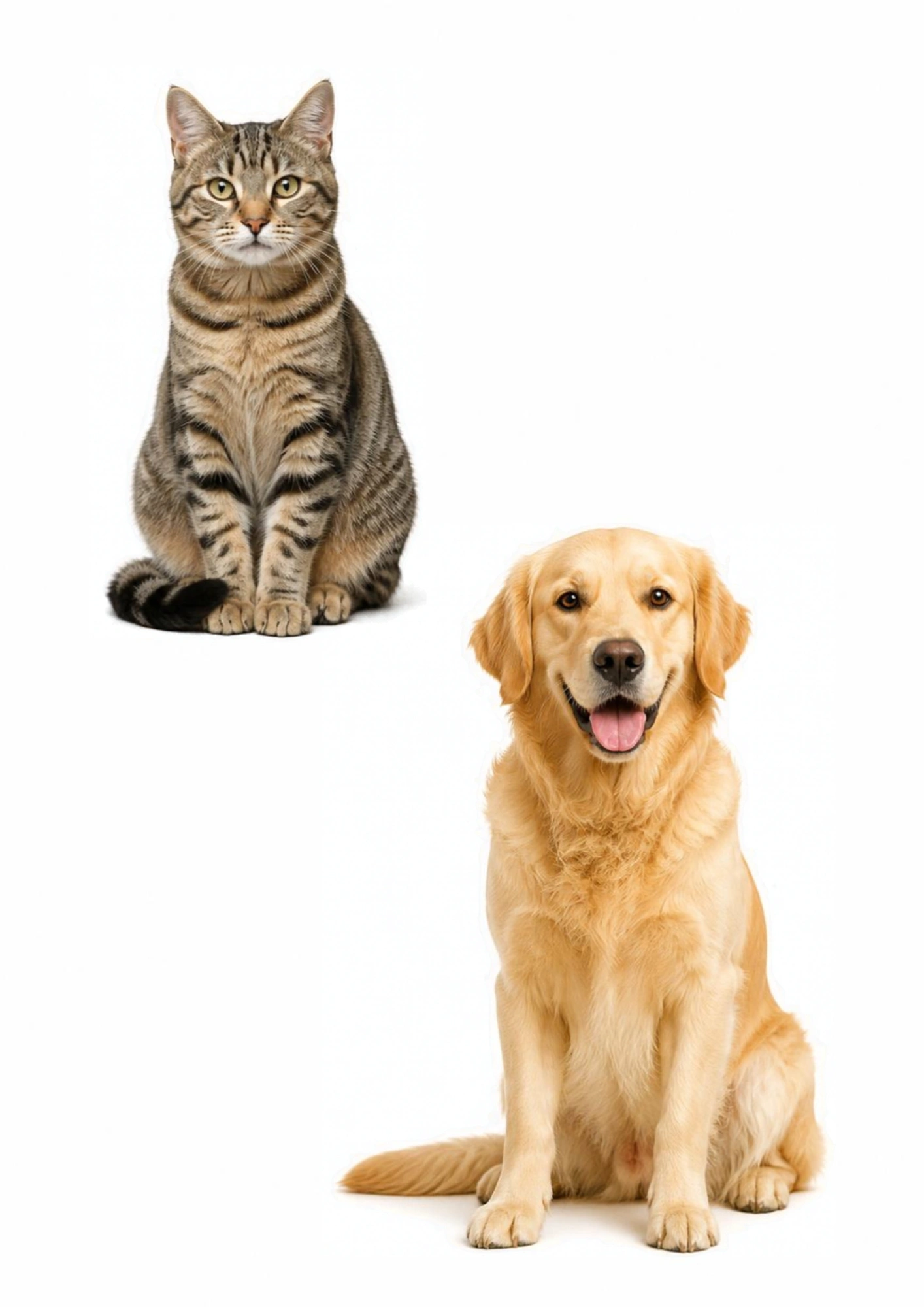
What is this?
A cat and a dog are both animals, both furry, both pets — and still clearly not the same. That near-miss is what makes the pair so good: alike enough to compare, different enough to see.
What does it mean?
Differences a toddler can hear are the easiest to feel: one animal says woof, the other says meow. Sound differences arrive before word differences, and both count as real comparing.
What does the child need to know?
The question is open on purpose — feet, sounds, size, tails, whatever your toddler notices is the right answer. Your job is to supply the words, not the verdict.
Why this matters
Cats and dogs fill a toddler’s week — out the window, in books, at grandma’s. A different-pair with daily reruns builds itself without another lesson minute.
What it teaches
Comparing two familiar animals, sound-to-picture linking, and open describing — the skill the animal-sound cards build, now pointed at contrast instead of naming.
Words to learn
catdogdifferentwoofmeowtail
Say this to your child
“"A cat and a dog! Same or different? Look closely… different! The dog says woof. The cat says meow. Can you make both sounds? Big dog… little cat — different animals."”
Step by step
- Show the card and greet both animals by name: a cat and a dog. One point each, one name each.
- Ask the deck’s question: are they the same? Then answer together, slowly: no — different!
- Hand each animal its voice: the dog says woof, the cat says meow. Take turns making both sounds — the difference your toddler can hear is the strongest one there is.
- Compare out loud in body language: the dog is big, the cat is small; the dog has a long tail, the cat has a curlier one. Point at each as you say it.
- Rerun the pair in the wild: a dog on the street, a cat on a wall, or both in a book at bedtime — different, every time they meet.
Look closer at the picture
The card shows a cat and a dog together for a same-and-different activity — two animals sitting side by side, not twins by any stretch. Ask your toddler to point at the cat, then the dog, then both at once.
Ask your child
"Are they the same or different?" "Where is the cat?" "What does the dog say?" "Can you make the cat sound?"
What your child can say or do
Woof and meow in the same breath is a full answer — the sounds prove the comparing happened. Some toddlers answer with their whole body: big stomps for dog, soft creeping for cat.
Out in the real world
Walks and windows supply the reruns: every real cat and dog your toddler meets is the card come alive, twice over. Point, name, compare in one short sentence, and walk on.
Try it together
Big dog, little cat: you are the dog with big stomps and loud woofs; your toddler is the cat, creeping quiet with tiny meows. Swap roles after two rounds and feel the difference in your own legs.
Understanding check
Show the card later and ask the question cold: same or different? A clear different, a point at each animal, or both sounds in order all pass. If only one animal gets named, that is a start, not a miss.
Parent tips
Let the sounds carry the lesson — contrast heard is contrast learned at two. If your toddler calls both animals dog, agree the category warmly (yes, animals!) and slip the word cat in once more, without fuss.
Staying safe
Real animals follow real rules: ask the owner before anyone pets, and watch from your hip until the answer comes. The comparing happens with words; the touching waits for permission.
This lesson pairs with the Different Animals flashcard in the library — print it, show it, keep it on the fridge. Back to Matching & Sorting (Toddler 4).